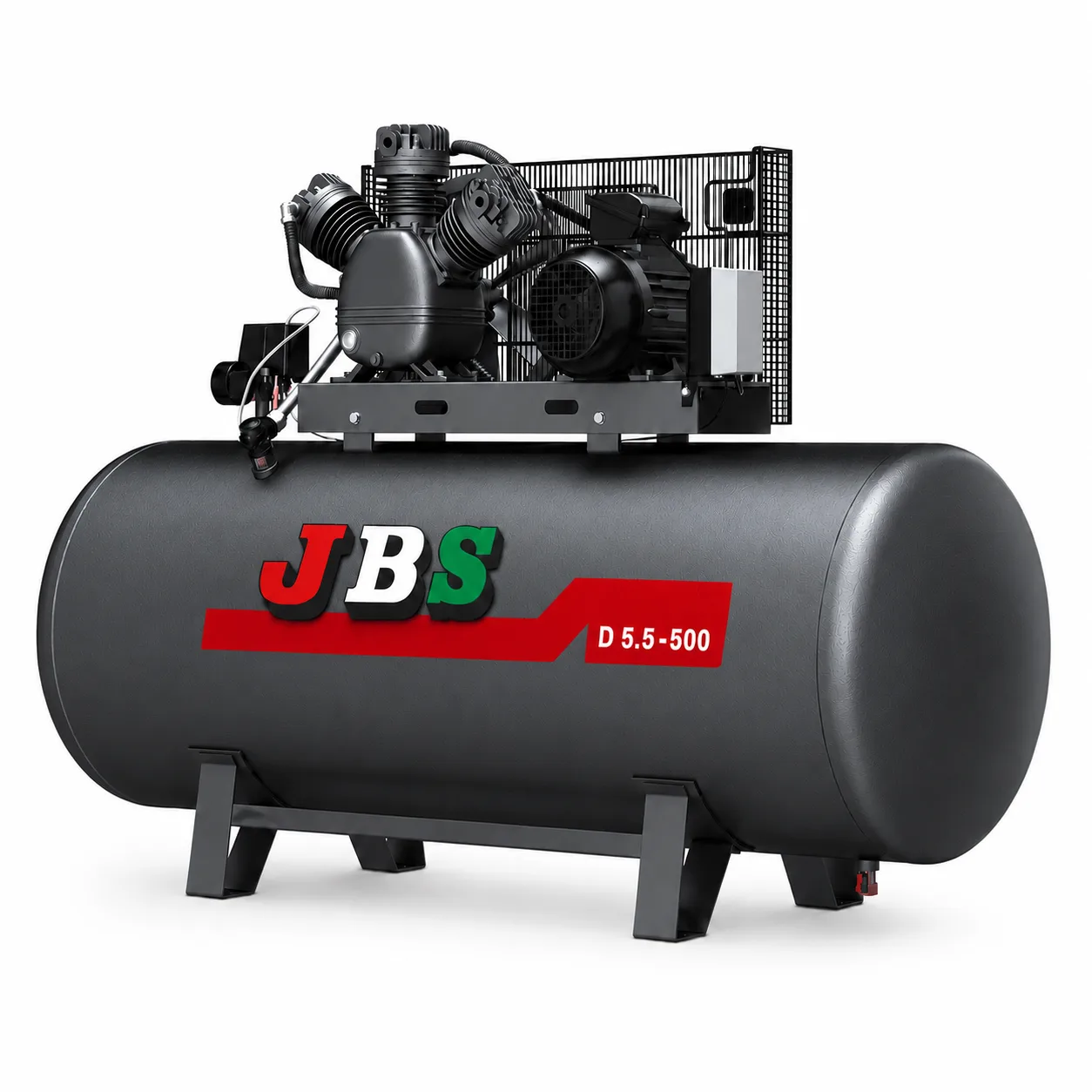
JBS piston air compressors are designed to provide a reliable supply of compressed air for workshops, automotive services, industrial facilities and maintenance operations. The range offers 100–500-litre tanks, 8 bar working pressure, 200–1,270 L/min air intake and 1.5–10 HP motor options. Available with one, two or three cylinders, these reciprocating air compressors provide an efficient solution for pneumatic tools, spray painting, tyre inflation and cleaning applications.
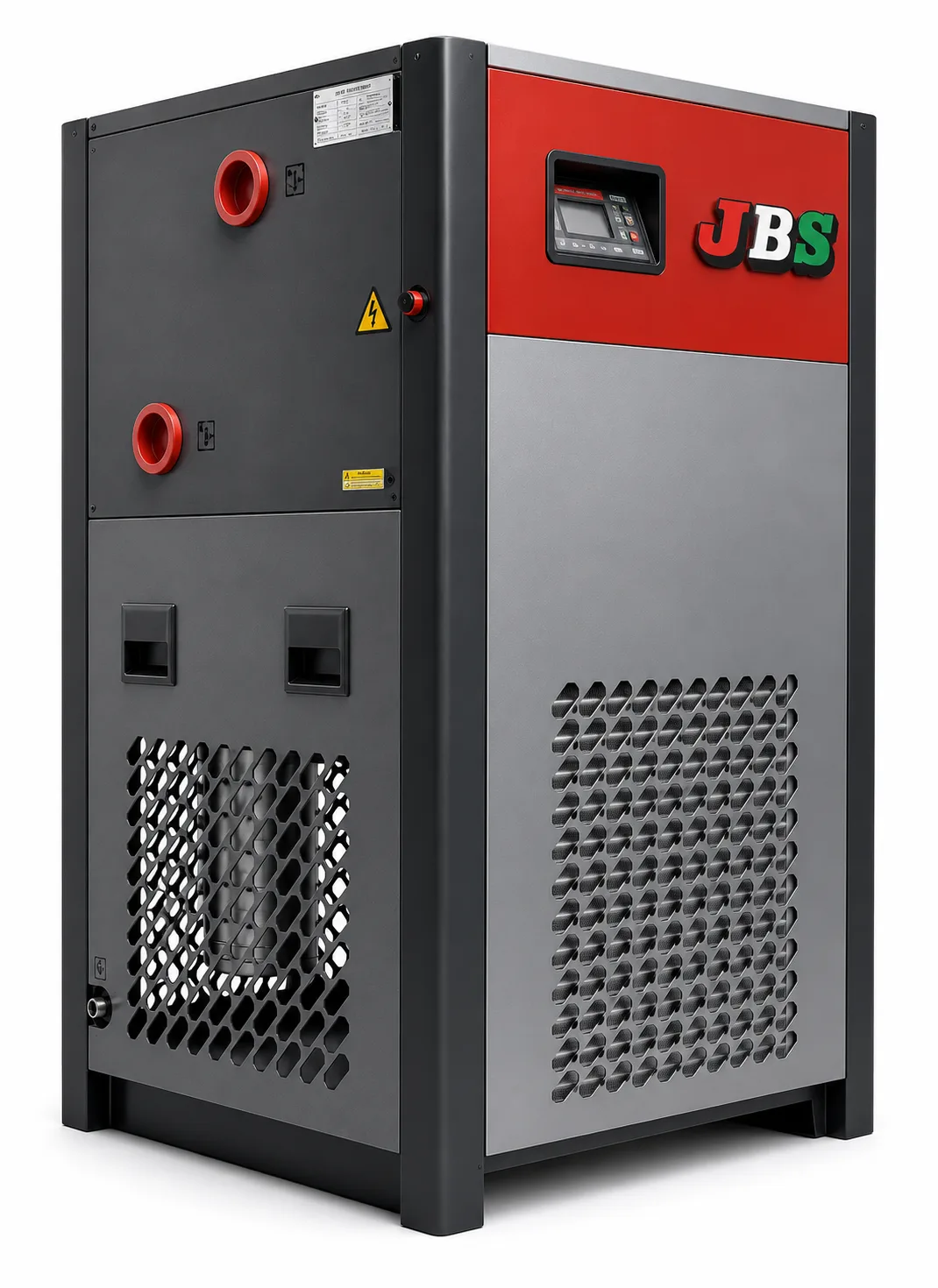
JBS ODR Series refrigerated air dryers remove moisture from compressed air through condensation. The ODR-300 offers a 30 m³/min capacity, 7–16 bar working pressure, a +3 °C dew point and R-410A refrigerant. Designed for automotive workshops, paint shops and industrial facilities, it helps protect pneumatic equipment, air receivers and pipelines against moisture, corrosion and breakdowns.
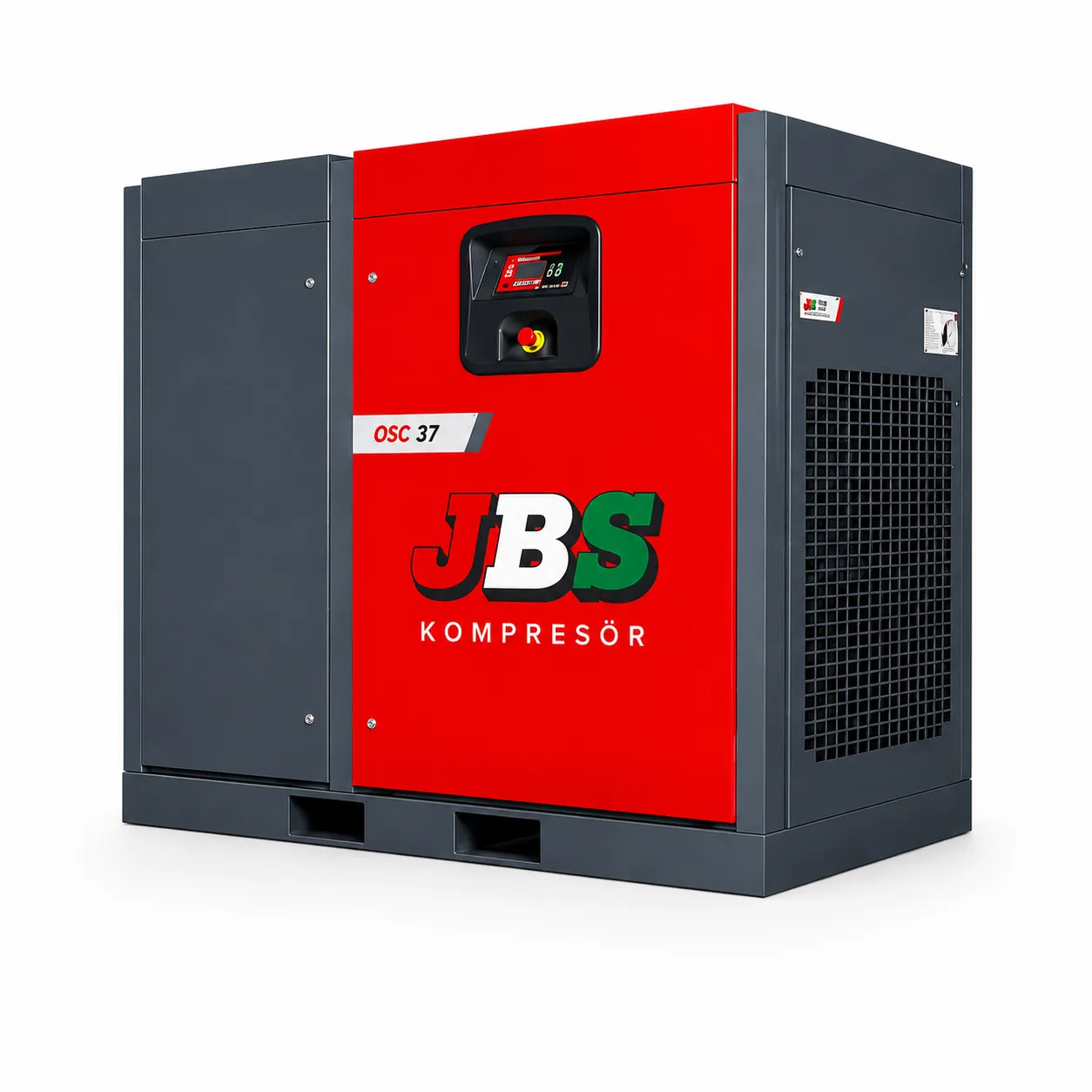
JBS OSC V Series rotary screw air compressors produce energy-efficient compressed air with a variable-speed drive that adjusts motor speed according to current demand. The series offers 3–132 kW motor options, while the OSC V-55 delivers 55 kW power, 9.5 m³/min airflow and 7–13 bar working pressure. It is designed for continuous, stable and reliable operation in workshops, automotive businesses and industrial facilities.
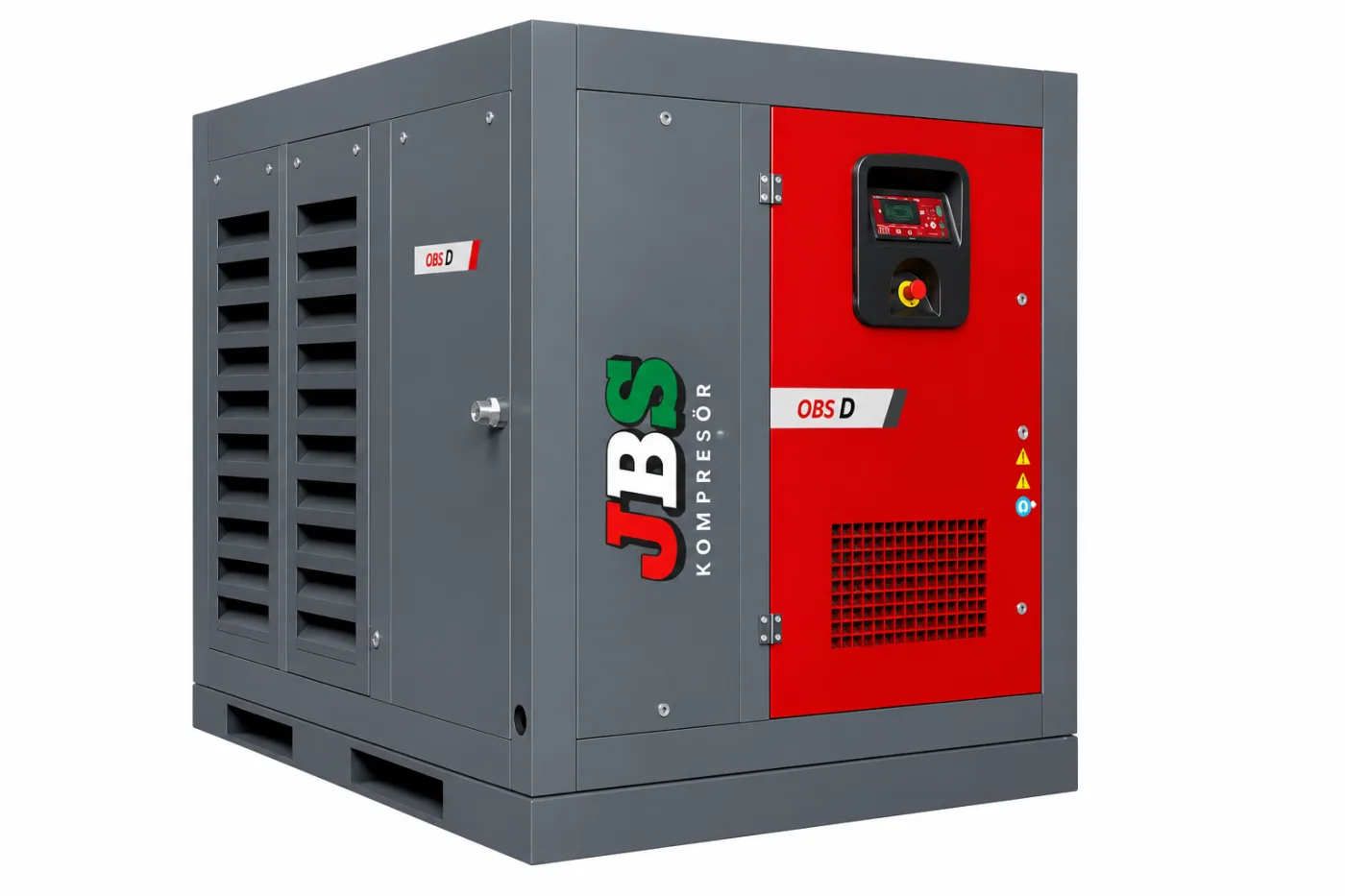
The JBS OBS 18 D screw booster compressor increases existing compressed air from 7–12 bar to 30 bar, providing a stable and continuous air supply for production processes. Its 18.5 kW/25 HP motor, 3.78–5.58 m³/min capacity and 1:1 direct-coupled drive ensure efficient operation. It is designed for PET bottle blowing, laser cutting, metalworking and high-pressure pneumatic applications.
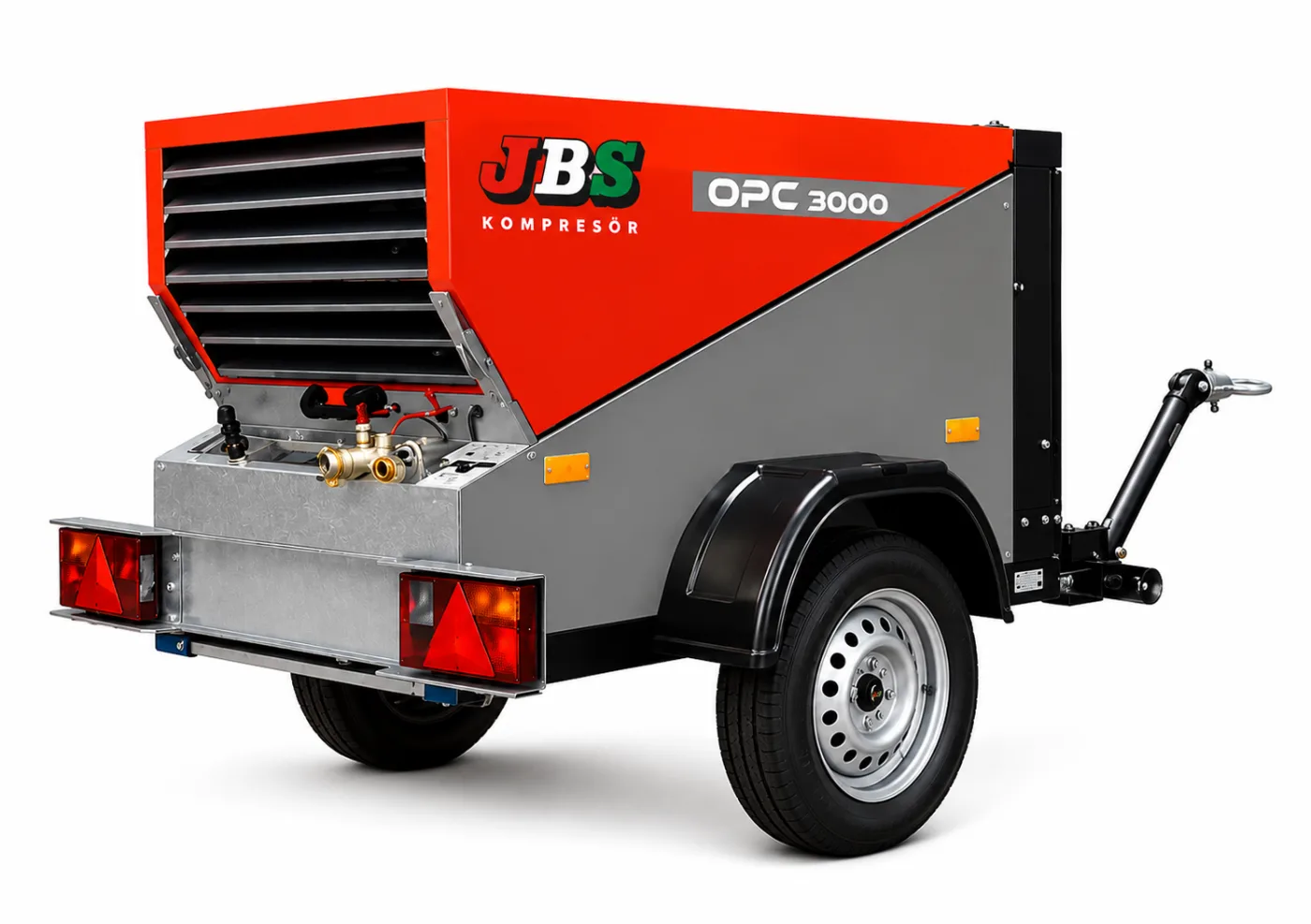
JBS OPC Series portable air compressors provide mobile compressed air at worksites without an electrical supply through their diesel-powered design. The range offers 1.2–5 m³/min airflow and 7–15 bar working pressure, while the OPC 4000 delivers 5 m³/min, 10 bar pressure and an 80-litre fuel tank. It is designed for construction sites, roadworks, drilling, sandblasting and pneumatic tools.
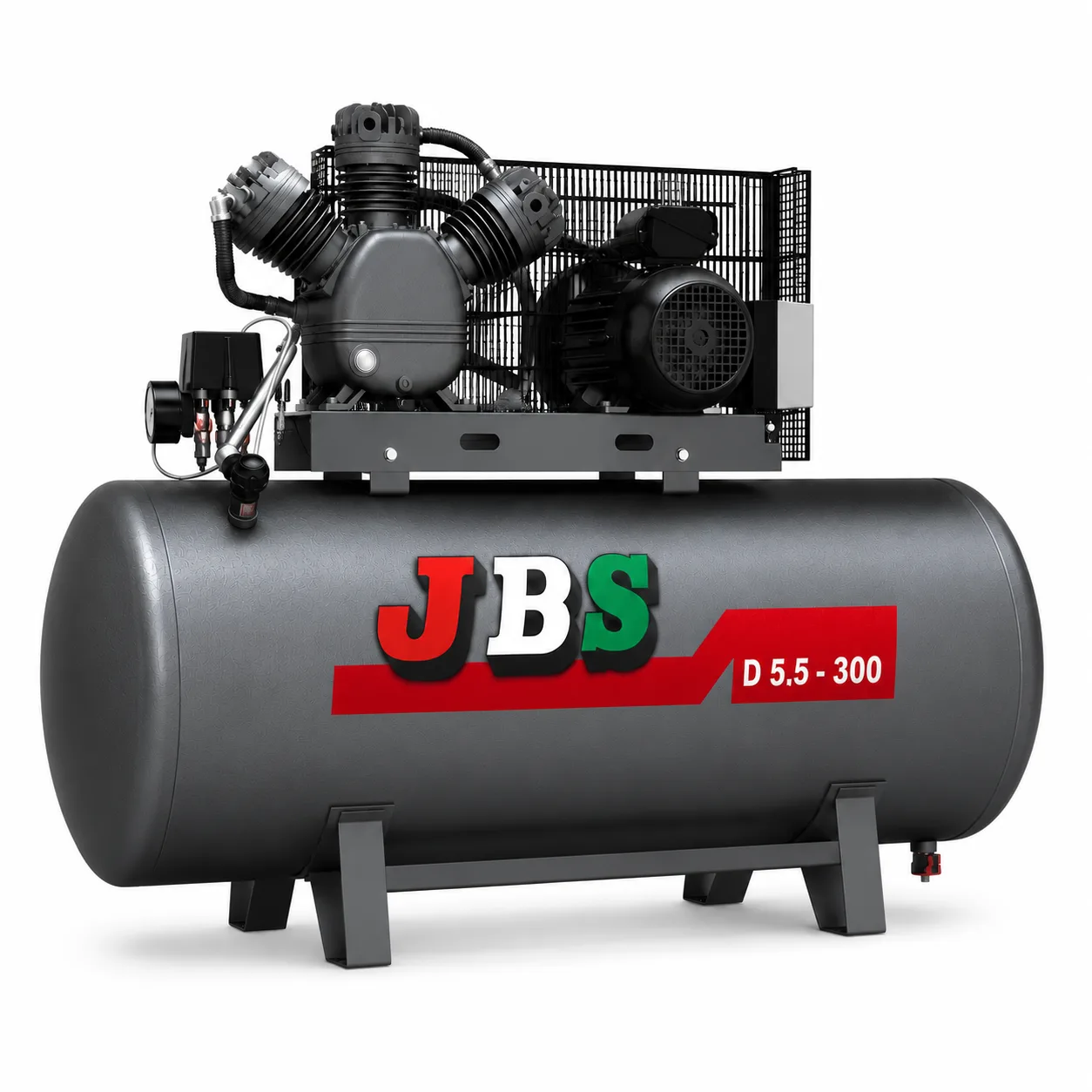
The JBS D 5.5-300 piston air compressor is designed to meet the professional compressed-air needs of automotive services, workshops and maintenance facilities. It delivers a 4 kW/5.5 HP motor, 7 bar working pressure and 649 L/min air intake. Its durable reciprocating design provides reliable performance for tyre inflation, air guns, spray painting and pneumatic tools.
Air compressors supply compressed air for pneumatic tools, automotive workshops, spray painting, production equipment and industrial systems. A professional compressor should not be selected by horsepower, receiver size or maximum PSI alone. Actual airflow (CFM/L/min), working pressure, duty cycle and simultaneous air demand are the key selection criteria.
For workshops, tyre shops and applications with intermittent air demand, reciprocating air compressors can provide a practical solution. For continuous or higher-volume compressed-air demand, rotary screw air compressors are generally more suitable.
The D-5.5-500 Piston Air Compressor is designed for workshop and service applications, while the OSC-V Variable-Speed Screw Air Compressor Series is designed for longer and variable industrial air demand. Booster compressors, portable compressors and compressed-air dryers cover high-pressure, mobile and air-quality requirements.
Short answer: Choose an air compressor by required CFM, working PSI/bar, duty cycle and air quality, not simply by HP or tank size.
Automotive, Tyre & Body Shops - Used for impact wrenches, tyre inflation, spray painting, blow-off cleaning and other pneumatic automotive tools.
Manufacturing & Metalworking - Industrial air compressors supply CNC equipment, pneumatic presses, assembly lines, air tools and fabrication processes.
Pneumatic Automation Systems - Provide compressed air for cylinders, valves, actuators, robotics and automated production equipment.
Woodworking & Furniture Production - Used for pneumatic nailers, staplers, sanders, spray equipment and workshop cleaning.
Construction & Field Operations - Portable compressors can power breakers, drills, nail guns, blasting equipment and other pneumatic tools on construction and maintenance sites.
Food, Beverage & Packaging - Compressed air is used for filling, packaging, pneumatic conveying and automation. Applications involving product contact require the appropriate compressed-air quality and filtration.
Air Compressors Advantages
Reliable Compressed Air Supply - Professional air compressors provide the compressed air required for pneumatic tools, manufacturing equipment and automation systems.
Optimised Energy & Operating Costs - Correct compressor sizing and demand-matched technologies can reduce unnecessary energy consumption and improve total cost of ownership.
Solutions for Different Airflow & Pressure Requirements - Reciprocating, rotary screw, booster and portable compressors can be selected according to required CFM/L-min, working pressure and duty cycle.
Efficient Pneumatic Equipment Operation - Compressed air powers impact tools, spray equipment, pneumatic cylinders, CNC systems and industrial production equipment.
Configurable Compressed-Air Quality - Filters and compressed air dryers help control moisture and contaminants for applications requiring cleaner, more consistent air.
Scalable & Serviceable Compressed-Air Systems - Compressor capacity, receivers, dryers and distribution systems can be expanded as production demand increases, while proper maintenance helps minimise downtime.
Buying Guide
Air Compressor Buying Guide
When buying an air compressor, do not compare horsepower, tank size or maximum PSI alone. Required airflow, working pressure, duty cycle and compressed-air quality are more important selection criteria.
Calculate Required CFM / Airflow – Add the air demand of pneumatic tools that may operate simultaneously. Compare actual CFM or L/min at working pressure, not intake capacity alone.
Match PSI to the Application – Impact tools, spray guns, pneumatic machinery and production equipment have different pressure requirements. More PSI does not automatically mean better performance.
Reciprocating or Rotary Screw? – A reciprocating air compressor can be suitable for intermittent workshop demand. For long operating hours and continuous compressed-air consumption, a rotary screw air compressor is generally more appropriate.
Do Not Choose by Tank Size Alone – A larger receiver provides additional stored-air capacity but does not increase compressor airflow. CFM and receiver size should be evaluated together.
Check Single-Phase or Three-Phase Power – Electrical supply, motor power and starting current should be confirmed before buying commercial compressor equipment.
Consider Air Dryers, Filtration & Service – Painting, CNC, automation and sensitive production processes may require dry, cleaner compressed air. Include filtration, air dryers, spare parts and service in the total system.
Short answer: The best air compressor is the system that delivers the required CFM at the required PSI for your actual duty cycle, not simply the model with the largest tank or highest horsepower.
What Is the Difference Between a Screw Compressor and a Piston Compressor?
Piston compressors are generally suitable for intermittent and lower air demand, while screw compressors are better suited to intensive, long-duration, and consistent air demand. Screw models provide a more continuous airflow and generally lower vibration.
What is the difference between an oil-lubricated and an oil-free air compressor?
An oil-lubricated air compressor uses oil to lubricate internal components, which can provide smoother operation, better cooling, and longer service life in demanding applications. An oil-free compressor operates without oil in the compression chamber, requiring less maintenance and delivering cleaner air. Oil-free models are often preferred where air purity is important, while oil-lubricated compressors are commonly chosen for intensive workshop and industrial use.
What is an air compressor?
An air compressor is a machine that draws in ambient air and compresses it to produce compressed air. The generated air is used for pneumatic equipment, cleaning, painting, tire inflation, and various industrial processes.
What should you consider when choosing an air compressor?
When selecting a compressor, working pressure, air flow rate, tank capacity, motor power, voltage, and daily operating time should be evaluated. The total air demand of the equipment to be connected should also be calculated.
How many bar should an air compressor have?
The required pressure depends on the application. For many workshop and car wash applications, 8–10 bar may be sufficient. Equipment requiring higher pressure should be matched with a compressor of suitable capacity.
Calculate Your Compressed-Air Requirement
Share the equipment to be supplied, required pressure and operating time to receive a technical quotation for the appropriate system.