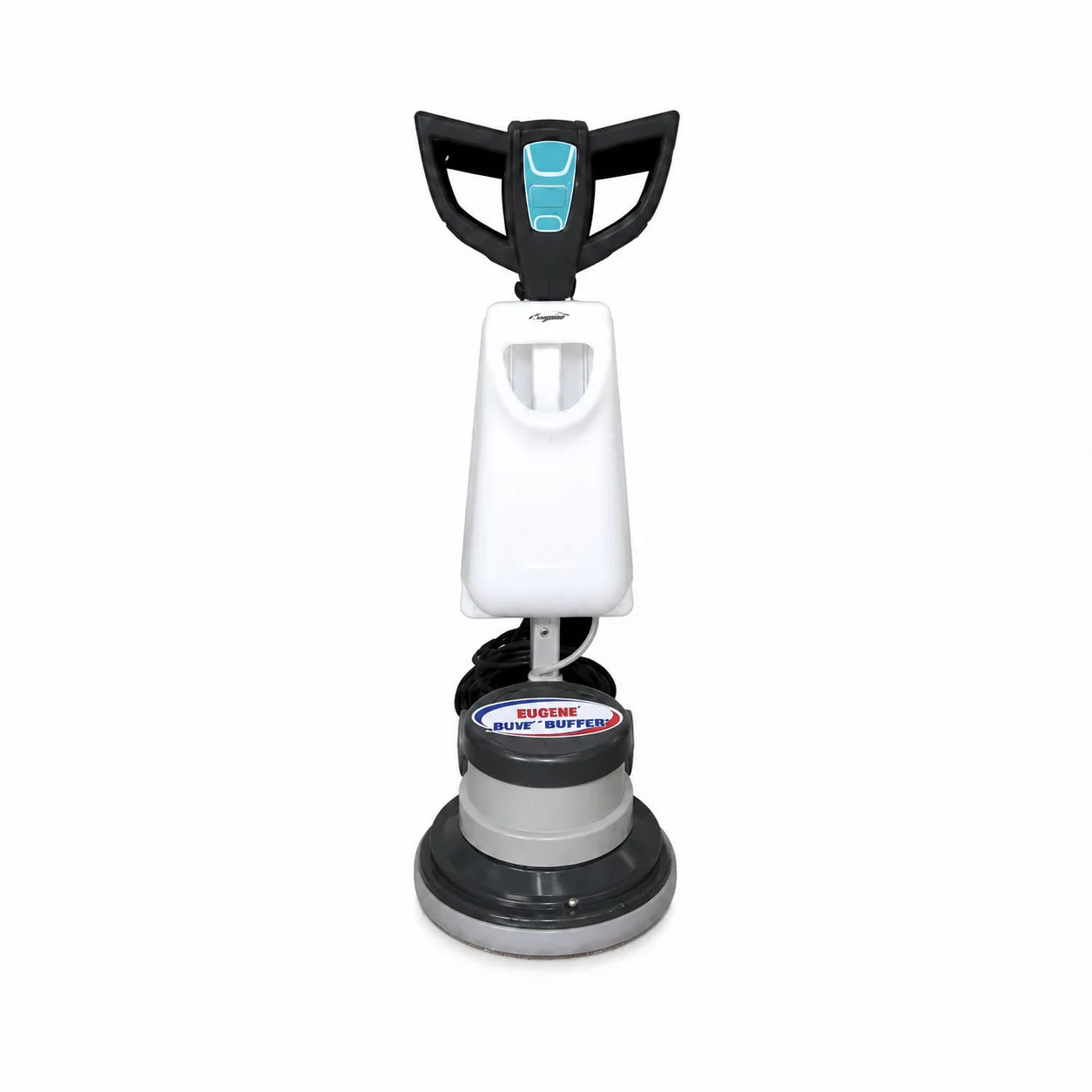
How to Choose a Commercial Single-Disc Carpet Cleaning Machine
Start with working width. A 430 mm machine offers greater control in restricted spaces, while a 510 mm disc can cover larger open areas in fewer passes.
Compare torque and operating system, not watts alone. Motor input is only one part of performance. Brush speed, transmission and machine weight influence mechanical agitation.
Choose the correct brush or pad. Carpet shampooing brushes, floor-scrubbing brushes and polishing pads are not interchangeable. Confirm the accessory package around your actual surfaces.
Plan dirty-water recovery separately. A rotary single-disc machine agitates the surface; it does not replace a carpet extractor or wet vacuum where solution recovery is required.
Consider manoeuvrability. Hotels, schools and contract cleaners may work around doors, furniture and narrow corridors where the largest working width is not always the most productive option.
Check cable reach and site layout. For mains-powered commercial machines, cable length affects repositioning and operator productivity.
Match chemicals to the carpet. Excess moisture, aggressive chemistry or the wrong brush can damage sensitive fibres. Always test an unfamiliar carpet in a discreet area.
Choose around throughput. The J-C43 is attractive where versatility and control matter; the wider J-CROM is better aligned with higher-volume open-area work.
The best machine is not simply the largest single-disc unit—it is the one whose working width, brush system and recovery workflow match the facility.
Share your carpet type, usable floor area and daily cleaning volume to request a JBS commercial quotation.