JBS Makina self-service car wash systems offer pressure washing, foam, wax, vacuum, and blower options suitable for different payment methods and wash-bay configurations.
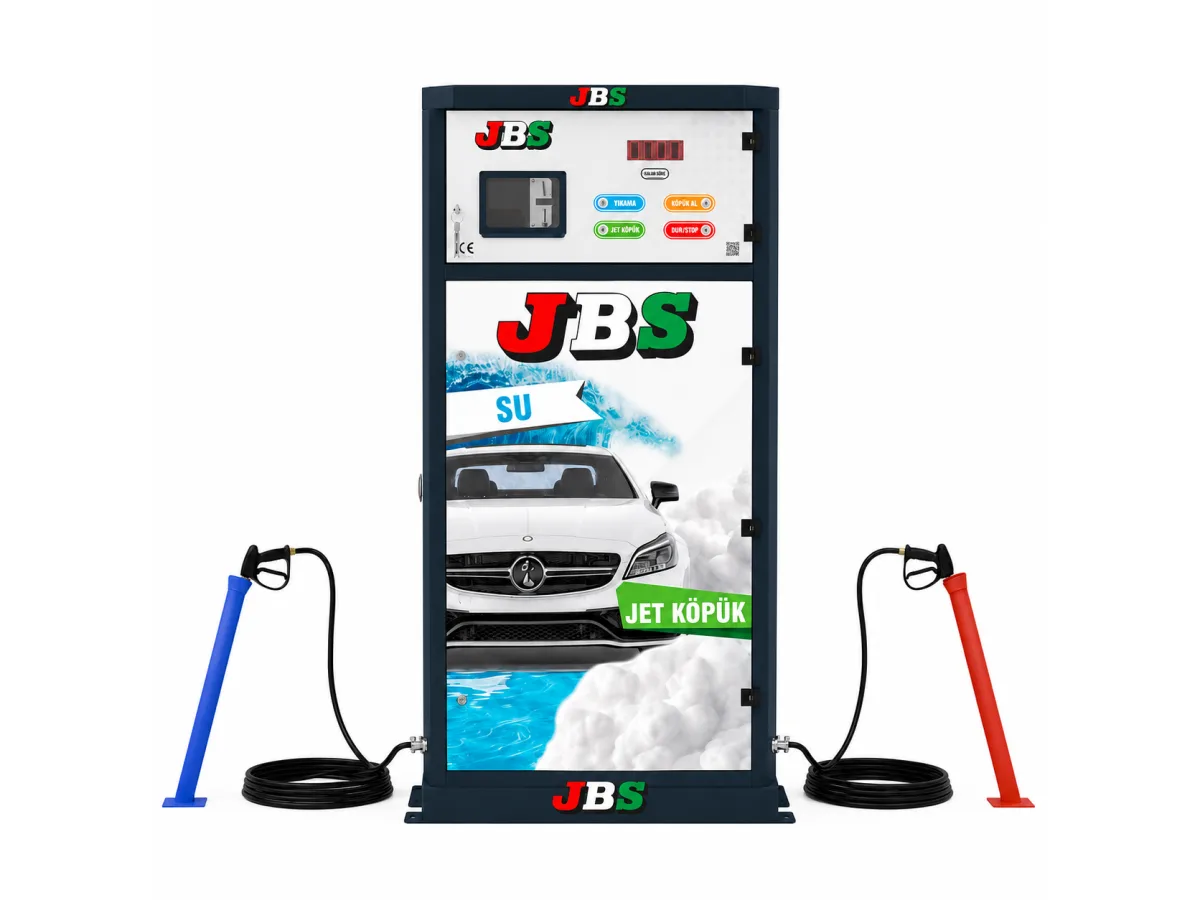
The JBS CYJK is professional dual-bay self-service car wash equipment designed to wash two vehicles simultaneously. It provides 0–200 bar adjustable pressure, 15 L/min flow, a 5.5 kW three-phase motor, an Italian pump, and two 12 m hoses. This coin-operated car wash machine combines high-pressure washing with a dense foam system and supports coins, tokens, or banknotes.
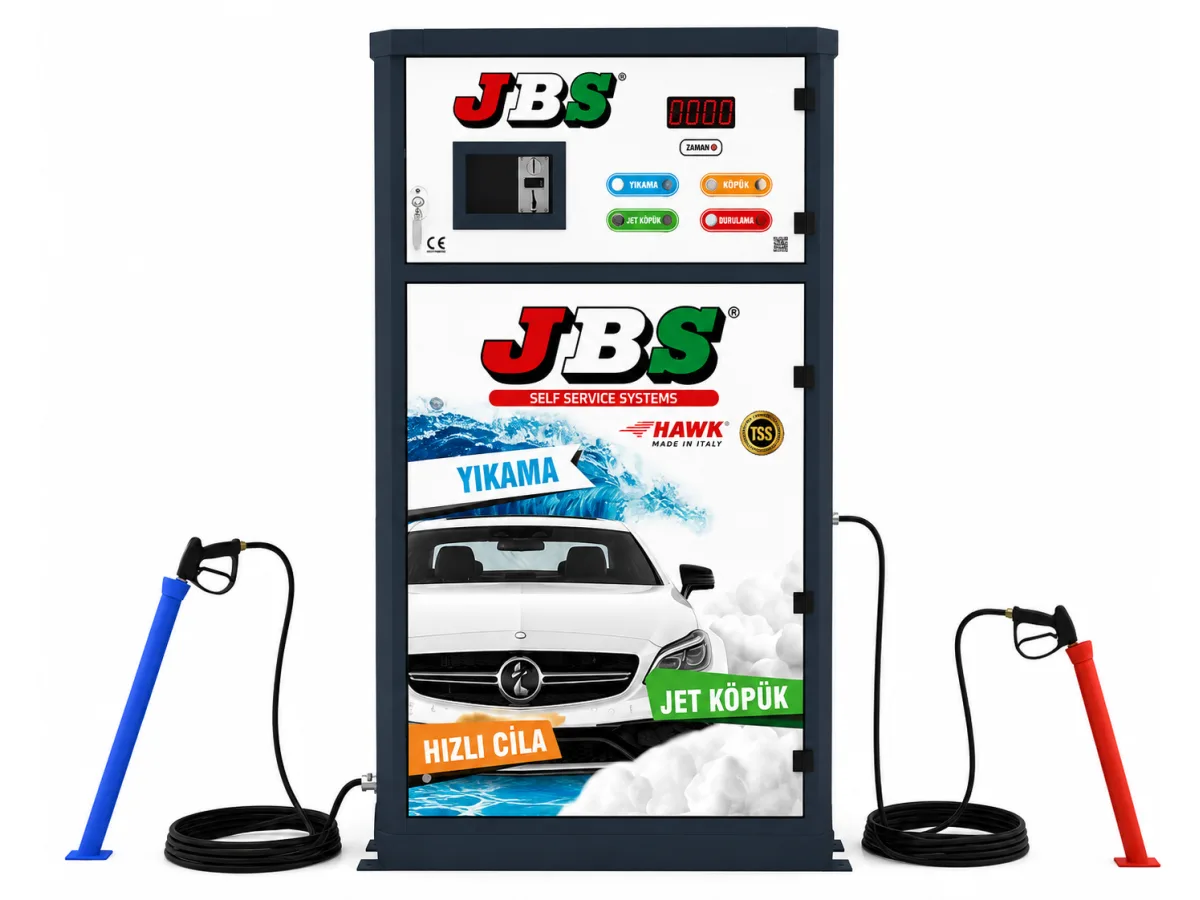
The JBS YKC is professional self-service car wash equipment combining high-pressure washing, dense foam and quick wax in one unit. It offers 0–200 bar adjustable pressure, 15 L/min flow, a 5.5 kW three-phase motor and an Italian pump. This coin-operated car wash system accepts coins, tokens or banknotes, leaving vehicles clean, glossy and well maintained.
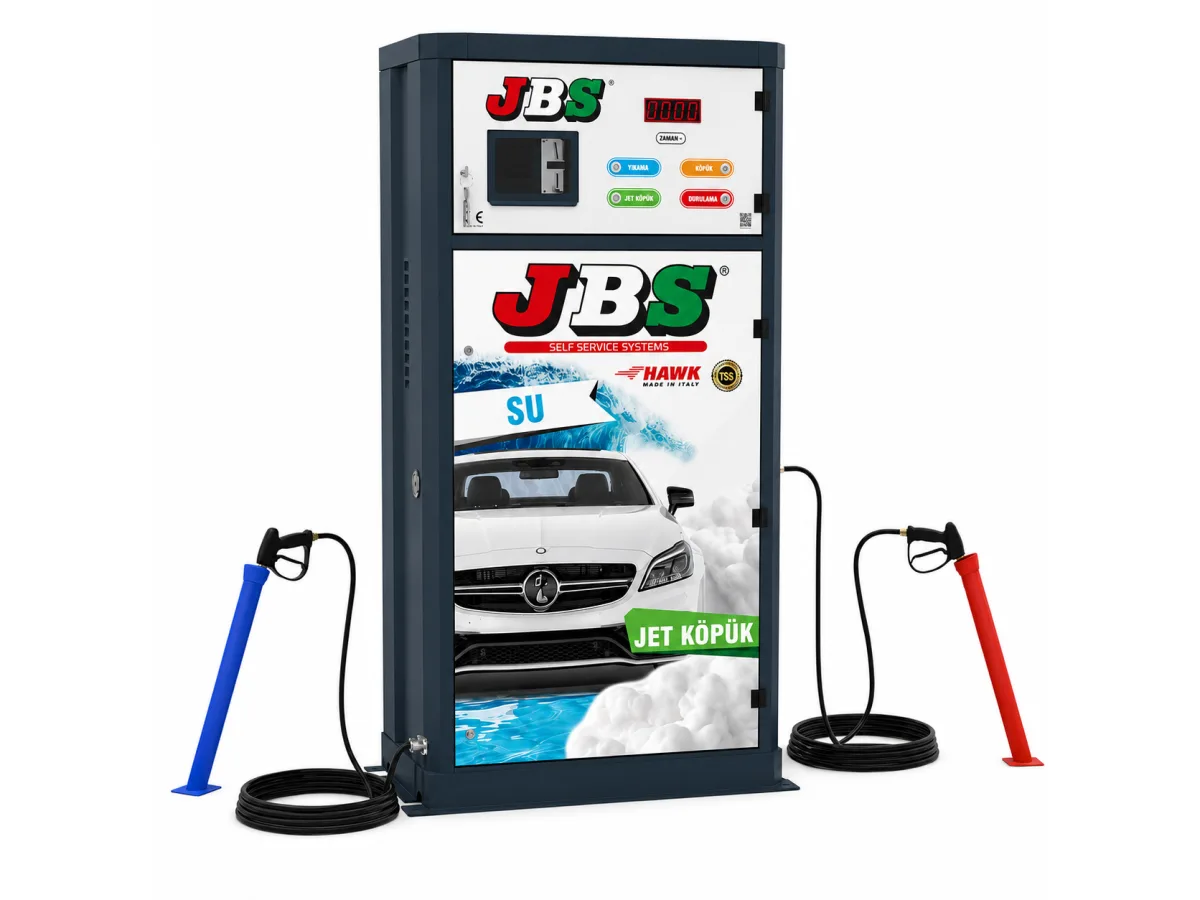
The JBS YK is professional self-service car wash equipment combining high-pressure washing and dense foam application in one unit. It delivers 0–200 bar adjustable pressure, 15 L/min flow, a 5.5 kW three-phase motor and an original Italian pump. Accepting coins, tokens or banknotes, this coin-operated car wash system effectively removes tough dirt from vehicles.
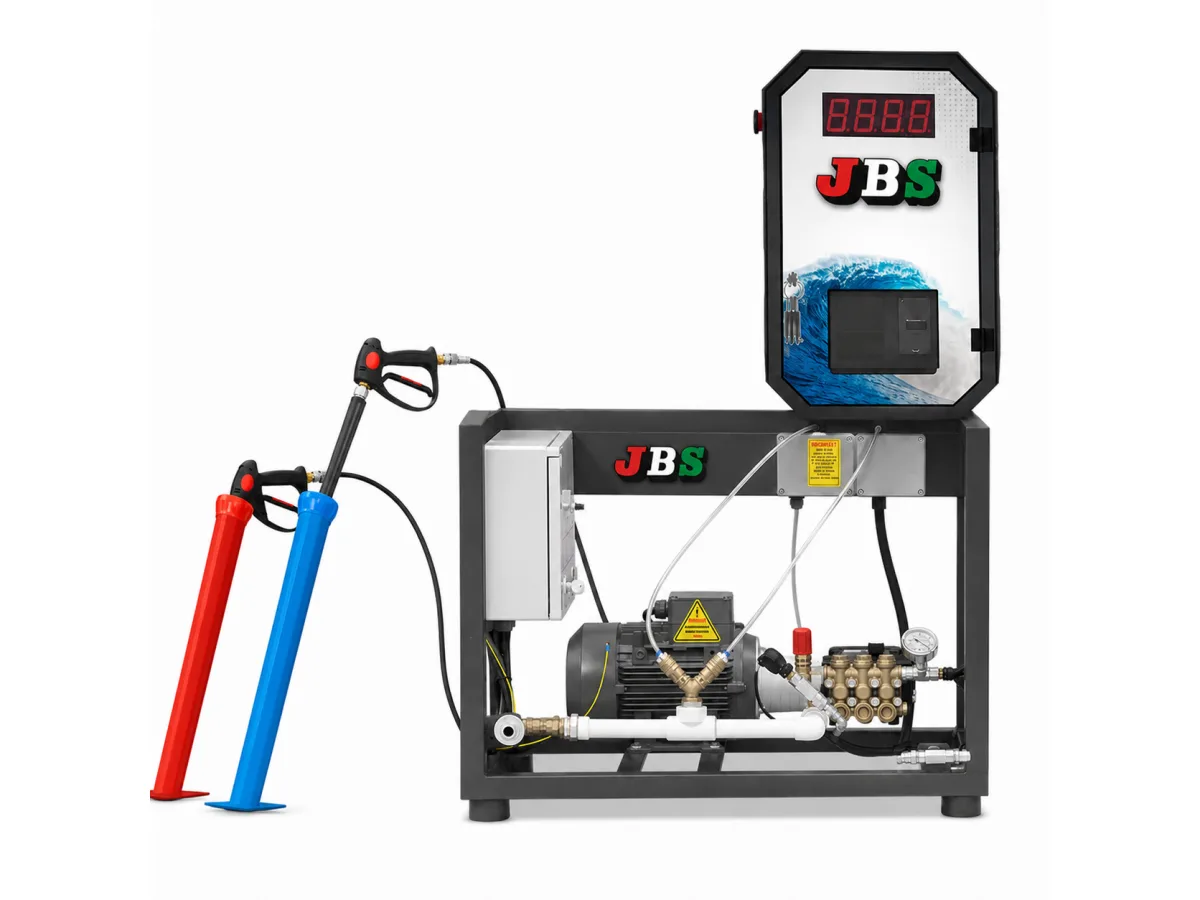
The JBS 4FMS is a professional self-service car wash system that centrally manages high-pressure washing, dense foam, wax and rinsing. It offers 0–200 bar adjustable pressure, 15 L/min flow, a 5.5 kW three-phase motor and an original Italian pump. Accepting coins, tokens or banknotes, this central car wash system can serve multiple wash bays.
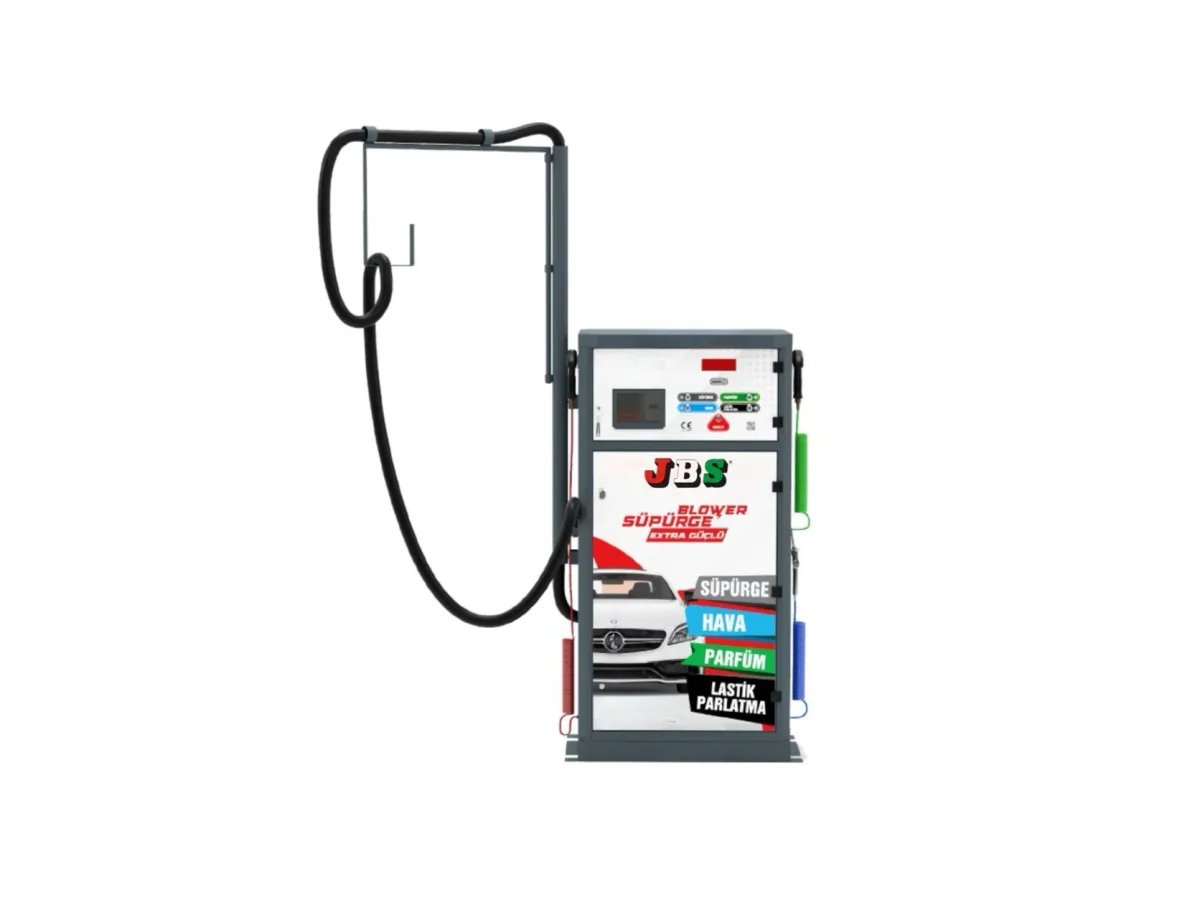
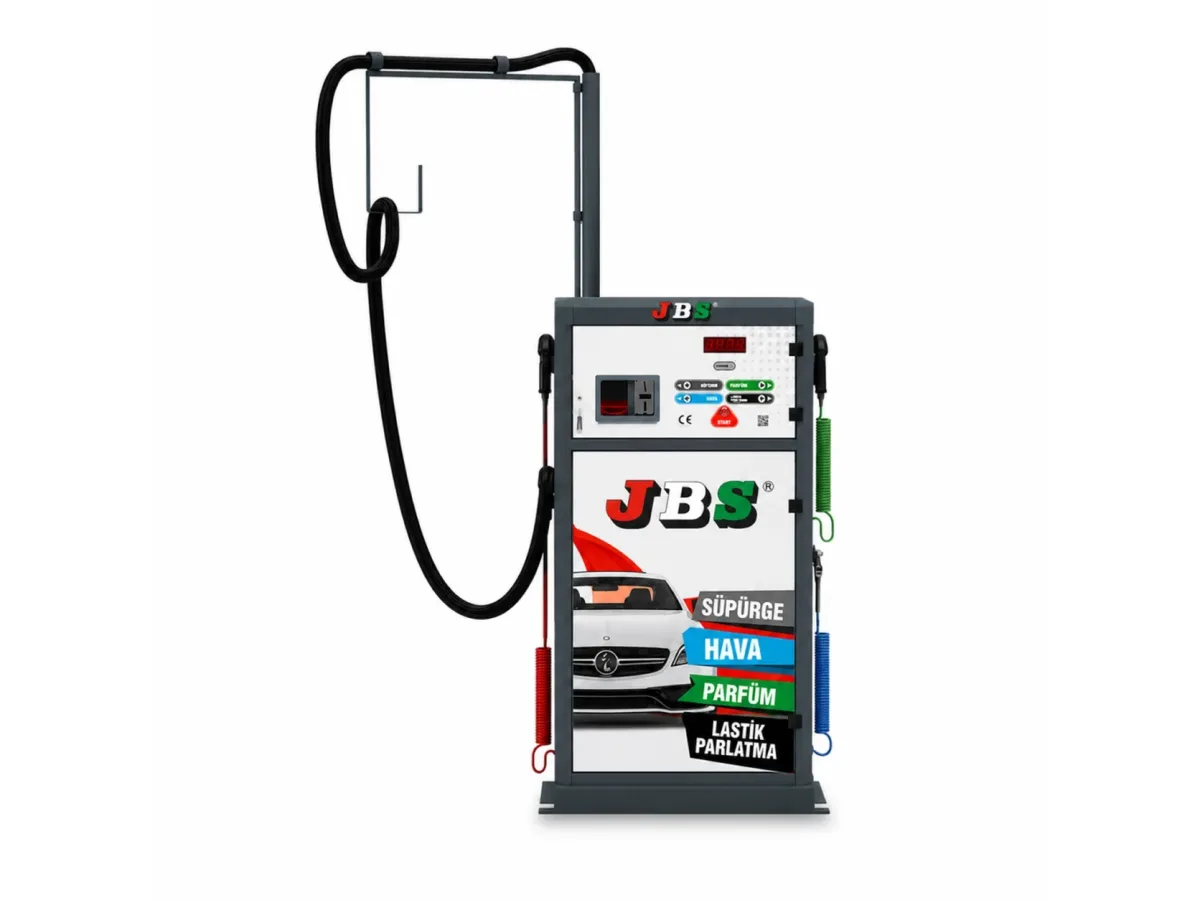
The JBS 4BS is a professional coin-operated car wash vacuum that combines powerful suction and high-output air blowing in one self-service unit. It delivers 280 mbar vacuum pressure, 300 L/s airflow, a durable 60-litre tank and a 380 V blower motor. Accepting coins, tokens or banknotes, it effectively removes dust and debris from vehicle interiors.
The JBS CFOS is a professional coin-operated car wash vacuum designed for efficient vehicle interior cleaning. This self-service vacuum features three 1,200 W twin-fan motors, 245 mbar suction pressure, 300 L/s airflow and a durable 60-litre stainless-steel tank. Built for frequent use, it effectively removes dust, sand and debris from seats, floor mats and luggage compartments.
Self-service car wash systems are professional business solutions that allow customers to clean their own vehicles using predefined washing programs.
The user activates the system through a configured payment method such as tokens, coins, cards, or QR codes. Depending on the selected program, pressure washing, foam, wax, rinsing, vacuum, or blower functions operate for a specified period.
These systems can be used at car wash businesses, fuel stations, shopping-center and residential car parks, motorway service areas, car dealerships, service centers, car rental companies, and fleet maintenance facilities.
Businesses adding interior vacuuming to their wash service
How Does a Self-Service Car Wash System Work?
After making a payment, the user selects the required program from the control panel. The selected function operates for a period determined by the business. Depending on the system configuration, the user can switch between programs during the remaining time or make another payment to extend the operating time.
Available programs may include:
High-pressure pre-wash
Foam or jet-foam application
Shampoo washing
High-pressure rinsing
Quick wax
Spot-free final rinse
Vehicle-interior vacuuming
Air blowing with a blower
The number of programs, operating times, and payment options should be determined according to the facility’s target customers and investment plan.
Which Self-Service System Should You Choose?
The JBS-YK can be considered by businesses that want to provide a basic self-service service with pressure washing and foam functions.
The JBS-YKC is designed for businesses that want to add quick wax to their washing and jet-foam programs.
The JBS-CYJK can serve two washing points simultaneously, helping increase capacity at locations with high customer traffic.
The JBS-4FMS is suitable for larger facilities where multiple wash bays are managed from a single technical center.
The JBS-4BS and JBS-CFOS complement exterior washing with vehicle-interior cleaning and air-blowing functions, creating additional service and revenue opportunities.
Central System or Stand-Alone Unit?
In central systems, the pumps, chemical-dosing equipment, and control components are located in a shared technical area. This arrangement can simplify maintenance and system management at facilities with multiple wash bays.
With stand-alone units, each wash bay has its own equipment. This structure may be preferred by smaller facilities or businesses with a limited number of washing points.
The correct configuration should be determined according to the site dimensions, number of bays, estimated daily users, investment budget, and potential future capacity increases.
What Should You Consider When Buying a Self-Service Car Wash System?
The following factors should be evaluated before purchasing:
Size of the washing area and number of bays
Estimated daily number of users and vehicles
Washing, foam, wax, and rinsing programs to be offered
Number of units that can operate simultaneously
Pump working pressure and water flow rate
Chemical-dosing system
Need for hot water and frost protection
Token, coin, card, or QR-code payment options
Management of program times and prices
Central-system or stand-alone-unit configuration
Remote monitoring and revenue-reporting features
Water, electricity, and drainage infrastructure
Quality of the cabinet, control panel, hoses, and guns
Technical service and spare-parts support
A system that is not designed for intensive use may experience pressure loss and service interruptions when multiple units operate simultaneously. Pump capacity should therefore be selected according to the number of bays and expected usage intensity.
Self-Service Car Wash System Prices
Self-service car wash system prices vary according to the number of bays, washing programs, pump capacity, payment system, central or stand-alone installation, vacuum and blower options, level of automation, and site infrastructure.
The total investment calculation should include not only the machines but also the concrete floor, canopy, water and electrical installations, drainage, water-treatment system, compressor, signage, permits, and installation costs.
Share your site dimensions, planned number of wash bays, required functions, and available infrastructure with JBS Makina to receive a current quotation tailored to your project.
Standalone Self-Service Car Wash Sites & Wash Parks - Ideal for dedicated self-service car wash businesses with single, dual or multi-bay configurations. For larger sites, the JBS 4FMS 4-Function Central Self-Service System can support centrally managed wash bays.
Petrol Stations & Fuel Forecourts - A self-service car wash for petrol stations can turn existing vehicle traffic into an additional paid service without requiring a conventional staffed wash operation.
Shopping Centres, Supermarkets & Car Parks - Self-service wash bays can be installed at retail parks, supermarket sites and high-traffic commercial parking areas where vehicle owners already spend time.
Highway Service Areas & Roadside Locations - Suitable for motorway service areas, roadside facilities and other high-traffic locations where drivers need convenient on-demand vehicle washing.
Car Dealerships, Service Centres & Rental Companies - Can provide an on-site solution for cleaning dealership stock, customer vehicles and rental fleets.
Fleet Depots & Corporate Vehicle Facilities - Suitable for companies operating delivery vehicles, service fleets and other regularly cleaned vehicles. For two simultaneous wash points, see the JBS CYJK Dual-Bay Self-Service Car Wash Machine.
Self-Service Car Wash Systems Advantages
24/7 Service with Lower Labour Requirements - Self-service car wash systems allow customers to operate the wash programmes themselves, reducing dependence on permanent washing staff and supporting extended operating hours where site conditions permit.
Coin, Card & Contactless Payment Options - Modern self-service car wash payment systems can support coins, tokens, cards or QR-based payment, making the wash process faster and giving operators greater control over programme time and pricing.
Controlled Water & Chemical Consumption - Timed wash programmes, controlled water flow and chemical dosing help businesses manage self-service car wash water consumption and detergent use more efficiently.
Modular & Scalable Wash Bays - A self-service car wash can be designed as a compact single-bay facility or expanded into a multi-bay operation according to traffic and available space. For higher-volume locations, the JBS-CYJK Dual-Bay Self-Service Car Wash Machine can serve two wash points.
Multiple Programmes Create Additional Revenue Opportunities - High-pressure wash, foam, wax, vacuum and blower services allow operators to offer more than a basic wash. The JBS-YKC Self-Service Wash, Jet Foam and Wax Machine combines several exterior-care programmes in one system.
Centralised Solutions for Multi-Bay Car Washes - For larger multi-bay self-service car wash facilities, centralised equipment can simplify system planning and management. The JBS-4FMS 4-Function Central System is designed for centrally managed wash, foam, wax and rinse functions.
Buying Guide
Self-Service Car Wash Buying Guide
When buying a self-service car wash system, do not compare equipment by price alone. Site traffic, number of wash bays, pump capacity, wash programs, payment technology and after-sales support should all be considered.
Choose the Right Number of Wash Bays – A single, dual or multi-bay system should be selected according to expected vehicle traffic. For locations that need to serve two vehicles simultaneously, the JBS-CYJK Dual-Bay Jet Foam Car Wash System can be considered.
Select the Right Wash Programs – High-pressure wash and foam are core functions, while wax and additional programs can increase service options. The JBS-YKC Self-Service Wash, Jet Foam and Wax Machine combines several popular programs.
Compare Pressure and Water Flow – Maximum pressure alone does not determine performance. Pump flow rate, the number of bays operating at the same time and continuous-duty capacity are important for a busy commercial self-service car wash.
Plan the Payment System – Coin-operated car wash systems remain common, but card, contactless and QR payment options can improve customer convenience and simplify pricing and wash-time management.
Central or Stand-Alone System? – Stand-alone machines may be suitable for smaller sites. Multi-bay facilities can use the JBS-4FMS 4-Function Central System to centrally manage wash, foam, wax and rinse functions.
Check Service, Spare Parts & Operating Costs – Pumps, spray guns, hoses, valves and electronic components should be easy to service and replace. Water, electricity, chemicals, maintenance and downtime should also be included when calculating the real cost of the investment.
The best self-service car wash system is not necessarily the one with the most programs; it is the system that matches site traffic, bay capacity and your business model.
What should you consider when buying a self-service car wash system?
When buying a self-service car wash system, you should consider equipment quality, washing capacity, pressure and water flow, payment options, water treatment and recycling systems, detergent dosing, energy efficiency, maintenance requirements, spare parts availability, warranty, and after-sales technical support. It is also important to choose a system that can be customized according to the available space, expected customer traffic, climate conditions, and local infrastructure.
What Is a Self-Service Car Wash System?
A self-service car wash system allows users to wash their own vehicles using coin-, card-, or QR-code-operated equipment. Functions such as foam, rinsing, wax, vacuuming, and air blowing can be provided in one area.
Does a Self-Service Car Wash System Require Maintenance?
Yes. The pump, hose, spray gun, nozzle, foam system, payment unit, filters, and vacuum and blower equipment should be checked regularly. Routine maintenance reduces the risk of failure and helps the system operate efficiently for longer.
Which Functions Should a Self-Service Car Wash System Include?
A basic system should include pressure washing, foaming, and rinsing. More professional installations can also include wax, hot water, vacuuming, air blowing, mat cleaning, and payment automation.
How does a self-service car wash work?
A self-service car wash allows customers to wash their vehicles using professional equipment without staff assistance. The process usually includes pre-washing, applying foam or detergent, high-pressure rinsing, waxing, and spot-free rinsing. Customers select the desired program through a payment or control system and use the available spray guns, brushes, or vacuum equipment.
Plan Your Self-Service Car Wash Project
Share the site dimensions, number of bays and required functions to receive a recommended installation plan and quotation.