How to Choose the Right Commercial Hot Water Pressure Washer
Start with the contamination your business actually removes.
Choose hot water for the right jobs. If the workload regularly includes grease, oily workshop residue, chassis contamination or machinery cleaning, heated water can reduce cleaning effort. Businesses mainly removing mud and routine road dirt should also compare cold-water equipment before paying for a heating system.
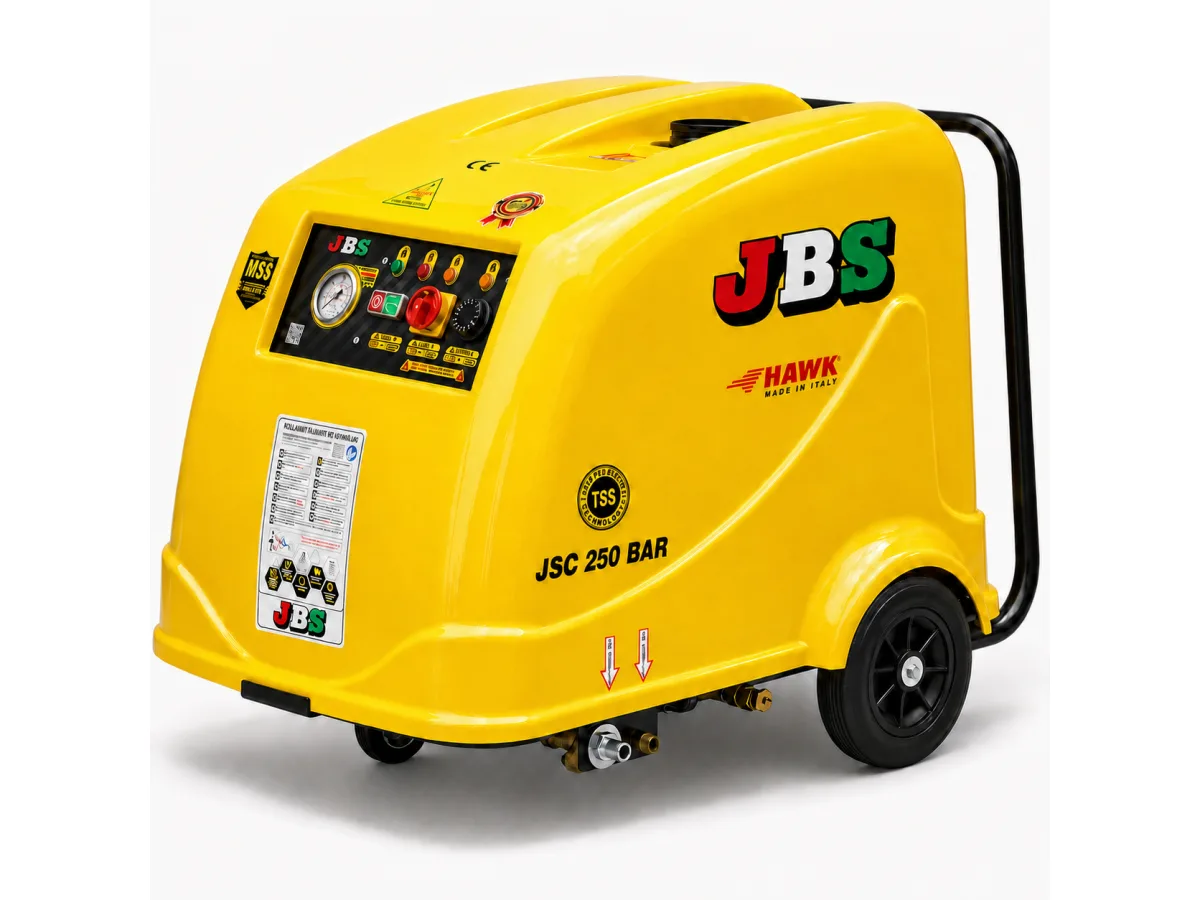
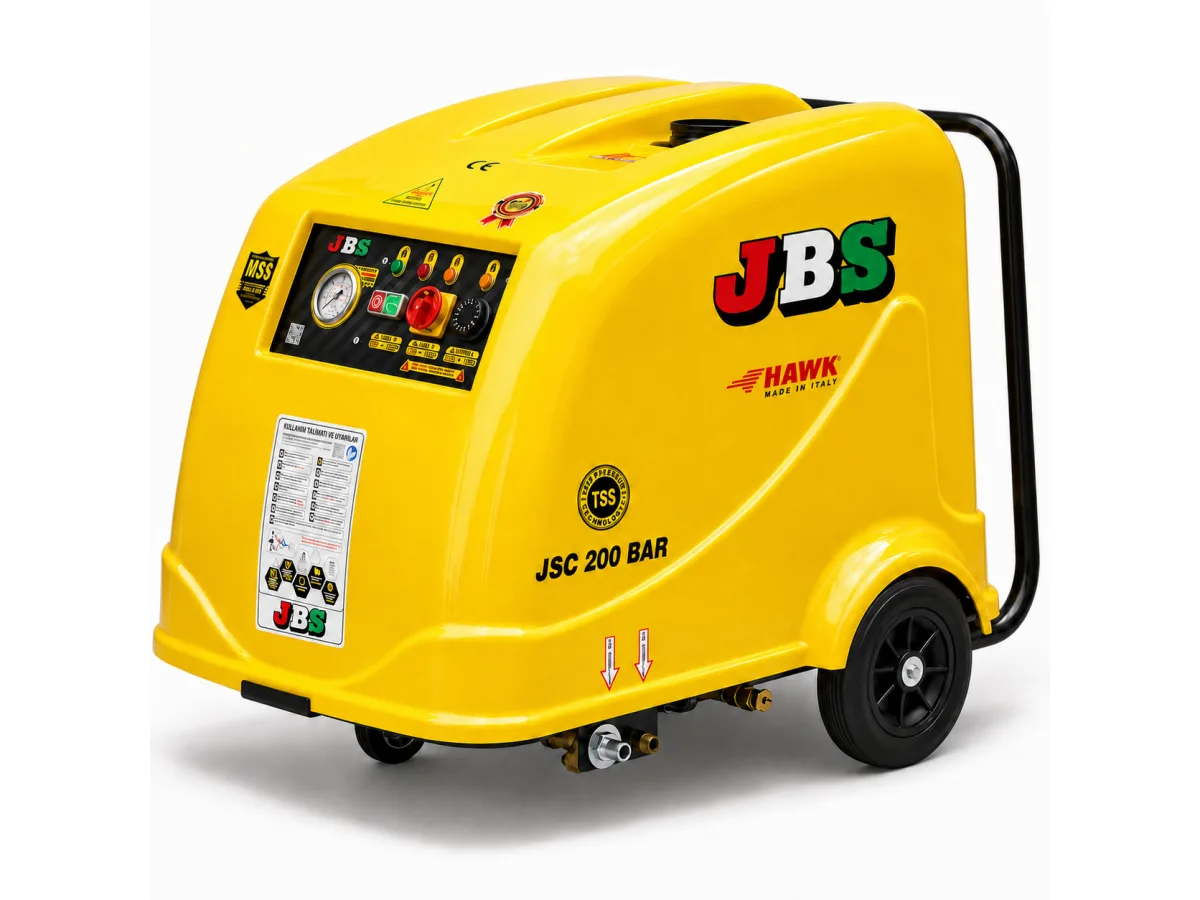
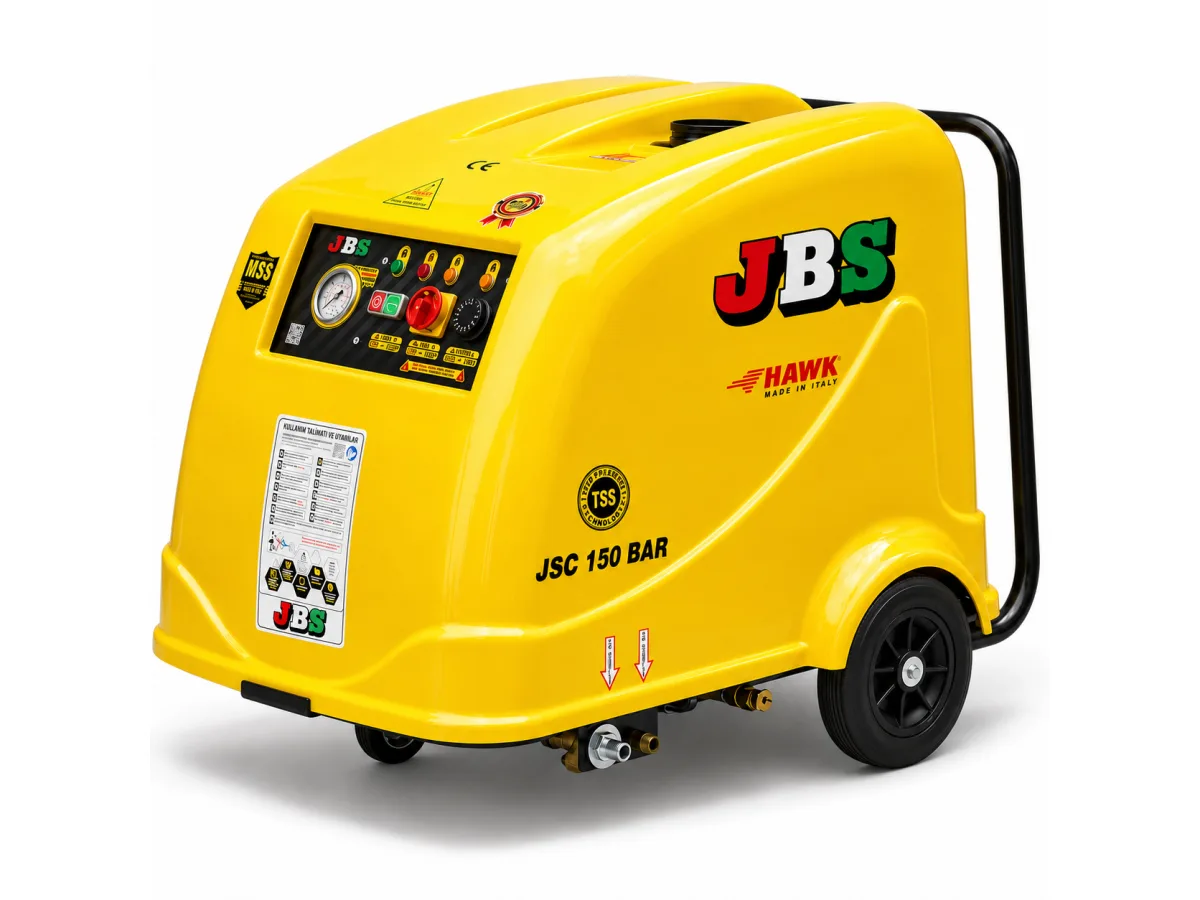
Match pressure to vehicle type. A 150-bar system may suit passenger cars and lighter commercial work. A 200-bar machine provides a stronger balance for regular professional use, while the 250-bar class is better aligned with trucks, fleets and heavy equipment.
Compare flow rate alongside pressure. Water flow determines how effectively loosened contamination is carried away. For commercial productivity, L/min can be as important as maximum bar.
Check the electrical supply. JSC-150 supports single-phase 220 V operation, while higher-capacity models require three-phase infrastructure.
Include heating cost in lifecycle calculations. Fuel consumption, burner maintenance, filters, hoses, guns and pump service all influence the real operating cost of a hot-water pressure washer.
Assess after-sales support. Commercial buyers should confirm availability of pumps, seals, valves, regulators, hoses and heating-system components before placing an order.
The best commercial pressure washer is not necessarily the machine with the highest pressure. It is the unit that matches vehicle mix, contamination, water flow and daily duty cycle.
Share your daily wash volume, vehicle types and site utilities to request a JBS commercial quotation.