JBS Makina
Menu
Language

Air Compressors Booster Compressors

Booster Compressors

JBS Makina booster compressors raise the pressure of air supplied by an existing compressed-air line to meet the requirements of industrial production and specialized processes.

Category Guide

Product Selection Guide and Technical Information

What Is a Booster Compressor?

Booster compressors are professional systems that increase the pressure of compressed air supplied by a primary compressor.

They do not replace standard compressors that draw air directly from the atmosphere. They are added to an existing compressed-air system to supply production points requiring higher pressure.

They can be used for PET bottle blowing, laser cutting, metal processing, test systems, and high-pressure pneumatic applications.

JBS Booster Compressor Model

Model Inlet pressure Outlet pressure Air capacity Motor Recommended use
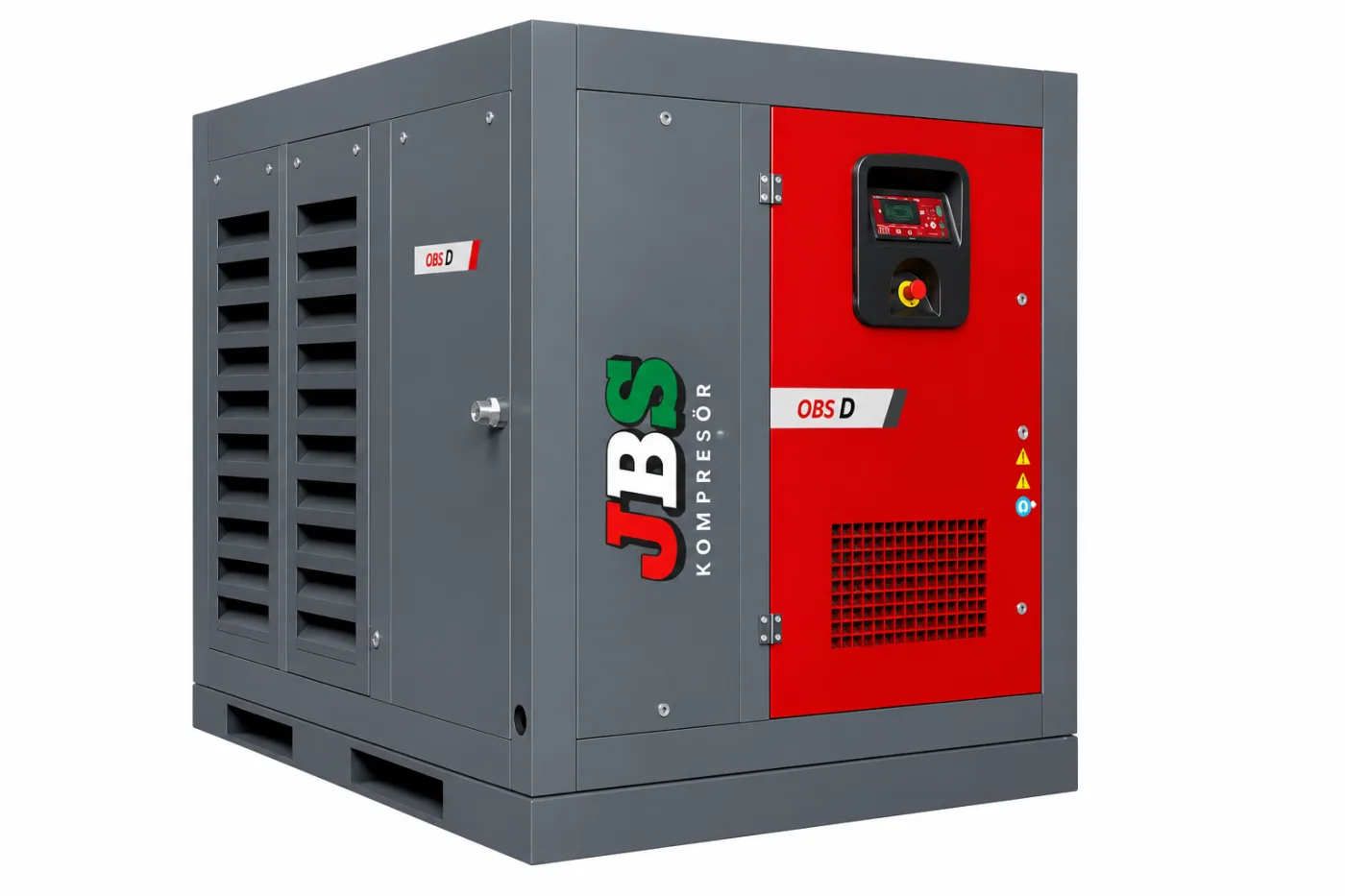
OBS 18-D Screw Booster Compressor 7–12 bar 30 bar 3.78–5.58 m³/min 18.5 kW / 25 HP Industrial applications requiring continuous medium-pressure air

The air capacity of the OBS 18-D varies according to inlet pressure:

  • 3.78 m³/min at 7 bar inlet pressure
  • 4.76 m³/min at 10 bar inlet pressure
  • 5.58 m³/min at 12 bar inlet pressure

The inlet pressure, required outlet pressure, and current technical specifications should be confirmed before ordering.

How Does a Booster Compressor Work?

A booster compressor receives compressed air produced by the primary compressor and raises it to a higher pressure through an additional compression stage.

The primary compressor must provide sufficient air capacity for stable operation. Insufficient inlet pressure or flow rate can reduce booster performance.

Air receivers, dryers, filters, safety valves, piping, and connections must be suitable for the system’s maximum pressure.

Applications

Booster compressors can be used in:

  • PET bottle production and blowing systems
  • Laser-cutting applications
  • Metal-processing facilities
  • Production and testing lines
  • Chemical-treatment facilities
  • Pressure and leak testing
  • High-pressure pneumatic systems
  • Specialized filling and industrial processes

Every application has different pressure, flow-rate, and air-quality requirements. The system should therefore be designed according to the intended process.

Advantages of Booster Compressors

Booster compressors increase pressure only in the section of the facility where it is required. This can reduce the need to operate the entire compressed-air network at high pressure.

Their integration into an existing compressor system allows high pressure to be supplied for specialized processes without replacing the complete air infrastructure.

What Should You Consider When Buying a Booster Compressor?

The following factors should be evaluated before purchasing:

  • Available inlet pressure
  • Required outlet pressure
  • Necessary air flow rate
  • Capacity of the primary compressor
  • Daily operating time
  • Motor power and electrical infrastructure
  • Air-receiver capacity
  • Dryer and filtration requirements
  • Pressure rating of pipes and connections
  • Safety and control systems
  • Technical service and spare-parts support

The model should not be selected according to motor power or maximum pressure alone. Inlet pressure, flow rate, air temperature, air quality, and operating time should be evaluated together.

Booster Compressor Prices

Booster compressor prices vary according to inlet and outlet pressures, air capacity, motor power, control system, dryer, filters, air receiver, and installation scope.

Share the capacity of your existing compressor, inlet pressure, target pressure, and daily air consumption with JBS Makina to receive a technical assessment and current quotation for the appropriate system.

To review the available products, visit booster compressors.
Booster Compressors Use Cases

  • Production Lines Requiring High Pressure - Booster compressors raise air from an existing compressor to a higher pressure for production, testing, filling and special processes where standard compressor pressure is insufficient.
  • PET Bottle Production - Blow-molding and bottle-forming lines may require high-pressure air. Booster compressors support the pressure needed for efficient PET bottle production.
  • Pressure-Boosting and Test Stations - Can support leak testing, strength testing and control processes for tanks, pipelines, valves, equipment and pressure vessels where higher pressure is required.
  • Industrial Production Lines - Some factory machinery and processes require pressure above the standard plant-air level.
  • Gas and Cylinder Filling - Can be used in suitable applications where air or certain gases must be stored at high pressure.

Booster Compressors Advantages

  • Meets High-Pressure Requirements - Raises air from an existing compressor to higher pressure for specialized production and testing processes.
  • Can Be Integrated into an Existing System - Can be added to the current compressed-air line, allowing high-pressure support at selected points without replacing the entire system.
  • Improves Efficiency in PET Bottle Production - Provides controlled high-pressure air for blowing and molding, supporting stable and continuous production-line operation.
  • Suitable for Special Processes - Can support laser cutting, gas filling, laboratory tests, R&D and industrial processes where standard compressor pressure is insufficient.
  • May Provide Energy and Investment Advantages - Using a booster only where high pressure is needed avoids operating the entire plant line at elevated pressure and can create a more efficient system design.

Buying Guide

What to Consider When Buying a Booster Compressor

The selection of a booster compressor should not be based solely on the maximum outlet pressure. The inlet pressure and air flow provided by the existing compressor directly affect the performance of the booster system.

Before purchasing, the following features should be checked:

  • Existing inlet pressure
  • Required outlet pressure
  • Required air flow rate
  • Capacity of the main compressor
  • Daily operating time
  • Motor power and electrical infrastructure
  • Compressed air quality
  • Need for dryers and filters
  • Air tank capacity
  • Pressure class of pipes, valves, and connections
  • Safety and control systems
  • Technical service and spare parts support

The OBS 18 D can increase air with an inlet pressure of 7–12 bar up to 30 bar. Since the air capacity it can provide varies depending on the inlet pressure, the main compressor must be able to supply sufficient flow continuously.

Booster compressors do not replace standard compressors that generate air directly from the atmosphere. They operate by integrating into an existing compressed air system. Therefore, the compressor, tank, dryer, filter, and piping system must be designed together as a complete system.

Related Links

Frequently Asked Questions

Can a Booster Compressor Operate on Its Own?

It generally receives air from an existing compressed-air source and increases the inlet pressure.

Which Values Are Required When Selecting a Booster Compressor?

The inlet pressure, target outlet pressure, required air flow rate, and operating duration should be known.

Is an Air Dryer Necessary?

Depending on the required air quality, drying may be needed before or after the booster compressor.

Share Your High-Pressure Requirement

Provide the inlet and target pressure values to receive a system assessment for the appropriate booster compressor.

Request a Quote

Request a Quote

Request a quote for Booster Compressors

Tell us what you need and our sales team will recommend the right model, capacity and equipment for your application.