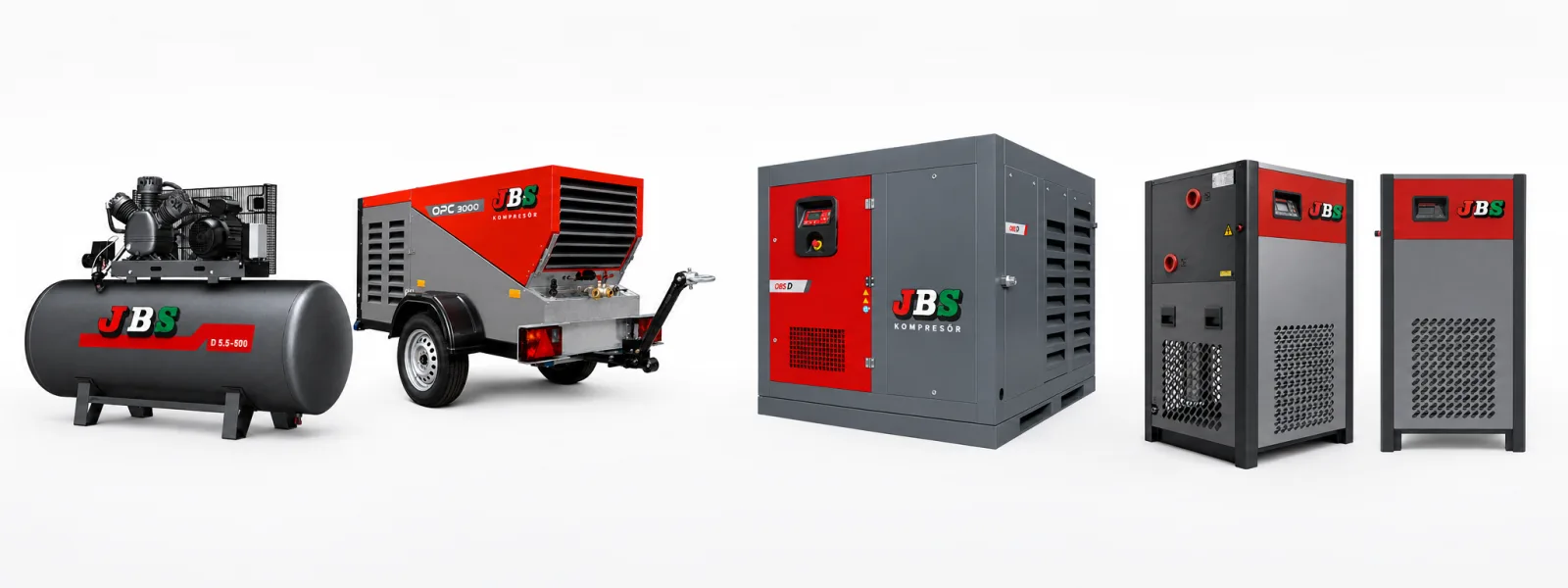
One of the main decisions when buying an air compressor is choosing between a reciprocating and a screw compressor. Both produce compressed air, but their operating principle, continuous-duty capability, air output, noise and investment cost are different.
What Is a Reciprocating Compressor?
A piston compresses air inside a cylinder. These machines are widely used for intermittent workshop tasks and applications where air demand rises and falls during the day.
What Is a Screw Compressor?
Rotary screw elements compress air continuously. Screw compressors are generally designed for longer operating periods and more stable, high-volume air demand.
Which Is Better for Long Working Hours?
For frequent stop-start use, a reciprocating compressor can be economical. For many hours of continuous production, a properly sized screw compressor is usually more suitable.
Air Delivery
Screw compressors commonly provide steadier flow at higher continuous capacity. Piston models are available in many sizes but should not be forced beyond their intended duty cycle.
Energy and Purchase Cost
Reciprocating compressors usually have a lower initial price. Screw systems cost more to purchase but can be more efficient in applications with high, stable air demand.
Maintenance
Piston machines require checks of oil, valves, belts and cylinders. Screw compressors need regular oil, filters and separator maintenance according to the service schedule.
Noise
Many enclosed screw compressors operate more quietly than open reciprocating units, although installation and model design affect actual sound levels.
Which Should You Choose?
Choose according to actual air consumption, daily running hours, required pressure, available power, maintenance capability and budget rather than machine type alone.
Conclusion
Reciprocating compressors suit intermittent demand; screw compressors are generally stronger candidates for long, regular and high-volume compressed-air use.
Recommended Solutions
Related Products and Categories
Common Questions
Frequently Asked Questions
Why Is an Air Dryer a Separate Category?
An air dryer does not produce compressed air; it helps reduce moisture in the air supplied by the compressor.
How Is Air Dryer Capacity Selected?
The compressor's actual air flow rate, operating pressure, inlet temperature, and ambient conditions should be considered.
How Many kW Should a Screw Compressor Be?
Motor power should not be selected in isolation. The total air consumption of the machines in the facility, required pressure, simultaneous usage rate, and possible future capacity increase should be calculated. Compressor selection should be based on the required m³/min flow rate.
How Should an Air Dryer Suitable for the Compressor Be Selected?
The air dryer's capacity should be equal to or greater than the compressor's maximum air flow rate.
What Is a Screw Compressor?
A screw compressor produces compressed air by reducing the volume of air trapped between two intermeshing helical rotors. It is widely used in businesses that require a continuous and stable compressed-air supply.
What Is the Difference Between a Screw Compressor and a Piston Compressor?
Piston compressors are generally suitable for intermittent and lower air demand, while screw compressors are better suited to intensive, long-duration, and consistent air demand. Screw models provide a more continuous airflow and generally lower vibration.
What Is the Difference Between Oil-Injected and Oil-Free Screw Compressors?
In oil-injected models, oil is used in the compression section for cooling, sealing, and lubrication. In oil-free models, no oil is introduced into the compression section. Oil-free models may be preferred in applications requiring high air purity, such as food, pharmaceuticals, chemicals, electronics, and laboratories.
Is an Air Receiver Tank Necessary for a Screw Compressor?
An air receiver tank reduces pressure fluctuations, meets short-term peak demand, and can limit unnecessary compressor cycling. Tank capacity should be determined according to compressor flow rate and the consumption profile.
After How Many Operating Hours Should a Screw Compressor Be Serviced?
The service interval varies according to the brand, model, oil used, operating environment, and usage intensity. The air filter, oil filter, separator, and compressor oil should be replaced according to the manufacturer's maintenance schedule. There is no single universal service interval.