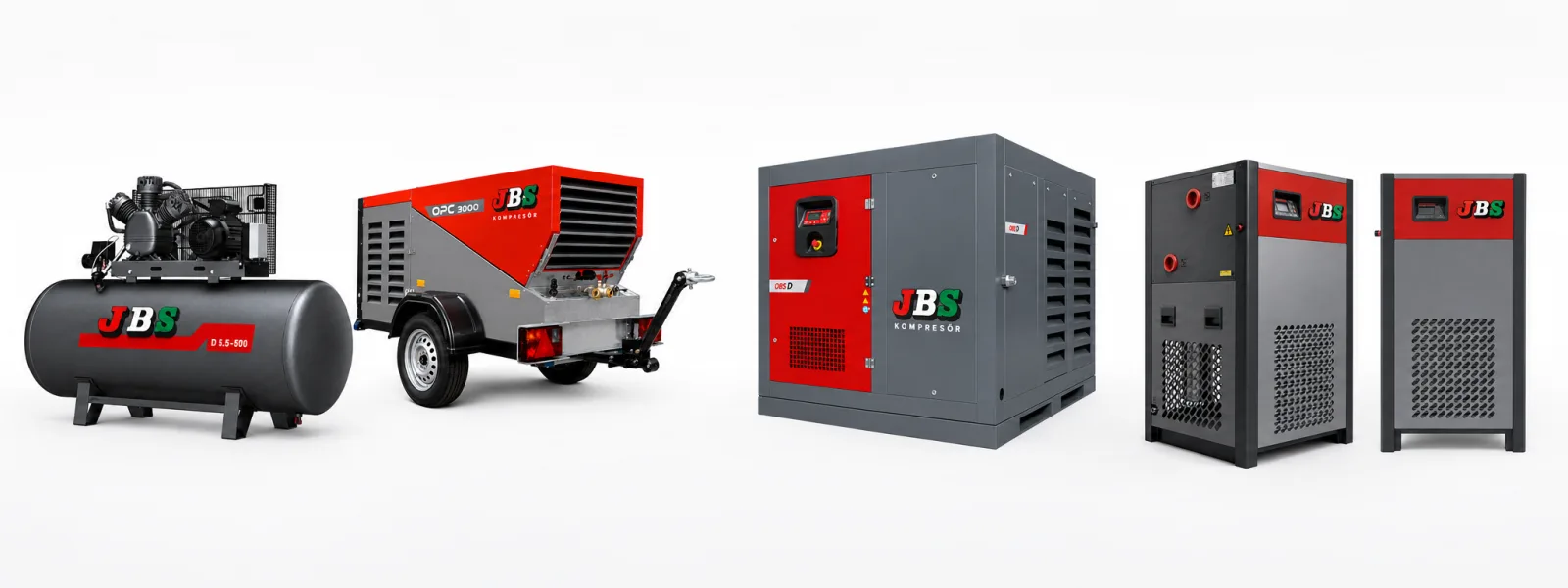
Choosing an air compressor requires more than comparing tank size, motor power or price. The working pressure of the tools, total air consumption, daily operating time and available electrical infrastructure should be evaluated together.
How Large Should the Tank Be?
The receiver tank stores compressed air and helps handle short peaks in demand. A larger tank can reduce frequent cycling, but it cannot compensate for a pump that produces too little air.
Air Delivery Is Critical
Compare the compressor's real delivered air, not only displacement or theoretical intake figures. Continuous air tools require enough output to meet their consumption over time.
Reciprocating or Screw Compressor?
Reciprocating compressors are often suitable for intermittent use and moderate demand. Screw compressors are generally preferred for long, regular operating periods and higher continuous air consumption.
Oil-Lubricated or Oil-Free?
Oil-lubricated models are common in workshops and industrial use. Oil-free air may be required where air contamination must be minimised. Filtration and drying can still be necessary depending on the process.
Check the Electrical Supply
Confirm voltage, phase, cable capacity and protection devices before purchase. Larger compressors may require three-phase power and suitable installation.
Duty Cycle and Noise
A compressor intended for heavy daily use should be designed for the required running time. Noise level and installation location can also affect workplace comfort.
Air Quality and Piping
Moisture separators, filters, dryers, pipe diameter and hose length influence the quality and pressure of air delivered to the tool.
Safety and Maintenance
The receiver, pressure switch, safety valve, drains and gauges must be maintained according to manufacturer instructions. Never exceed the rated working pressure of the tank or system.
Conclusion
The best compressor is selected from the actual air demand and operating pattern, with enough delivery capacity and safe long-term support.
Recommended Solutions
Related Products and Categories
Common Questions
Frequently Asked Questions
How to choose an air compressor?
To choose the right air compressor, total air demand, required pressure level, simultaneously operating equipment, tank capacity and daily working time should be evaluated together. This helps determine the most suitable compressor capacity for the business.
Who Is a Piston Compressor Suitable For?
It may be suitable for service centers, workshops, and small businesses with intermittent compressed-air demand.
When Should a Screw Compressor Be Preferred?
It should be considered for businesses with regular, long-duration, and high compressed-air demand.
Can a Booster Compressor Operate on Its Own?
It generally receives air from an existing compressed-air source and increases the inlet pressure.
Where Is a Portable Compressor Used?
It is used at construction sites, roadworks, mines, mobile maintenance operations, and locations without a fixed compressed-air line.
Is an Air Dryer a Compressor?
No. A compressor produces compressed air, while a dryer helps reduce moisture in the produced air.
What Does a Tank-Mounted Screw Compressor Provide?
It enables the compressor, air receiver tank, and, in some configurations, components such as an air dryer to be installed as a compact unit.