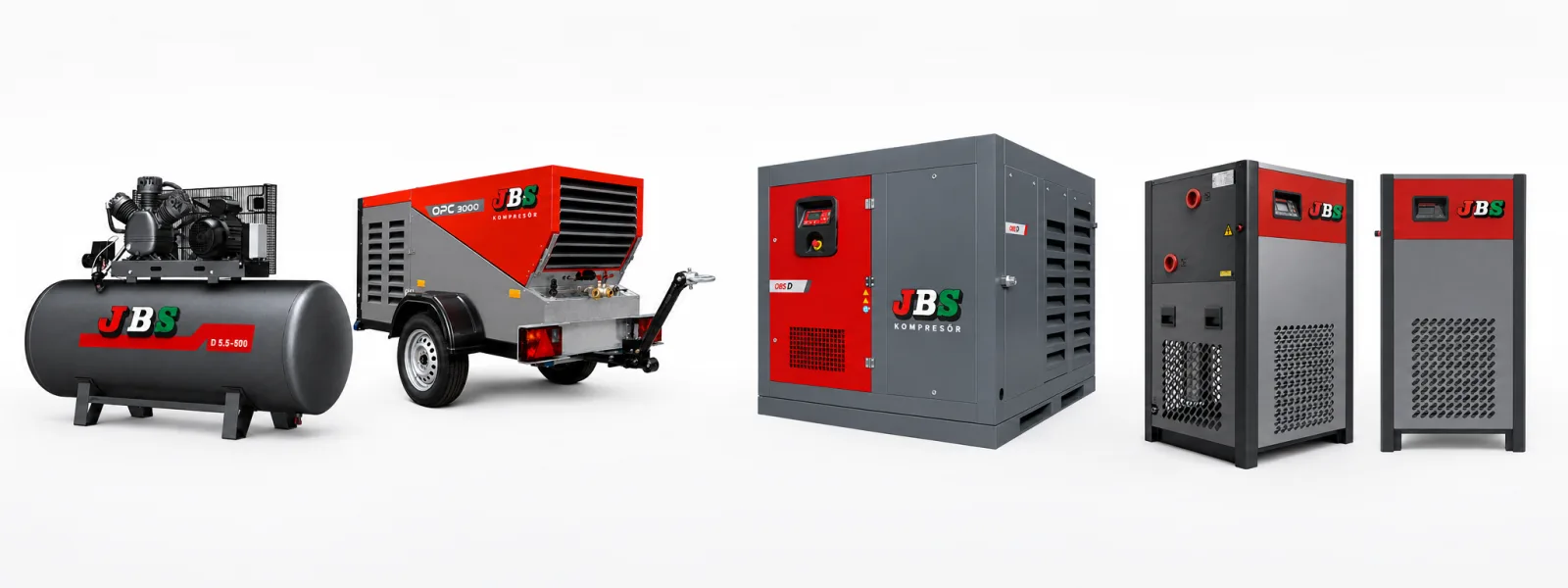
The required compressor tank size depends on the equipment being used, air-flow demand, working duration and how many tools operate at the same time. A 24- or 50-litre compressor that is adequate for tyre inflation may be too small for a spray gun or air sander that consumes air continuously.
What Does Tank Capacity Mean?
Tank volume shows how much compressed air can be stored. It does not by itself show how quickly the compressor can produce replacement air.
24- and 50-Litre Compressors
These compact sizes are useful for light, intermittent tasks such as inflation, blowing and small pneumatic jobs with modest air demand.
100-Litre Compressors
A 100-litre receiver provides more reserve for workshop tasks but the pump output still needs to match the tools being used.
200-Litre Compressors
200-litre systems are common in small and medium workshops, car wash businesses and service applications where several short-demand tools are used during the day.
500-Litre Compressors
Larger receivers can support higher demand and reduce cycling, but they are most effective when paired with sufficient pump or screw-compressor capacity.
Car Wash Applications
Car washes may use compressed air for foam tanks, blow guns, tyre inflation and pneumatic detailing tools. The correct size depends on whether these functions operate simultaneously.
Tank Size vs. Air Delivery
Air delivery is often more important than tank volume for continuous tools. If consumption is greater than compressor output, even a large tank will eventually lose pressure.
Conclusion
Select the compressor by required pressure and real air flow first, then choose a tank volume that supports the operating pattern and reduces excessive cycling.
Recommended Solutions
Related Products and Categories
Common Questions
Frequently Asked Questions
Is a Piston Compressor Sufficient for Intensive Use?
A screw compressor may be more suitable for continuous operation or applications requiring a high air flow rate.
How Many Bar Should a Screw Compressor Be?
Operating pressure should be determined by considering the equipment with the highest pressure requirement and pressure losses in the piping system. Selecting unnecessarily high pressure can increase energy consumption.
How Is Compressor Air Flow Rate Calculated?
The air consumption of all pneumatic equipment that may operate simultaneously is added together. The required flow rate is then determined by considering usage factors, leakage allowance, and future capacity expansion.
Should You Choose a Fixed-Speed or Variable-Speed Screw Compressor?
If air consumption changes throughout the day, a variable-speed compressor may be more suitable. The variable-speed system adjusts motor speed according to demand. If air demand is continuous and stable, a fixed-speed compressor may be preferred.
Can a Screw Compressor Operate Continuously?
Screw compressors are designed for intensive and long-duration operation. However, ambient temperature, ventilation, maintenance condition, and the manufacturer's specified operating requirements must be observed.
Why Does a Screw Compressor Fail to Produce Sufficient Pressure?
Air leaks, a clogged filter, an inlet valve fault, an incorrect pressure setting, a separator problem, or insufficient capacity to meet consumption can cause low pressure.