Marine maintenance is about preparation as well as cleaning
UK marine contractors use water jetting for tasks ranging from removing marine growth and contamination to preparing suitable steel surfaces for inspection or recoating.
The required setup depends on whether the objective is washing, corrosion removal or coating preparation.
These are different processes and should not be specified simply by ordering the highest-pressure pump available.
Heavy plant needs both impact and flushing capacity
Excavators, loaders, quarry equipment and construction machinery can accumulate compacted soil, grease and process contamination.
Pressure breaks stubborn material away, while water flow helps move the loosened contamination off the machine.
For large equipment, hose reach, access around the machine and daily operating hours may be just as important as maximum pressure.
Concrete residue is not the same as hydrodemolition
Water jetting can help remove hardened residue from suitable mixers, plant equipment, forms and robust concrete surfaces.
That should not be confused with structural concrete removal.
Hydrodemolition and controlled removal of concrete are specialist operations that can require substantially different pressures, tooling, robotic equipment and safety controls.
Steelwork and coating maintenance
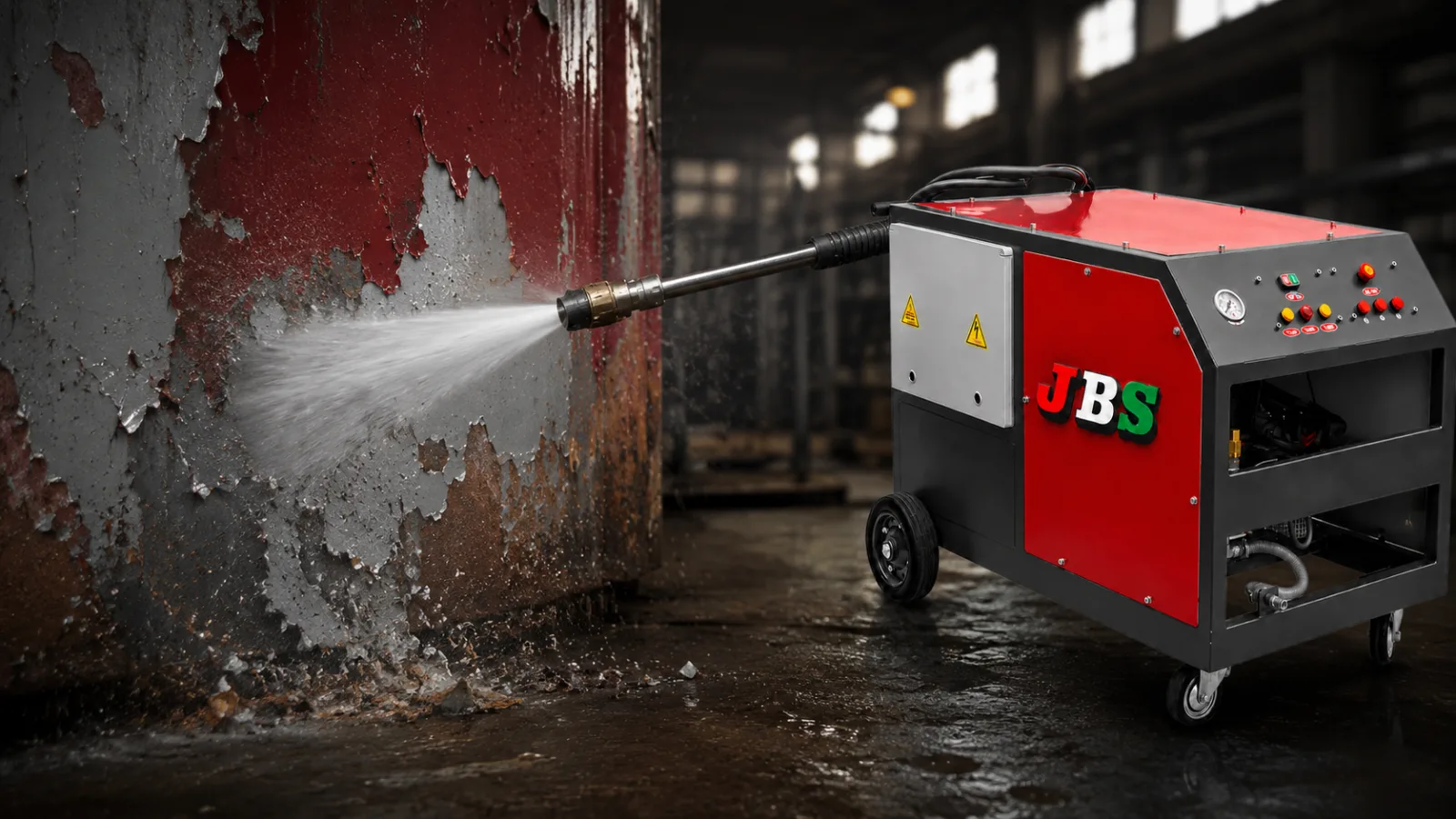
On suitable industrial steelwork, water jetting can remove contamination, loose corrosion and poorly bonded coating material.
Where a defined preparation standard is required before painting, the contractor should specify the required surface condition rather than assume a pressure rating will automatically deliver it.
Nozzle type, traverse speed and stand-off distance all influence the result.
Tank and process-equipment cleaning
External tank surfaces, robust process equipment and suitable industrial areas can benefit from high-pressure cleaning.
Internal tank work is a different risk category because confined-space controls, previous contents, ventilation and site procedures may apply.
Equipment selection must therefore follow the job method statement.
Specify the task before the machine
For high-flow industrial work, review the JBS-500 500 Bar Water Jetting Machine, then compare other pressure/flow configurations in the High-Pressure Water Jetting Machines range. Typical production and maintenance scenarios are covered under Industrial Surface Cleaning, while the Pressure Washer Maintenance and Lifespan guide helps plan long-term equipment availability. Once substrate, contamination, duty cycle and site utilities are defined, request a project-specific quotation from JBS.
Recommended Solutions
Related Products and Categories
Common Questions
Frequently Asked Questions
Can a Water Jet Be Used for Vehicle Washing?
This high-pressure class may not be suitable for standard vehicle surfaces. Its suitability for industrial applications and the intended surface should be technically verified.
Why Does a High-Pressure Water Jet Machine Fail to Build Pressure?
The most common causes include an inadequate water supply, a clogged filter, a clogged or worn nozzle, air trapped in the pump, water leaks, worn seals or gaskets, valve failure, a bypass or regulator problem, or insufficient motor speed.
Can a Water Jet Machine Be Used for Vehicle Washing?
High-pressure water jet machines are not suitable for standard vehicle bodywork. They should be used in a controlled manner mainly on chassis, heavy equipment, construction machinery, and durable surfaces.
Where are high-pressure water jet systems used?
High-pressure water jet systems are used in industrial cleaning, surface preparation, paint and rust removal, tank and pipeline cleaning, shipyards, construction, heavy machinery maintenance, manufacturing plants, and other demanding cleaning applications. Depending on the pressure level and nozzle configuration, they can remove stubborn dirt, coatings, grease, corrosion, and other contaminants from durable surfaces.