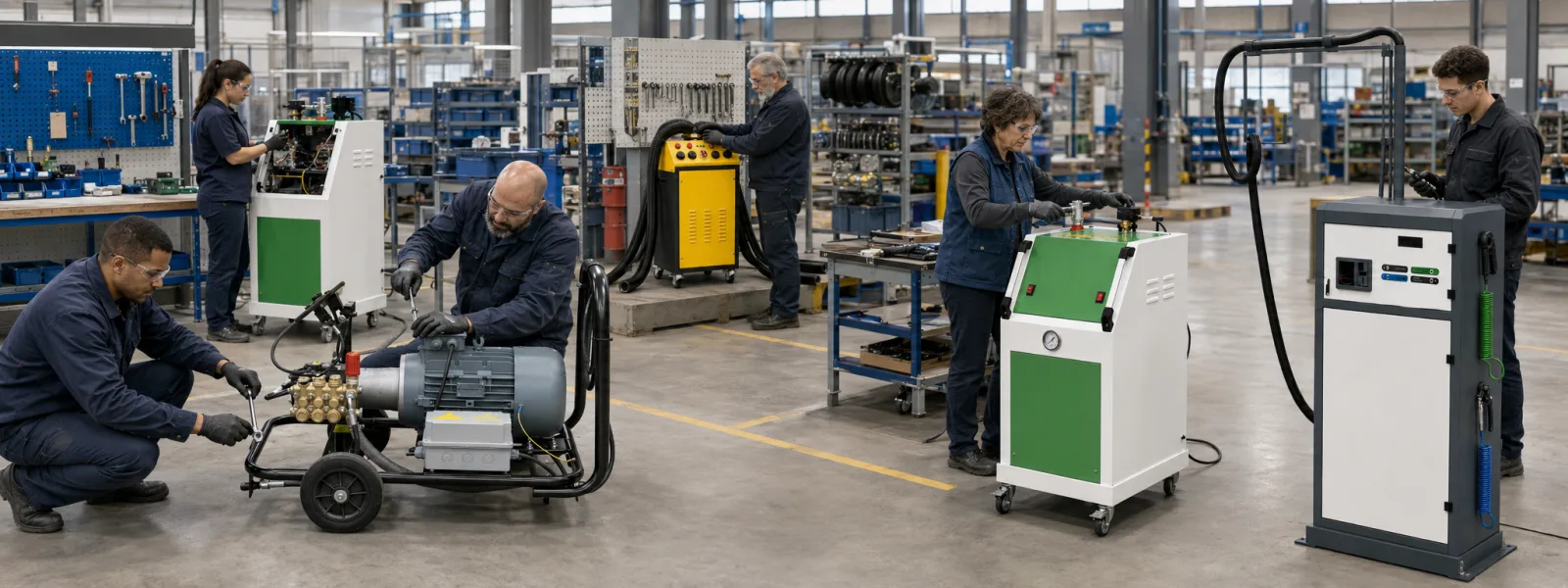
Regular pressure washer maintenance is essential for maintaining performance and reducing unexpected failures in professional car wash businesses.
Pumps, motors, filters, hoses and nozzles should be checked regularly, especially on machines operating for many hours each day.
Correct operation and maintenance of professional car wash machines can help reduce unnecessary wear and maintain stable performance.
Why Is Pressure Washer Maintenance Important?
A pressure washer uses a pump to pressurise water. Problems with water supply, filtration or nozzle selection can therefore directly affect the pump.
Regular maintenance helps:
- Maintain stable pressure
- Reduce pump wear
- Detect leaks early
- Reduce unexpected downtime
- Maintain cleaning performance
Never Operate the Pump Without Water
A pressure washer pump requires an adequate and continuous water supply.
Running the machine without sufficient water can damage internal pump components, seals and valves.
Before starting the machine, always confirm that the water supply is open and provides sufficient flow.
Clean the Water Inlet Filter
Sand, sediment and other contaminants should not be allowed to enter the pump.
Check the water inlet filter regularly and clean it whenever necessary.
A blocked filter can restrict water flow, create unstable pressure and increase stress on the pump.
Professional car wash equipment should therefore always be operated with a suitable and clean water supply.
Check the Nozzle and Spray Gun
The nozzle has a major influence on both pressure and water flow.
A worn or incorrectly sized nozzle can alter system pressure, while a blocked nozzle may place unnecessary load on the pump.
Inspect the nozzle regularly and replace worn components when necessary.
Inspect Hoses and Connections
High-pressure hoses, guns, fittings and connections should be inspected for:
- Water leaks
- Cracks
- Abrasion
- Damaged fittings
- Deformation
Leaks can reduce working pressure and increase unnecessary water consumption.
Damaged high-pressure hoses should not continue to be used.
When Should Pressure Washer Pump Oil Be Changed?
Maintenance requirements vary between pump designs.
If the machine uses a serviceable oil-lubricated pump, check the oil condition and level according to the manufacturer's instructions.
Oil-change intervals should always follow the machine or pump manufacturer's maintenance schedule rather than a universal interval.
What Causes Pressure Fluctuation?
Unstable pressure may indicate:
- Insufficient water supply
- A clogged inlet filter
- A worn nozzle
- Air entering the system
- Hose leaks
- Regulator problems
- Worn pump valves
Persistent pressure fluctuation should be investigated rather than continuing to operate the machine under abnormal conditions.
Long-Term and Winter Storage
Before storing a pressure washer for an extended period, drain water from the machine, hoses and accessories.
Water left inside the system can freeze and expand in cold conditions, potentially damaging pumps, seals and connections.
Store the machine in a clean, dry and frost-free location.
How Can You Extend Pressure Washer Life?
To extend machine life:
- Never operate without water.
- Maintain adequate water flow.
- Keep the inlet filter clean.
- Inspect the nozzle regularly.
- Repair hose and fitting leaks.
- Follow the correct pump-oil maintenance schedule.
- Avoid continuously overloading the machine.
- Protect the system from freezing.
- Do not delay periodic servicing.
Conclusion
Pressure washer lifespan depends not only on machine quality but also on how the equipment is operated and maintained.
Clean water, correct nozzle selection, filter maintenance and proper pump care can help maintain reliable performance.
Explore JBS Makina professional pressure washing machines for different pressure levels and professional operating requirements.
Recommended Solutions
Related Products and Categories
Common Questions
Frequently Asked Questions
How is a pressure washer repaired?
Pressure washer repair starts with identifying the cause of the problem. Common issues include clogged filters or nozzles, water leaks, damaged hoses, pressure loss, pump wear, faulty seals, motor problems, or electrical faults. Basic maintenance may include cleaning filters and nozzles, checking connections, and replacing worn accessories. Repairs involving the pump, motor, electrical system, or high-pressure components should be carried out by qualified technicians using suitable spare parts. Always disconnect the machine from power and release system pressure before inspection.
What Information Should Be Shared for Repair Service?
For car wash machine repair, share the machine model, problem description, pressure performance, water flow issue, photos or videos, usage area and previous service history.