Commercial Pressure Washer Problems: Diagnose Downtime Before Replacing Parts
For a UK wash bay, the most expensive fault is often not the failed component but the time spent replacing the wrong one.
A practical diagnosis starts by deciding whether the problem belongs to the site or the washer.
Is the Fault Site-Side or Machine-Side?
Site-side faults include:
-
inadequate mains-water flow,
-
kinked inlet hose,
-
restricted filter,
-
poor electrical supply,
-
unsuitable extension leads.
Machine-side faults become more likely only after those conditions have been ruled out.
This distinction matters because a healthy pump cannot deliver its rated performance if the site starves it of water.
The Ten-Minute Operator Check
Before arranging commercial pressure washer servicing, an operator can safely record:
-
Does the machine receive enough water?
-
Is the inlet filter clear?
-
Is the nozzle visibly obstructed?
-
Are hoses kinked or leaking?
-
Does the fault occur only with the trigger open?
-
Does the machine stop after heating up?
Nilfisk’s commercial troubleshooting similarly separates inlet-air, mains-water, nozzle and filter faults from worn valves and pump seals.
Repeated Cycling Is a Different Fault from Low Pressure
A washer that starts and stops repeatedly while the trigger is not being operated may have a leak or control-side issue.
That is different from pressure washer losing pressure continuously under load.
The first pattern can point towards the trigger gun, leakage or control system; the second requires flow, nozzle and pump condition to be evaluated.
Pulsing Under Load: Record What Changes
If the hose or gun repeatedly kicks while pressure rises and falls, note whether the problem disappears after the system receives a stable water supply.
Persistent pressure washer pulsing after inlet checks makes pump valves, seals or unloader components more relevant.
Do not compensate by simply increasing the pressure setting.
Do Not Condemn the Pump Too Early
A pressure washer pump failure should not be diagnosed from weak cleaning performance alone.
A worn or incorrect nozzle can reduce effective performance. Air can produce unstable pressure. Restricted inlet flow can mimic internal pump wear.
Only after these are excluded should internal pump components become the main diagnosis.
Build an Uptime Kit Around the Wash Bay
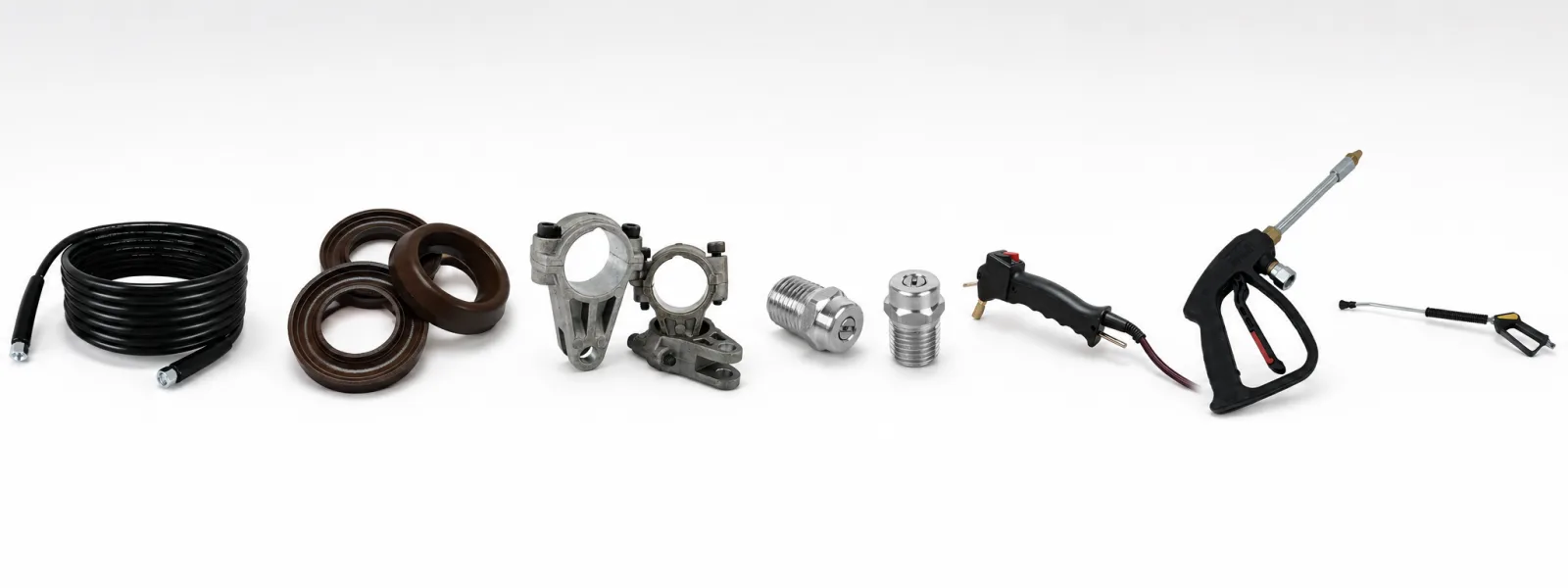
For a commercial site, keeping approved consumables and wear parts available can reduce downtime.
Useful stock may include the correct nozzles, filtration elements, compatible seals where appropriate, hoses and trigger-gun components specified for the equipment.
JBS lists pump, seal, valve, bypass, hose and spray-gun support on its professional product pages.
For regular commercial work, review the JBS JSKT-200 Trigger-Controlled Pressure Washer and compare equipment under Car Wash Machines.
For a focused no-flow diagnosis, read Why Is the Car Wash Machine Not Spraying Water?, or review typical workloads under Car Wash Businesses.
If downtime keeps returning, send the model, fault pattern, inlet-water details and operating hours when you request technical information from JBS Makina.
Recommended Solutions
Related Products and Categories
Common Questions
Frequently Asked Questions
Why is the pressure washer running but not producing pressure?
Insufficient water supply, a clogged filter or nozzle, air entering the system, a regulator problem, or worn pump components can cause a loss of pressure.
Why does the pressure washer keep losing pressure?
Insufficient water flow, nozzle wear, hose leaks, or problems with the pump valves can cause the pressure to fluctuate continuously.
Why does the pressure washer operate loudly or with vibration?
Air entering the pump, insufficient water supply, or problems with the pump valves can cause noisy or vibrating operation.
Why does a pressure washer pump fail?
Running without water, dirty water, insufficient maintenance, prolonged intensive use, and unsuitable operating conditions can cause pump components to wear out more quickly.