What Size Air Compressor Does a Car Wash Need?
Compressed air in a professional car wash can be used for foam systems, blow guns, tyre inflation, detailing tools and other pneumatic equipment.
For a smaller operation with intermittent demand, a receiver-mounted reciprocating compressor can be practical.
However, the receiver size alone does not determine whether the compressor can keep up with the workload.
The critical specifications are:
- Airflow / CFM
- Required PSI or bar
- Receiver capacity
- Duty cycle
- Simultaneous air demand
- Electrical supply
Atlas Copco specifically recommends sizing a compressor primarily around airflow and pressure requirements rather than horsepower or receiver size alone.
200, 300 or 500 Litres?
A 200-litre class receiver can be suitable for a smaller single-bay operation with intermittent compressed-air use.
Moving toward 300 litres provides additional stored-air capacity where blow guns and foam equipment are used more frequently.
A 500-litre receiver can be considered for busier operations or sites with several pneumatic consumers.
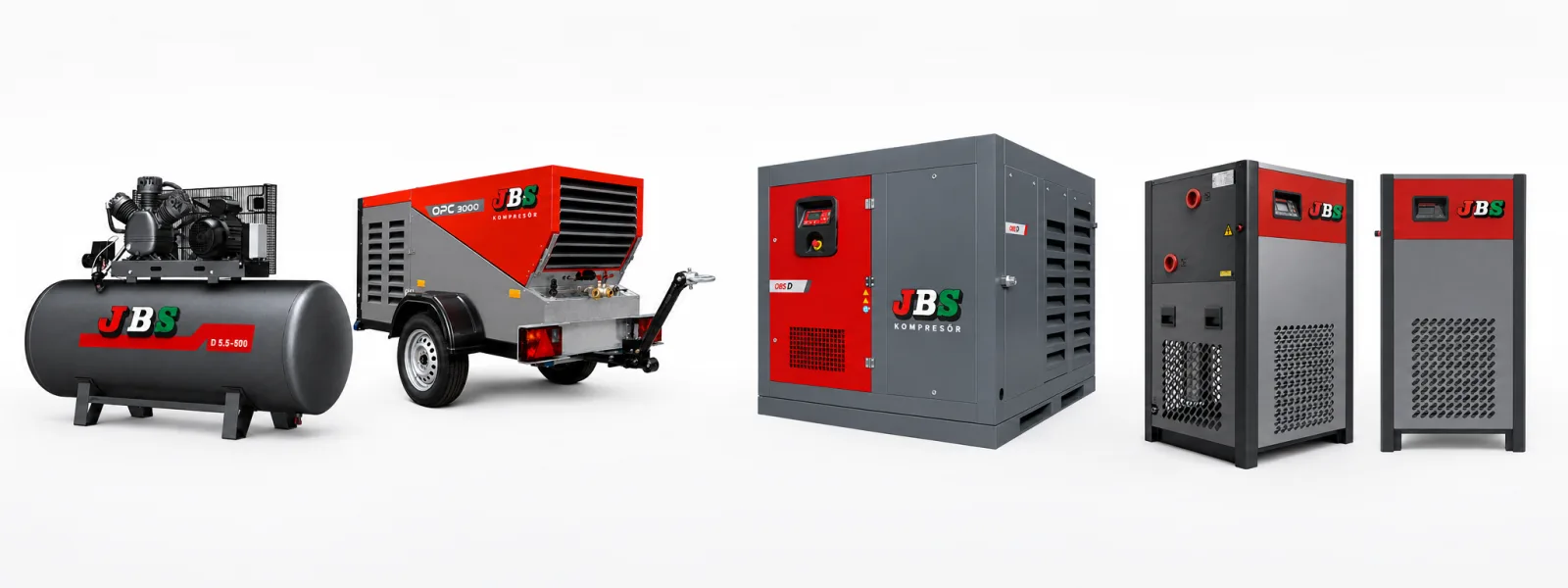
The JBS D-5.5-500 Piston Air Compressor provides a 500-litre receiver, 649 L/min intake capacity, 4 kW / 5.5 HP motor and 7 bar working pressure.
Airflow Is More Important Than Tank Size Alone
A larger receiver provides a bigger temporary air reserve, but it does not increase the compressor pump's actual air-production capacity.
If connected equipment consumes air faster than the compressor can replace it, pressure will eventually fall regardless of receiver size.
This is why professional buyers should calculate the combined airflow requirement of any tools that may operate simultaneously.
Atlas Copco notes that CFM determines whether a compressor can actually power connected tools under load.
Air Compressor for a Foam Tank
Professional foam tanks depend on compressed air to move the chemical-and-water mixture to the foam gun.
JBS offers 60 L and 100 L professional foam tanks, both rated at 5 bar working pressure.
The compressor should therefore provide sufficient airflow while the line pressure is regulated to the safe operating pressure required by the tank.
A 100-litre foam tank does not automatically require a 100-litre compressor receiver. The air demand of the foam equipment and other simultaneous consumers must be calculated separately.
Piston or Rotary Screw Compressor?
Reciprocating compressors are generally suitable for intermittent or variable air demand.
Where compressed air is required continuously throughout the working day, a rotary screw compressor may be more appropriate.
You can compare the complete JBS Air Compressor range, including reciprocating and rotary-screw solutions.
Practical Selection
For a small single-bay car wash, begin by calculating the airflow requirements of the foam tank and blow gun.
For a busier detailing centre or multi-bay facility, add together the airflow of every device that may run simultaneously and include a sensible reserve.
The correct compressor is therefore not simply the model with the largest receiver. It is the compressor capable of supplying the required airflow at the required pressure for the required duty cycle.
Recommended Solutions
Related Products and Categories
Common Questions
Frequently Asked Questions
What is the most important value when choosing an air compressor?
The most important value when choosing an air compressor is the actual air delivery capacity, usually expressed in L/min, m³/min, or CFM at the required working pressure. The compressor must be able to supply enough air for the tools or equipment being used. Motor power, maximum pressure, tank size, and duty cycle are also important, but air delivery capacity is usually the key factor.
How is air compressor capacity calculated?
Air compressor capacity is mainly calculated according to the total air consumption of the connected equipment, usually expressed in liters per minute (L/min), cubic meters per minute (m³/min), or CFM. Add the air consumption of all tools that may operate at the same time and include an additional safety margin, typically around 20–30%. The required working pressure, duty cycle, and air tank size should also be considered when selecting a compressor.
Can a compressor run continuously?
Not every compressor is suitable for continuous operation. For continuous use, a model with a high duty cycle and an appropriate motor and cooling system should be selected. The manufacturer's operating-time instructions must be followed.