Why Commercial Buyers Choose Cold Water Pressure Washers
A commercial cold water pressure washer uses pump pressure to increase cleaning force without heating the water onboard.
For garages, valeting businesses, dealerships and fleet operators, this makes it a relatively straightforward solution for routine exterior cleaning.
UK suppliers such as Kärcher and Kränzle commonly classify these machines by working pressure, water flow, power supply and commercial duty rather than describing them simply as car wash machines.
Where Cold Water Makes Commercial Sense
Cold-water equipment is particularly effective where the main contamination is:
-
road dirt,
-
mud,
-
dust,
-
loose debris,
-
routine vehicle contamination.
For a vehicle valeting operation washing passenger cars throughout the day, adding a heating system may provide little commercial benefit if oil and grease are not major cleaning problems.
That can make cold-water equipment simpler to purchase and operate.
Pressure Alone Does Not Define Cleaning Output
Professional buyers should consider pressure and flow together.
Pressure helps break contamination away from the surface.
Water flow determines how effectively the loosened dirt is carried away.
For this reason, comparing two machines only by their maximum bar rating can produce a poor purchasing decision.
Match the Machine to Vehicle Throughput
A car valeting business washing a modest number of passenger vehicles has a different requirement from a fleet depot cleaning vans and trucks.
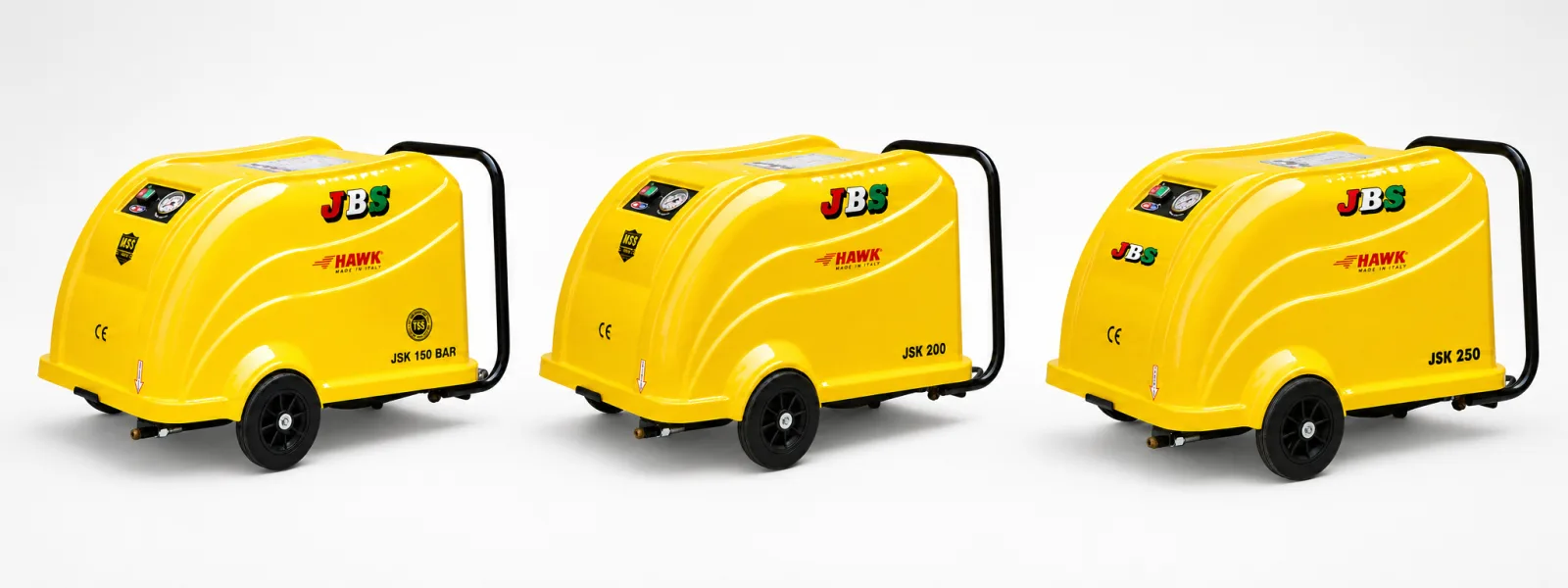
The JBS range therefore covers different capacities.
The JBS commercial pressure washer range includes 150, 200 and 250 bar cold-water options for different workloads.
For lighter professional operations, the 150 bar class combines lower electrical requirements with useful commercial capacity.
Higher-throughput and heavier-vehicle operations may justify higher flow and three-phase equipment.
230 V or Three-Phase?
Electrical supply can eliminate otherwise suitable machines from the shortlist.
A smaller garage or valeting unit may only have single-phase power available.
High-output commercial equipment frequently requires three-phase supply.
Check available electrical infrastructure before ordering rather than adapting the site after purchasing the machine.
When Is Hot Water Worth Paying For?
Heating becomes more relevant when the business regularly removes:
-
engine oil,
-
grease,
-
oily workshop contamination,
-
difficult industrial residue.
Hot water can help break down greasy contamination more effectively.
For general road dirt, however, a properly specified cold-water pressure washer can remain the more economical choice.
Pump and Duty Matter in Commercial Use
An inexpensive pressure washer intended for occasional domestic use is not automatically suitable for a business washing vehicles throughout the day.
Commercial buyers should review:
-
pump construction,
-
operating hours,
-
motor speed,
-
pressure regulation,
-
hose and gun quality,
-
service support,
-
replacement-part availability.
Downtime during a busy trading day can cost more than the difference between two machines.
Choose by Cost per Working Day, Not Maximum Bar
Compare JBS cold water pressure washers, review the wider commercial car wash equipment range, and see practical requirements for Car Wash Businesses. For budgeting and machine comparison, read the Car Wash Equipment Buying Guide. Share vehicle type, daily throughput, power supply and required flow to request a technical quotation.
Recommended Solutions
Related Products and Categories
Common Questions
Frequently Asked Questions
What equipment is required when purchasing a car wash system?
The equipment required for a car wash system depends on the type of operation and service capacity. Common components include a pressure washer, water tank, water pump, vacuum cleaner, air compressor, foam and chemical dosing systems, hoses, spray guns, water treatment or recycling units, and electrical control equipment. Depending on the project, payment systems, steam cleaners, spot-free rinse systems, and drying equipment may also be required.
What determines the price of a car wash machine?
The price of a car wash machine depends on factors such as machine type, working pressure, water flow rate, motor and pump quality, automation level, water treatment systems, included accessories, build quality, installation requirements, and suitability for continuous professional use. Additional features such as payment systems, foam systems, water recycling, remote control, and after-sales support can also affect the total price.
What should you consider when choosing a car wash machine manufacturer?
When choosing a car wash machine manufacturer, you should consider product quality, manufacturing experience, technical specifications, customization options, warranty conditions, spare parts availability, installation support, maintenance services, and after-sales technical support. For professional projects, it is also important to evaluate the manufacturer’s references, export experience, energy and water efficiency, and ability to provide solutions tailored to your business needs.
How do you choose a pressure washer for car washing?
When choosing a pressure washer for car washing, you should consider working pressure, water flow rate, pump quality, motor power, hose length, nozzle options, durability, and ease of maintenance. For professional car wash applications, it is also important to select a machine suitable for frequent use and capable of providing stable pressure without damaging vehicle paint or sensitive surfaces.