Start With the Service Menu
A UK hand car wash, dealership valeting bay and fleet depot should not buy the same equipment package.
Define first whether the site sells:
exterior wash only, interior valeting, full valet, upholstery extraction, steam detailing or fleet cleaning.
The equipment list should follow the paid services.
This prevents capital being tied up in machines that operators rarely use.
Find the Slowest Stage in the Bay
A high-output pressure washer adds little value if the vacuuming stage takes twice as long.
Map the workflow:
pre-wash → foam → pressure rinse → interior vacuum → detailing → handover
and estimate operator minutes at each stage.
The equipment package should keep those stages reasonably balanced.
For UK commercial operations, vehicle turnaround is often a better purchasing metric than simply buying the highest pressure or motor rating.
Pressure Washer: Specify Flow and Duty
The washer should be selected around vehicle mix and productive trigger-on time.
For regular professional vehicle cleaning, compare:
-
working pressure;
-
L/min;
-
pump construction;
-
operating duty;
-
hose reach;
-
electrical requirement;
-
serviceability.
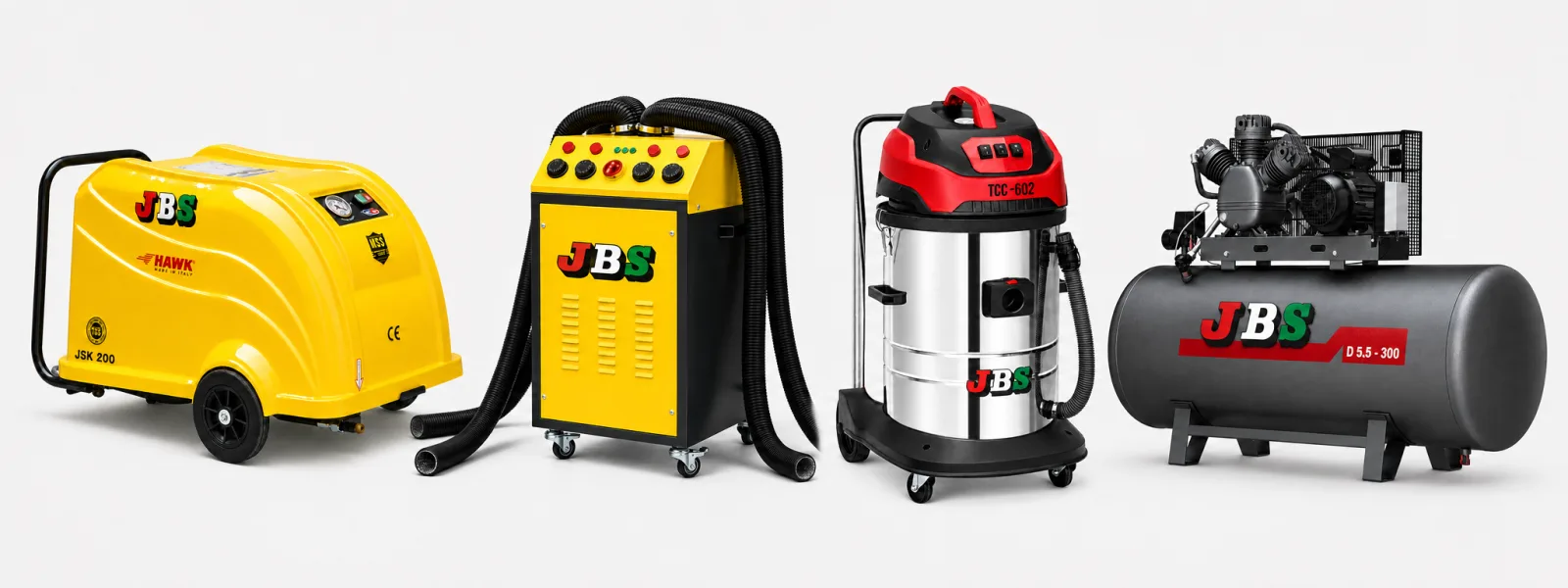
The JBS JSK-200 Commercial Pressure Washer is one option for regular commercial use, but the correct class should follow the workload.
Valeting Requires Different Equipment From Exterior Washing
A basic wash bay may need little beyond pressure washing, foam, vacuum and compressed air.
A valeting business can add:
wet-and-dry vacuuming, upholstery extraction, steam cleaning and drying.
That distinction matters commercially.
Nilfisk's UK automotive range similarly separates pressure washing, commercial vacuums and application-specific accessories rather than treating vehicle cleaning as one machine.
Check Utilities Before Ordering the Package
Equipment specifications should be compared against the actual site.
Confirm:
electrical phase and voltage, available load, incoming water flow, drainage and compressor installation.
International three-phase machinery also requires exact electrical compatibility to be confirmed for the destination.
A good package on paper can become an expensive installation problem if site utilities are ignored.
Price the Downtime Risk
Commercial equipment should be purchased with its maintenance route.
Before ordering, establish:
-
which wear parts are available;
-
pump identification;
-
hose and gun replacement;
-
vacuum consumables;
-
warranty responsibility;
-
technical support.
A package that saves money on purchase but leaves the wash bay unavailable during a minor fault can be the more expensive option over its service life.
Specify the Package From Real Throughput
Review the JBS JSK-200 Commercial Pressure Washer, compare complementary equipment under Car Wash Equipment, and size the installation for your Car Wash Business. Use the Equipment Needed to Start a Car Wash guide to define the complete specification. Provide bay count, vehicle throughput, service menu, utilities and destination to request a commercial JBS quotation.
Recommended Solutions
Related Products and Categories
Common Questions
Frequently Asked Questions
Which washing machine is suitable for car wash businesses?
For car wash businesses, the most suitable washing machine depends on daily vehicle volume, service type, available space, and budget. Professional pressure washers, steam cleaners, self-service wash systems, or automatic car wash machines can be preferred depending on the operation. For intensive commercial use, durability, stable pressure, high water flow, energy efficiency, easy maintenance, and reliable after-sales support are especially important.
How much does it cost to open a car wash in 2026?
The cost of opening a standard professional car wash in a rented shop can range from approximately TRY 1,000,000 to TRY 3,000,000. The amount of renovation required and the machines selected determine the total budget.
What equipment is required when purchasing a car wash system?
The equipment required for a car wash system depends on the type of operation and service capacity. Common components include a pressure washer, water tank, water pump, vacuum cleaner, air compressor, foam and chemical dosing systems, hoses, spray guns, water treatment or recycling units, and electrical control equipment. Depending on the project, payment systems, steam cleaners, spot-free rinse systems, and drying equipment may also be required.
What Size Foam Tank Is Needed for a Car Wash?
Professional car washes generally use 60- or 100-liter foam tanks. The right capacity should be selected according to the number of vehicles washed daily.