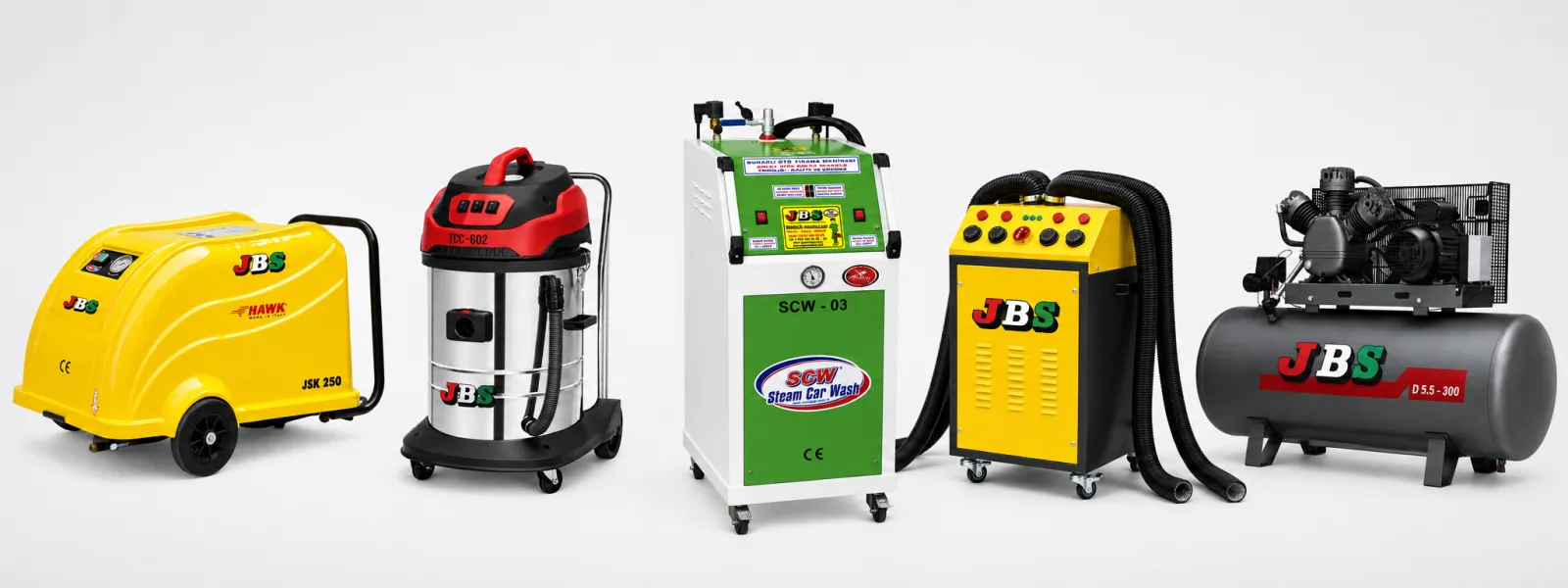
Car detailing equipment prices vary according to the services offered by the detailing business and the capacity of the machines selected.
Interior detailing, upholstery cleaning, steam cleaning, vacuuming and exterior washing require different types of professional equipment.
You can explore JBS Makina professional cleaning machines to compare suitable equipment for vehicle cleaning and detailing operations.
What Equipment Does a Professional Detailer Need?
A professional detailing or valeting business may require:
- Steam cleaning machine
- Wet and dry vacuum cleaner
- Carpet and upholstery extractor
- Professional pressure washer
- Air compressor
- Foam tank
- Polishing equipment
- Drying equipment
- Detailing brushes and accessories
The exact setup should be selected according to daily vehicle volume and the services offered.
What Affects Car Detailing Equipment Prices?
Professional car detailing equipment prices depend on factors such as:
- Motor power
- Suction performance
- Tank capacity
- Pump quality
- Working pressure
- Steam production capacity
- Daily operating time
- Included accessories
- Technical service and spare-parts support
A machine designed for occasional cleaning and one developed for intensive commercial operation should not be compared only by purchase price.
Steam Cleaning and Interior Detailing Equipment
Steam systems can support cleaning of seats, upholstery, door areas and other detailed vehicle surfaces.
For professional steam applications, compare JBS Makina steam car wash machines.
For seats, carpets and textile surfaces, spray-extraction machines and professional wet/dry vacuums can be used to remove dirt and residual moisture.
Pressure Washing Equipment
Professional exterior detailing also requires a pressure washing system suitable for daily vehicle volume.
When selecting a pressure washer, evaluate working pressure together with water flow, motor power and pump quality.
You can compare professional car wash machines according to the requirements of your business.
What Should You Check Before Buying?
Before buying professional detailing equipment, compare:
- Daily vehicle volume
- Machine duty cycle
- Motor and pump quality
- Suction performance
- Electrical requirements
- Spare-parts availability
- Technical service
- Maintenance requirements
The lowest-priced machine may not always offer the lowest long-term operating cost.
Current Car Detailing Equipment Prices
The final cost depends on whether your business requires only interior detailing equipment or a complete setup including pressure washing, steam cleaning, vacuuming and drying.
Compare JBS Makina professional machines and request current pricing according to your daily operating capacity and required services.
Recommended Solutions
Related Products and Categories
Common Questions
Frequently Asked Questions
Who Can Use a Steam Car Wash Machine?
Steam car wash machines can be used by car wash businesses, detailing centers, auto dealerships, service centers, rent a car companies, fleet operators and mobile vehicle cleaning services.
Car Wash Business Equipment Cost Guide
Machine selection directly affects the cost of opening a car wash because pressure washers, steam machines, vacuum systems, foam tanks, compressors, installation needs and service support determine the total investment budget.
Which Machines Should Car Detailing Centers Choose?
Steam car wash machines, upholstery cleaners, wet and dry vacuums, and pressure washers can be considered together for detailing centers. Steam systems are advantageous for interior detailing, door jambs, air vents, and seat rails.
How many cars can a car wash clean per day?
The number of cars a car wash can clean per day depends on the type of system, number of wash bays, washing time per vehicle, staff capacity, opening hours, and customer traffic. A small manual car wash may clean around 20–50 vehicles per day, while self-service or automatic systems can handle significantly higher volumes. For professional planning, daily vehicle capacity should be calculated according to the equipment and expected customer flow.