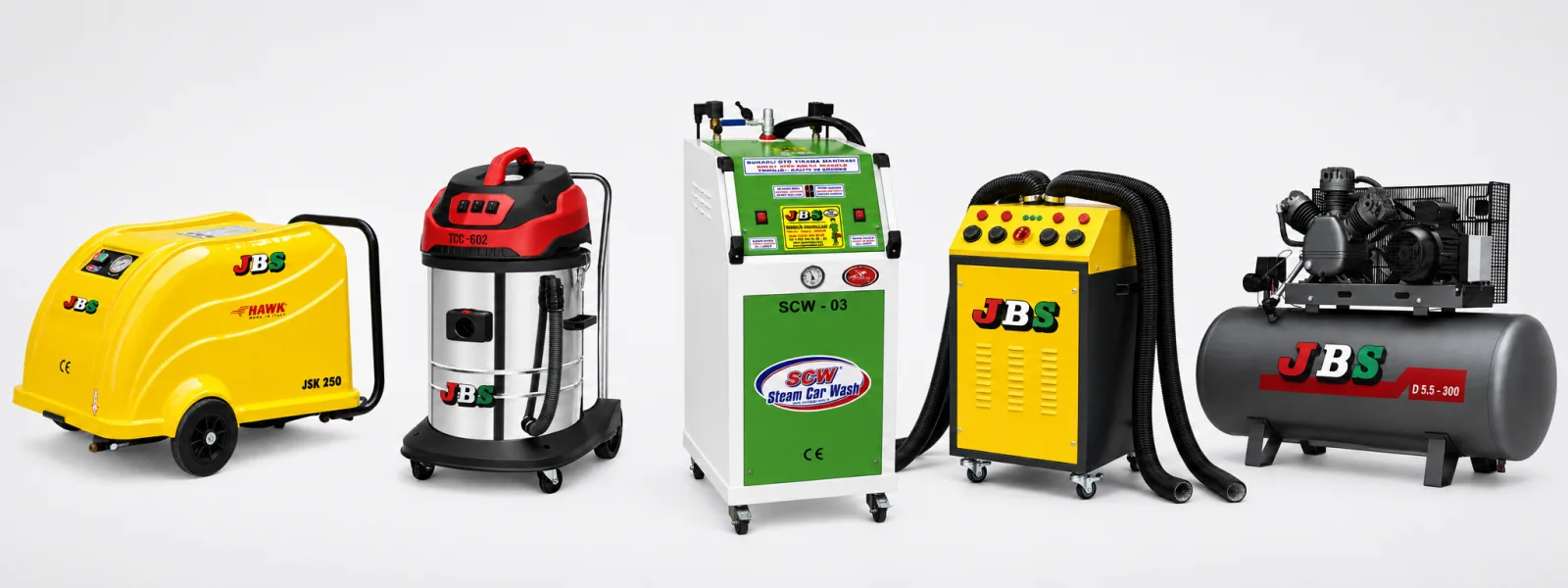
When choosing a car wash machine, you should not focus solely on pressure rating or purchase price. The expected number of vehicles washed each day, water flow rate, pump quality, motor power, and continuous-duty capacity should all be evaluated together.
Pressure Rating
Professional machines operating between 150 and 200 bar are generally preferred for washing passenger cars and light commercial vehicles. Higher pressure does not always provide better cleaning. Incorrect use may damage vehicle paintwork, plastic components, seals, and other sensitive surfaces.
Water Flow Rate
Water flow determines how quickly dirt can be removed from a surface. Between two machines with the same pressure rating, the model with the higher water flow may perform better against heavy dirt. Therefore, the litres-per-minute value should be considered together with the bar rating.
Hot and Cold, Cold-Water, or Steam Cleaning
- Cold-water pressure washers: Suitable for standard exterior vehicle cleaning.
- Hot and cold pressure washers: More effective against oil, grease, and stubborn dirt.
- Steam car wash machines: Suitable for detailed cleaning of seats, upholstery, door jambs, air vents, wheels, and engine compartments.
The correct system should be selected according to the services offered by the business.
Pump and Motor Quality
A durable pump, powerful motor, and high-quality connection components are essential for professional use. If many vehicles will be washed throughout the day, the machine must be designed for intensive or continuous operation. Domestic machines may not withstand the workload of a commercial car wash.
Electrical Requirements
Check whether the machine operates on single-phase or three-phase electricity. Smaller models may use a single-phase supply, while high-capacity professional machines generally require three-phase power. The electrical installation should be checked before purchasing the equipment.
Daily Vehicle Capacity
A small business with one wash bay does not have the same requirements as a busy facility washing several vehicles simultaneously. As daily vehicle volume increases, motor power, pump capacity, water flow, and continuous-duty performance become more important.
Technical Service and Spare-Parts Support
Replacement hoses, guns, nozzles, seals, valves, and pump components should be readily available. A low-cost machine without reliable technical service or spare-parts support may remain out of operation for an extended period after a fault, causing business and revenue losses.
Warranty and Safety Features
Warranty coverage, maintenance requirements, and technical service procedures should be reviewed before purchase. Safety features such as pressure adjustment, a safety valve, thermal protection, and electrical leakage protection should also be checked.
Conclusion
The best car wash machine is the model that matches the business’s daily vehicle capacity and service range. A professional 150–200 bar pressure washer may be sufficient for standard vehicle washing. Hot and cold pressure washers are more suitable for oil and stubborn dirt, while steam systems are ideal for detailed cleaning.
JBS Makina provides professional car wash machines, technical support, and spare-parts solutions for businesses with different operating capacities. Contact us to select the right machine for your business and request a quotation.
Recommended Solutions
Related Products and Categories
Common Questions
Frequently Asked Questions
Choose the Right Steam Cleaner for Your Production Facility
JBS Makina professional steam cleaners can be considered for mold cleaning, production-line maintenance, and cleaning suitable industrial equipment according to different operating requirements.
Should the intended use be determined before purchasing a vehicle washing machine?
Yes. The intended use should be clearly defined before purchasing a vehicle washing machine because the required pressure, water flow, motor power, pump capacity, accessories, and duty cycle can vary depending on the application. A machine used for passenger cars may have different requirements from one used for trucks, construction equipment, industrial cleaning, or mobile washing services. Defining the application helps ensure the correct machine is selected.
Is motor power important when buying a vehicle washing machine?
Yes. Motor power is an important factor because it affects the machine’s ability to drive the pump and maintain stable pressure and water flow during operation. However, motor power should not be evaluated alone. Working pressure, flow rate, pump quality, duty cycle, energy efficiency, and suitability for continuous professional use should also be considered.
Which Is More Important: Water Flow Rate or Pressure?
Both are important. Pressure helps break dirt away from the surface, while water flow helps carry the loosened dirt away.
Is a Higher Water Flow Rate Always Better?
Not always. Flow rate should be balanced with pressure, pump power, and surface requirements. An unnecessarily high flow rate can increase water consumption.