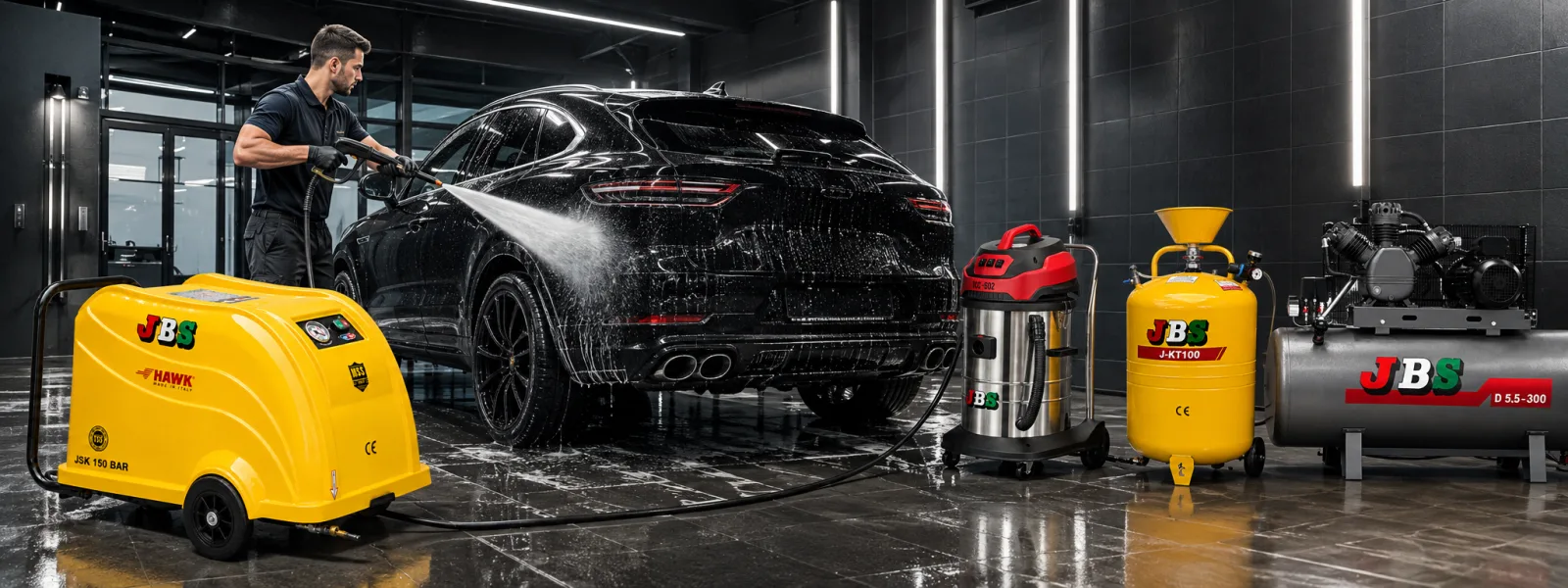
There is no single car wash machine that is best for every business. The right choice depends on the type of vehicle, daily workload, level of dirt and services offered.
JBS Makina provides high-quality cold-water, hot and cold-water, and steam car wash machines designed for professional working conditions. Its wide product range allows businesses to select equipment that matches their capacity and cleaning requirements.
For Standard Vehicle Washing
Cold-water pressure washers are suitable for removing mud, dust and everyday road dirt. They offer a practical and economical solution for professional car washes and vehicle service centres.
When choosing these machines, water flow, adjustable working pressure and pump quality should be considered—not maximum pressure alone.
For Oil and Heavy Dirt
Hot and cold-water car wash machines can be used to remove oil, grease and stubborn dirt. Hot water helps loosen these contaminants and makes the cleaning process easier.
These machines may be more suitable for businesses cleaning trucks, construction equipment, engine compartments and industrial machinery.
For Detailed Interior and Exterior Cleaning
Steam car wash machines can be used on seats, upholstery, door gaps, wheels, engine compartments and difficult-to-reach areas. Their controlled steam output makes them suitable for detailing centres, vehicle services and professional car care businesses.
How Should the Best Machine Be Selected?
The following features should be evaluated together:
- Adjustable working pressure
- Water or steam flow rate
- Motor and pump quality
- Hot or cold-water operation
- 220 V or 380 V electrical connection
- Daily operating time
- Number of spray guns used simultaneously
- Warranty, technical service and spare-parts support
Why Choose JBS Makina?
JBS Makina car wash machines are offered with the intensive requirements of professional businesses in mind. High-quality equipment, different capacity options and a wide model range provide reliable solutions for long-term operation.
Machine selection is based not only on high pressure but also on cleaning performance, operating intensity, electrical infrastructure and running costs. Technical support and spare-parts availability also help businesses maintain efficient operation.
Conclusion
Cold-water pressure washers are suitable for standard exterior washing, hot and cold-water machines for heavy and oily dirt, and steam car wash machines for detailed interior and exterior cleaning.
The best car wash machine is one that matches your daily vehicle capacity, uses quality components and is designed for extended operation. Explore JBS Makina products and receive technical support to select a professional and reliable solution for your business.
Recommended Solutions
Related Products and Categories
Common Questions
Frequently Asked Questions
Which washing machine is suitable for car wash businesses?
For car wash businesses, the most suitable washing machine depends on daily vehicle volume, service type, available space, and budget. Professional pressure washers, steam cleaners, self-service wash systems, or automatic car wash machines can be preferred depending on the operation. For intensive commercial use, durability, stable pressure, high water flow, energy efficiency, easy maintenance, and reliable after-sales support are especially important.
What Should You Consider When Choosing a Car Wash Machine?
Learn what to consider when choosing a car wash machine, including pressure, water flow, pump quality, power requirements, accessories, service support and business usage needs.
Car Wash Business Equipment Cost Guide
Machine selection directly affects the cost of opening a car wash because pressure washers, steam machines, vacuum systems, foam tanks, compressors, installation needs and service support determine the total investment budget.