What Makes a Vacuum Suitable for Professional Valeting?
For a UK valeting business, the useful question is not “how many watts does it have?”
It is how quickly can the operator clean the next vehicle without losing suction or repeatedly stopping to empty the machine?
Commercial wet-and-dry vacuums are therefore bought around workflow rather than domestic-style headline power figures.
Start with Turnaround Time
A valeting bay handling a few booked vehicles has a different requirement from a hand car wash processing interiors throughout the day.
More vehicles usually mean greater importance for:
tank capacity + hose reach + filtration + sustained operating performance.
A larger tank can reduce emptying interruptions, while a suitably long hose allows an operator to reach front seats, rear footwells and the boot without constantly moving the vacuum.
Airflow and Suction Tell You More Than Wattage
UK professional manufacturers publish airflow and suction separately because they describe different parts of vacuum performance.
Airflow helps carry sand, hair and debris through the hose.
Sealed suction or vacuum pressure indicates the system's ability to lift material.
Motor input alone does not tell you either figure.
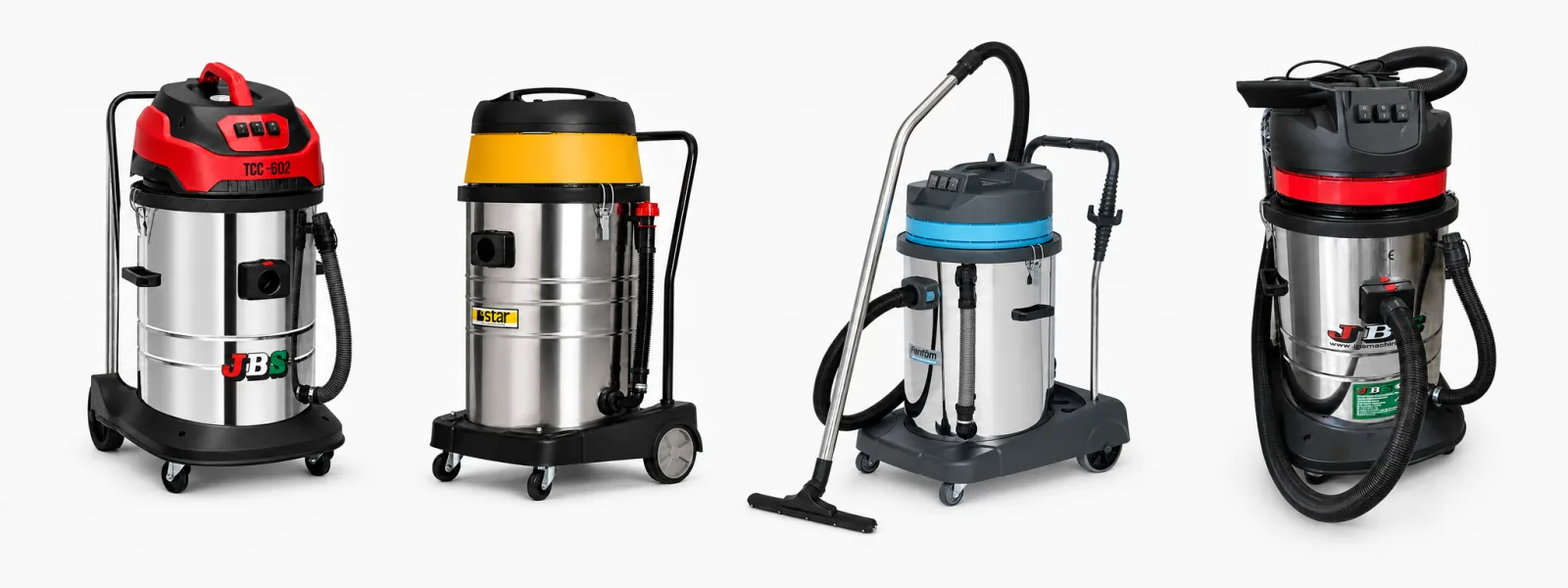
The JBS-603 commercial wet and dry vacuum is specified at 159 L/s airflow, 2,000 mm H₂O suction and a 70-litre tank, alongside its three-motor configuration.
Wet Pickup Is Not Upholstery Extraction
A wet-and-dry vacuum can recover suitable liquids.
That does not make it a carpet or upholstery extractor.
A professional extractor adds cleaning solution to the textile and recovers the dirty liquid afterwards. A wet vacuum simply collects material already present.
A valeting centre selling interior shampoo or deep-seat cleaning should therefore plan vacuuming and extraction as separate stages.
Noise and Filtration Matter During Trading Hours
A machine can have strong suction and still be awkward for a customer-facing business.
Consider:
-
operating noise,
-
filter access,
-
replacement filter availability,
-
cable length,
-
hose storage,
-
wheel quality,
-
ease of emptying.
These factors become increasingly important where staff use the machine repeatedly during an eight-hour trading day.
Operator-Used or Customer-Operated?
A staffed valeting bay generally benefits from a mobile wet-and-dry machine.
A petrol station or self-service wash can create a separate paid interior-cleaning service with a fixed vacuum station.
That changes the buying criteria completely: payment method, cabinet durability, timer control and hose management become as important as suction.
Specify the Vacuum Around Your Valeting Throughput
Review the JBS-603 Wet and Dry Vacuum, compare the full Industrial and Car Vacuum Cleaner range and see how the equipment fits an Auto Detailing Centre. For wider equipment planning, read the Car Wash Equipment Buying Guide, then provide daily vehicle throughput and interior-cleaning services to request a technical quotation.
Recommended Solutions
Related Products and Categories
Common Questions
Frequently Asked Questions
What is a car vacuum cleaner?
A car vacuum cleaner is a cleaning machine designed to remove dust, dirt, sand, crumbs, hair, and other debris from vehicle interiors. Professional models may also offer wet and dry vacuuming, large tank capacity, powerful suction, and durable construction for frequent use in car washes and detailing centers.
Where are car vacuum cleaners used?
Car vacuum cleaners are commonly used in professional car washes, detailing centers, service stations, car dealerships, rental car companies, garages, and self-service car wash areas. They are designed to clean seats, carpets, floor mats, trunks, and other interior surfaces quickly and efficiently
What is the difference between an industrial car vacuum cleaner and a household vacuum cleaner?
An industrial car vacuum cleaner is designed for frequent, intensive, and professional use. It usually offers stronger suction power, a larger tank, more durable components, and better performance for dust, sand, liquids, and heavy dirt. Household vacuum cleaners are generally intended for lighter and less frequent cleaning, making them less suitable for professional car washes and detailing businesses.
What is a wet and dry car vacuum cleaner used for?
A wet and dry car vacuum cleaner is designed to remove both dry dirt and liquids from vehicle interiors. It can clean dust, sand, crumbs, mud, spilled drinks, and moisture from seats, carpets, floor mats, and other surfaces. This makes it especially useful for professional car washes and detailing businesses.
What is the blower function on a car vacuum cleaner used for?
The blower function allows a car vacuum cleaner to blow air instead of only suctioning. It is useful for removing dust, dirt, leaves, and debris from hard-to-reach areas such as air vents, seat rails, gaps, and corners. It can also help speed up drying after vehicle cleaning.