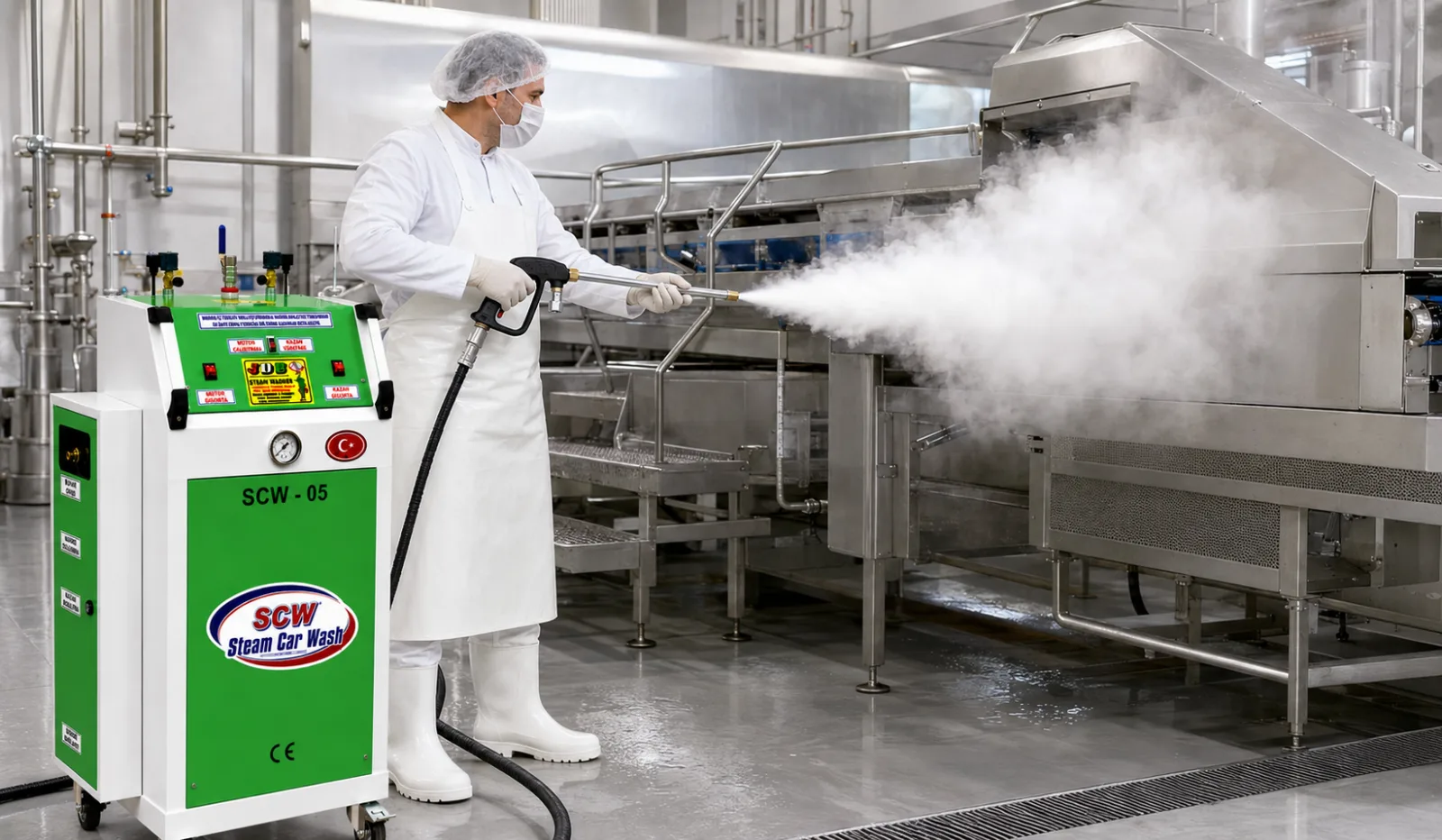
Cleaning in food production is essential for product safety, process continuity and business reputation. Grease, protein, starch, sugar and dried product residues can create areas where contamination accumulates. Professional steam cleaning uses controlled heat and moisture to soften these residues and support their removal from suitable surfaces.
Cleaning, Disinfection and Sterilisation Are Different
Steam can support hygienic cleaning, but a hot surface is not automatically disinfected or sterilised. Effective hygiene depends on pre-cleaning, temperature, contact time, surface compatibility, removal of residues and verification under the facility's hygiene plan.
Advantages of Steam Cleaning
- Helps loosen grease and dried product residues
- Can reduce the amount of liquid water used
- Reaches joints, corners and difficult areas
- Can leave less free water on suitable surfaces
- May reduce chemical use in selected cleaning steps
Where Can Steam Be Used?
Potential applications include stainless-steel equipment, suitable parts of production machinery, racks, ovens, floors, joints and accessible sections of conveyor systems. Electrical and heat-sensitive components require protection.
Which Food Businesses Can Use It?
Steam cleaning can be considered in meat, poultry and fish processing, dairy plants, bakeries, beverage filling operations, industrial kitchens and catering production facilities.
Recommended Cleaning Process
- Stop or isolate equipment as required.
- Remove loose and heavy residues.
- Test material compatibility.
- Apply steam with controlled temperature, distance and contact time.
- Remove loosened contamination and condensate.
- Complete any required sanitising step and verify the result.
HACCP and Hygiene Procedures
Steam should be integrated into the site's documented hygiene and HACCP procedures rather than treated as a replacement for all chemicals or sanitation steps.
Conclusion
Steam cleaning is a useful professional method in food facilities when equipment design, surface compatibility, hygiene validation and worker safety are considered together.
Recommended Solutions
Related Products and Categories
Common Questions
Frequently Asked Questions
Can steam cleaning replace disinfection?
Steam cleaning should not automatically be considered a substitute for disinfection in every application. On food-contact surfaces, the facility's cleaning, rinsing, and sanitizing procedures must still be completed.
Steam Car Wash Machines for Businesses
Steam car wash machines are suitable for car wash businesses, auto detailing centers, car dealerships, service centers, rent a car companies, fleet operators and mobile vehicle cleaning services.
How to Choose the Right Steam Car Wash Machine
The most important criterion when choosing a steam car wash machine is matching the machine’s capacity, steam performance, working time, power requirements and accessory support with the business’s actual cleaning needs.
Can the steam system be used for vehicle interior cleaning?
Yes. Steam systems can be used for vehicle interior cleaning. They are effective for cleaning seats, carpets, door panels, dashboards and hard-to-reach areas while using less water. The steam pressure and temperature should be adjusted according to the surface to avoid damaging sensitive materials.
How do you start a mobile car wash business with a steam cleaner?
A suitable vehicle, a professional steam cleaner, power and water supplies, cleaning equipment, and a safe operating plan are required. Local permits, insurance requirements, and environmental regulations should also be checked.