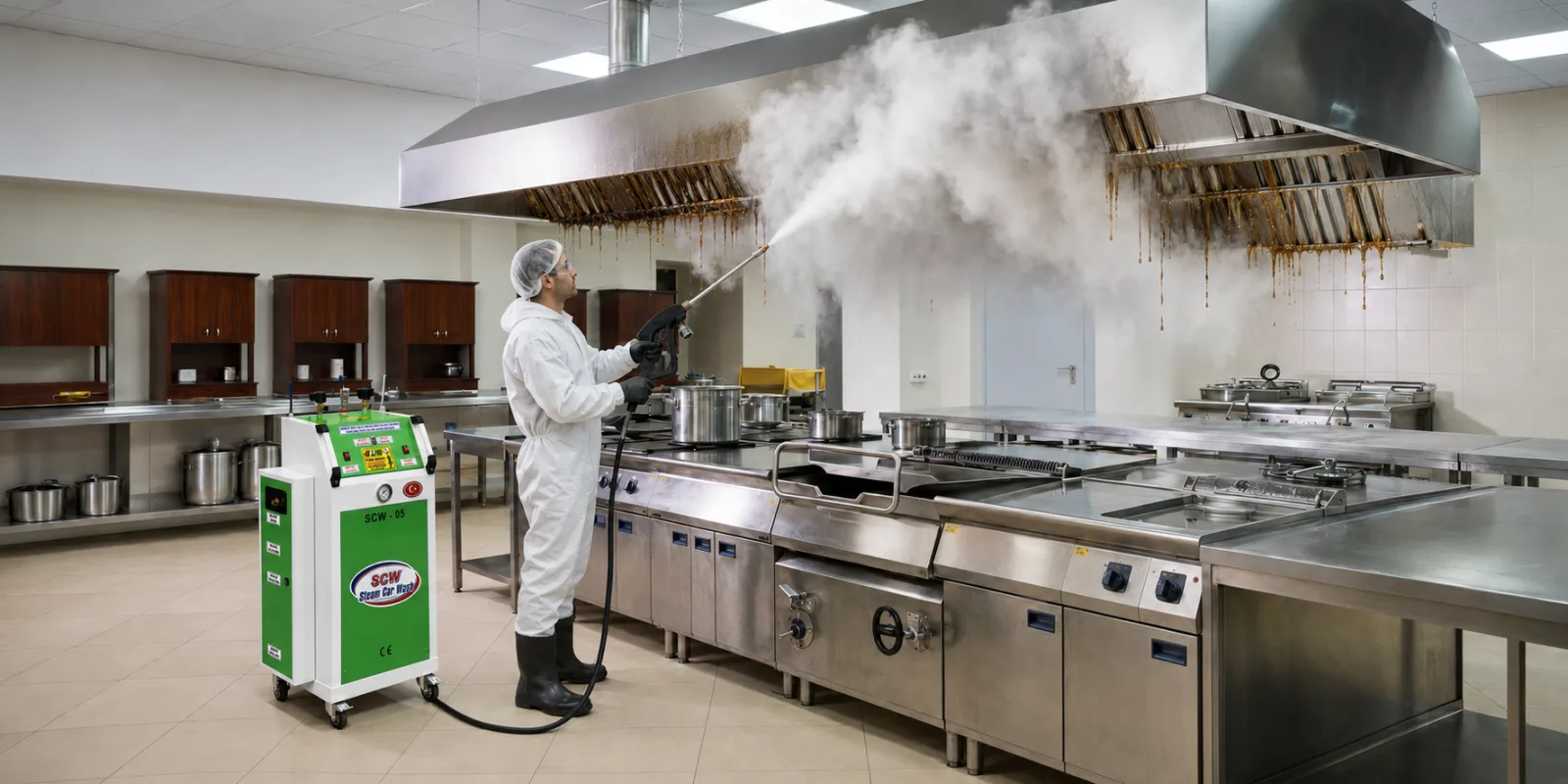
Industrial Steam Cleaning Should Be Designed Around Downtime
For a manufacturing plant, engineering workshop or industrial cleaning contractor, the key question is not simply whether steam removes grease.
The commercial question is whether the cleaning method can deliver the required result inside the available maintenance window.
That changes how industrial steam equipment should be specified.
Map the Contamination Before Selecting the Machine
Oil films, machining coolant, polishing compound, adhesive, food residue and carbonised grease behave differently.
A plant should first identify:
-
what the contamination is,
-
where it accumulates,
-
which surfaces are temperature-sensitive,
-
whether residue must be collected,
-
how long the equipment can remain offline.
UK supplier Turbex, for example, positions industrial steam around manufacturing contamination including oils, lubricants, polishing compounds and swarf rather than presenting steam as one universal cleaning method.
Isolate Machinery Before Steam Is Introduced
Cleaning should begin only after the equipment has been made safe under the site's maintenance procedures.
Electrical cabinets, exposed connectors, sensors, control hardware and moisture-sensitive components should be protected from direct steam.
Loose swarf and production debris should also be removed first so the steam can work on bonded contamination instead of wasting operator time moving solid waste.
Steam Output Matters More Than a Headline Pressure Figure
Maximum pressure is easy to compare on a quotation, but industrial productivity is also affected by how much steam the machine can sustain over time.
Ask suppliers about:
steam output, recovery under continuous use, refill arrangement, warm-up time, simultaneous gun operation and the electrical supply needed to maintain performance.
These parameters become increasingly important when the machine is expected to work through a full maintenance shift.
Where Steam Adds the Most Value
Industrial steam is particularly useful on suitable:
machine housings, metal components, workshop equipment, detailed joints, stainless surfaces and production-line areas where grease or oily residue has bonded to the surface.
For larger external surfaces covered in heavy mud or bulk contamination, high-pressure or hot-water washing may still be the faster process.
Steam works best when it is allocated to the jobs where heat and controlled moisture provide an operational advantage.
JBS groups these heavy-duty applications under Industrial Surface Cleaning.
Food Production Needs a Validated Cleaning Programme
Steam can be useful around stainless-steel machinery, conveyor areas and difficult details in food production.
However, cleaning with steam should not automatically be described as validated sanitation.
Food-contact equipment must remain subject to the site's HACCP, CIP, sanitation and manufacturer-approved procedures. The JBS industrial steam-cleaning guide for food-processing plants covers this distinction in more detail.
Selecting a Heavy-Duty JBS Configuration
For applications requiring higher temperature and intensive equipment cleaning, the JBS SCW-05 provides 15 bar steam pressure, 170–210°C operation, a 33-litre tank, dual guns and 380 V three-phase power.
That makes its purchasing logic different from a compact interior-detailing steam cleaner.
A buyer should evaluate it around machinery type, daily run time, two-operator requirement, available three-phase supply and service support.
Other configurations can be compared in the JBS Steam Car Wash and Professional Steam Cleaner range.
For a project-specific recommendation, provide the contamination type, equipment to be cleaned, shift pattern, operator count and electrical infrastructure when you request a quotation from JBS Makina.
Recommended Solutions
Related Products and Categories
Common Questions
Frequently Asked Questions
Who Can Use a Steam Car Wash Machine?
Steam car wash machines can be used by car wash businesses, detailing centers, auto dealerships, service centers, rent a car companies, fleet operators and mobile vehicle cleaning services.
Steam Car Wash Machines for Businesses
Steam car wash machines are suitable for car wash businesses, auto detailing centers, car dealerships, service centers, rent a car companies, fleet operators and mobile vehicle cleaning services.
How to Choose the Right Steam Car Wash Machine
The most important criterion when choosing a steam car wash machine is matching the machine’s capacity, steam performance, working time, power requirements and accessory support with the business’s actual cleaning needs.