“Industrial” Is About Duty, Not Just Pressure
UK buyers are more likely to encounter the terms commercial pressure washer or heavy-duty pressure washer than “industrial car wash machine”.
That distinction matters for SEO and for procurement.
A machine becomes relevant to heavy commercial work when it can support repeated cleaning cycles, larger vehicles and long operating periods without the wash bay constantly stopping for recovery, maintenance or repairs.
Calculate the Shift Before Choosing the Machine
Start with the working day.
A useful fleet specification might be:
40 vans per day / two washing periods / outdoor bay / three-phase available / road film and mud / occasional grease.
That tells a supplier far more than “we need 250 bar”.
The key buying question is how much cleaning capacity the site needs per shift.
Flow Rate Becomes More Valuable as Vehicles Get Larger
A fleet depot may wash vans, buses, trucks or plant equipment with substantially more surface area than a passenger car.
Once contamination is loosened, it has to be rinsed away.
That is why commercial UK machines are routinely specified with both working pressure and litres per minute or litres per hour.
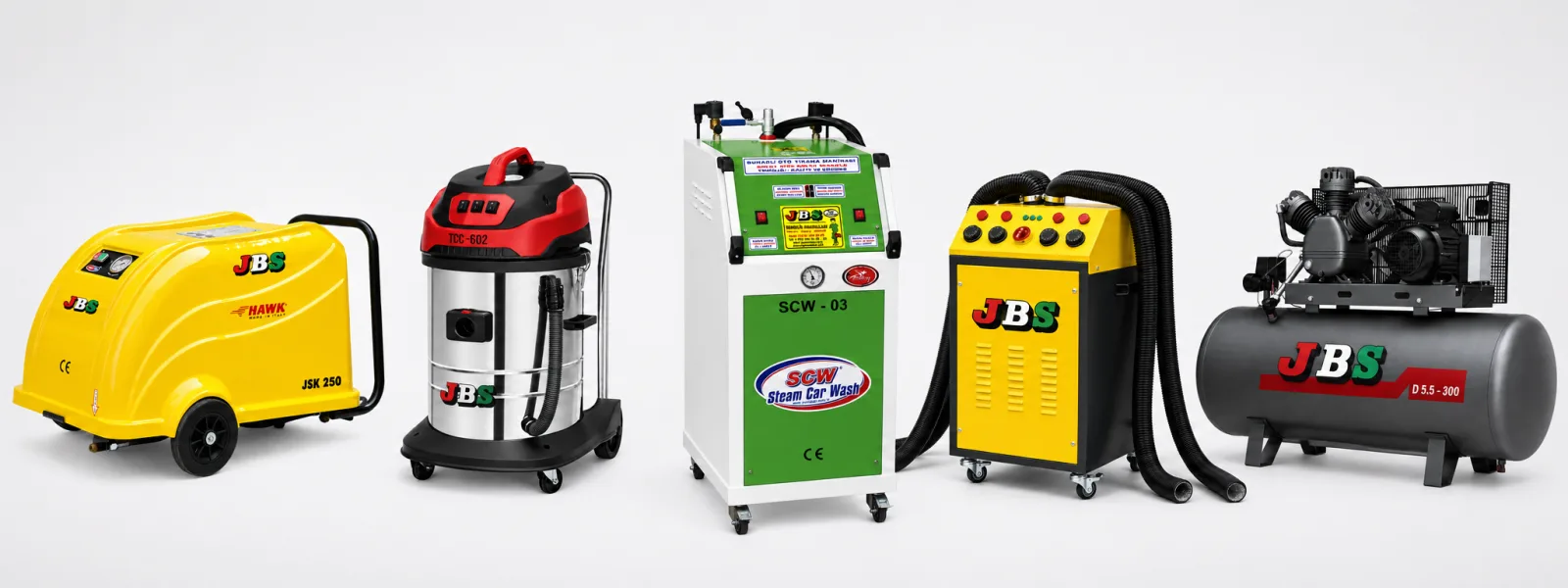
The JBS JSK-250 Commercial Cold Water Pressure Washer provides adjustable 20–250 bar pressure with 15 L/min flow, making it a higher-output option for fleets and equipment yards.
Hot Water Is a Labour Decision
Routine mud and road grime do not automatically justify heating.
Where the daily workload contains:
-
grease,
-
oil,
-
workshop residue,
-
chassis contamination,
-
plant machinery,
a hot-water machine can become more commercially useful.
The decision should be based on whether heat reduces operator time and chemical demand enough to justify additional equipment and running cost.
For that type of operation, the JBS JSC-250 Hot and Cold Water Pressure Washer is the more relevant comparison.
Three-Phase Power Needs to Be in the Procurement Brief
Heavy-duty electric machines frequently move beyond ordinary single-phase installations.
Before ordering, confirm:
site voltage, phase, current capacity, protective equipment and installation arrangement.
JBS's higher-output 250-bar machines are specified for 380 V / 50 Hz three-phase supply, so compatibility with the actual UK site installation should be confirmed by the installer before commissioning.
Uptime Is Part of the Specification
Commercial UK suppliers put significant emphasis on servicing, repairs and parts availability for a reason.
For a fleet depot, a failed hose or pump valve can affect the whole vehicle turnaround process.
The purchase decision should therefore include:
hose and gun availability, pump parts, service access and repair response, not only the machine price.
Specify the Washer Around Fleet Throughput
For larger vehicles, review the JBS JSK-250 Commercial Pressure Washer and compare capacities in the Cold Water Car Wash Machine range. See the operating context under Commercial Vehicle and Fleet Cleaning, then use the Car Wash Pressure Washer Flow Rate Guide to calculate water delivery. Submit vehicle mix, washing hours and utilities to request a commercial quotation.
Recommended Solutions
Related Products and Categories
Common Questions
Frequently Asked Questions
What Should You Consider When Choosing a Car Wash Machine?
Learn what to consider when choosing a car wash machine, including pressure, water flow, pump quality, power requirements, accessories, service support and business usage needs.
How much do car wash machines and equipment cost?
A budget of approximately TRY 150,000–500,000 may be allocated for a pressure washer, foam tank, compressor, vacuum cleaner, and auxiliary equipment. The cost increases when steam, seat-cleaning, and drying machines are added.