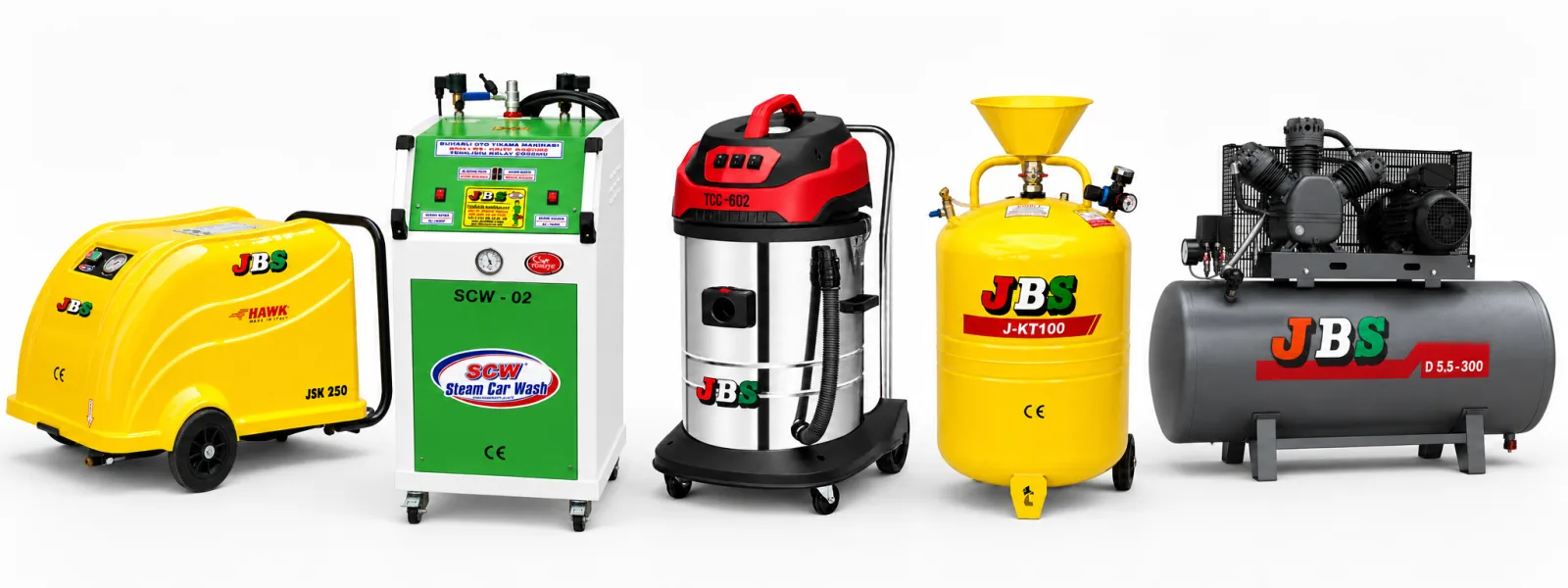
Importing Car Wash Equipment from Turkey to the UK: A Buyer’s Guide
Importing car wash equipment from Turkey gives UK operators and distributors another sourcing option alongside domestic suppliers. The right decision depends on more than the advertised machine price: freight, import arrangements, installation and technical support all affect the outcome.
Whether you operate a detailing studio, a fixed-site wash or a mobile service, use the following steps to assess a potential purchase.
1. Specify the equipment your business actually needs
Give the manufacturer a clear description of your cleaning tasks, expected workload and available utilities. Include the number of people who need to work simultaneously.
For detailing applications, compare professional steam car wash machines by steam output, recovery time, outlet configuration and power requirements. Pressure-washing applications require a different assessment, including working pressure and water flow.
For mobile installations, check vehicle payload, mounting arrangements and power supply with suitably qualified professionals.
2. Compare a direct import with a UK-supplied package
A UK supplier’s quotation may include services that are priced separately in an overseas offer. Ask both suppliers to specify accessories, commissioning, training, warranty labour and replacement-part delivery.
Request model-specific documentation and a demonstration before committing. Confirm who manufactures the equipment, who receives payment and who handles support.
A useful comparison asks: “What will it cost to receive, install and maintain this machine at my business?” rather than comparing headline prices alone.
3. Calculate the landed cost
Build a cost estimate that separates the equipment price from the following items:
-
Export packaging and freight.
-
Insurance and customs-agent charges.
-
Applicable duty and import VAT.
-
Destination handling and final delivery.
-
Unloading, electrical work and commissioning.
-
Initial maintenance items and spare parts.
Keep tax cash flow separate from the long-term cost assessment, and discuss any recoverability with your accountant. Confirm the quotation currency and allow for exchange-rate movements before making a payment decision.
4. Prepare the customs and origin information
For imports into England, Scotland or Wales, arrange the appropriate GB EORI registration and establish who will submit the customs declaration. Confirm the commodity code using the exact equipment specification. Northern Ireland requires a separate check of the applicable arrangements.
The UK–Turkey trade agreement may provide preferential duty treatment when its conditions are met. Shipment from Turkey alone does not establish preferential origin. Ask what origin evidence is available and have your customs representative verify eligibility before including a duty saving in your budget.
The official UK import guide and UK–Turkey trade guidance provide starting points for this review.
5. Check documentation and installation requirements
Request an English operating manual, maintenance instructions, electrical specifications and the conformity documentation applicable to the exact model and destination.
Agree what must be supplied before dispatch. A generic brochure or certificate that does not identify the equipment is insufficient for a meaningful technical review.
Have a qualified professional assess the proposed electrical connection and any other site requirements before the machine arrives.
6. Agree delivery and acceptance arrangements
Record the delivery term, named destination and responsibilities for transport, insurance, customs formalities and unloading.
Ask for packed dimensions, gross weight and the estimated production and transit periods separately. Request pre-dispatch photographs, a packing list and evidence of the agreed functional checks.
On arrival, inspect the packaging, record any damage and verify the model and accessories against the order.
7. Plan service and spare parts before ordering
Clarify how faults will be diagnosed and who pays for labour, replacement-part shipping or equipment returns. Check whether any proposed UK service partner is confirmed for your model.
If support is provided remotely, agree the communication channel, language and working hours. Ask for an illustrated parts list and recommended initial spares.
Distributors should also agree training, territory, stock commitments and responsibility for end-customer warranty cases.
Recommended Solutions
Related Products and Categories
Common Questions
Frequently Asked Questions
Can car wash machines be purchased from Turkey?
Yes. Car wash machines can be purchased from manufacturers and suppliers in Turkey and exported to many countries. Before placing an order, it is important to check product specifications, certifications, warranty conditions, spare parts availability, shipping terms, installation support, customs requirements, and after-sales service. For professional projects, choosing an experienced manufacturer with international shipping and technical support can make the purchasing process easier.
What criteria are important when choosing a car wash system manufacturer in Turkey?
When choosing a car wash system manufacturer in Turkey, important criteria include product quality, manufacturing experience, technical specifications, customization options, warranty conditions, spare parts availability, after-sales service, and technical support. For professional projects, it is also important to evaluate installation services, maintenance support, references, energy and water efficiency, and whether the manufacturer can provide solutions tailored to the required capacity and application.
Welche Angaben werden für ein Exportangebot benötigt?
Zielland, Stückzahl, Einsatzbereich, tägliche Fahrzeugzahl, Anzahl der Bediener und Stromversorgung helfen bei der Angebotserstellung.
Does JBS Makina export steam car wash machines?
JBS Makina evaluates international enquiries from distributors, importers and professional car wash businesses according to destination country, machine configuration, quantity and delivery requirements.