Drying time can cost more than cleaning time
For a UK valeting business, a seat is not finished simply because it looks clean.
If upholstery remains excessively wet, the vehicle continues occupying valuable bay space and customer handover is delayed.
That makes moisture recovery and drying part of the commercial specification, not an optional finishing detail.
Vacuum first, extract only where needed
Loose sand, hair and debris should normally be removed before wet-cleaning textiles.
A commercial wet and dry vacuum for valeting is useful for dry debris and suitable liquids, but it is not the same machine as an upholstery extractor.
Spray extraction introduces solution into compatible fabric and recovers contaminated moisture through vacuum. Buyers should therefore compare suction performance, solution delivery, recovery capacity and tank size rather than simply motor wattage.
Steam handles detail work, not every fabric problem
Steam is particularly useful around door shuts, vents, trim joints, seat rails and other awkward areas.
Deep contamination in fabric seats or carpets may still require extraction.
The best professional workflow uses steam and extraction for different jobs instead of forcing one machine to perform every interior-cleaning task.
Fixed studios and mobile valeters need different machines
A permanent detailing studio can accommodate larger tanks, multiple machines and dedicated drying equipment.
Mobile valeters usually place more importance on compact dimensions, cable reach, transport weight and available electrical supply.
The professional choice is therefore the machine that fits the operating model, not automatically the largest machine.
Buy around vehicles per day
Before investing, establish how many vehicles must leave the bay each day and which services actually generate revenue.
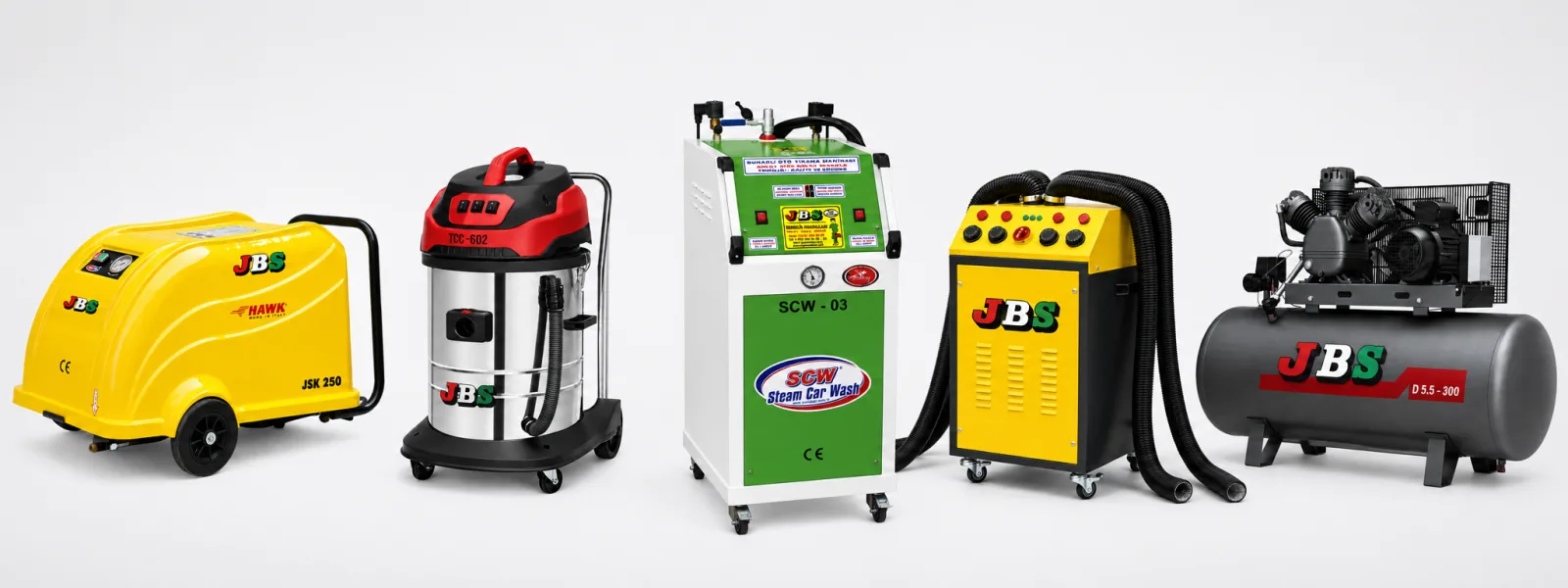
For compact upholstery work, review the JBS J-COMBO Upholstery Extractor and compare higher-capacity vacuums and extractors in Professional Cleaning Machines. Use the Auto Detailing Centers application page to build the wider bay specification, then review the Car Interior Steam Cleaning guide before deciding where steam belongs in the workflow. Once daily throughput, services and operator count are clear, request a commercial detailing quotation from JBS.
Recommended Solutions
Related Products and Categories
Common Questions
Frequently Asked Questions
How much water does steam car washing use?
Actual water consumption depends on the machine, steam flow rate, vehicle size, and cleaning time. Professional steam cleaning generally uses much less water than conventional pressure washing.
Does a Vehicle Interior Dryer Completely Dry the Seat?
The result depends on the fabric type, amount of water used during washing, ambient temperature, and ventilation.
How Should You Choose Between a 60-Litre and 100-Litre Foam Tank?
The choice should be based on daily vehicle volume, foam consumption, refill frequency, and workspace conditions.
What Is the Difference Between a Piston Compressor and a Screw Compressor?
They differ in operating duration, capacity, operating cycle, and investment structure, so the choice should be based on the business's needs.
What is a professional pressure washer?
A professional pressure washer is a high-performance cleaning machine designed for frequent and intensive use in commercial and industrial environments. It uses pressurized water to remove dirt, mud, grease, and other contaminants from vehicles, machinery, floors, equipment, and outdoor surfaces. Professional models typically offer durable pumps, powerful motors, high water flow, robust components, and longer operating capability than household pressure washers.