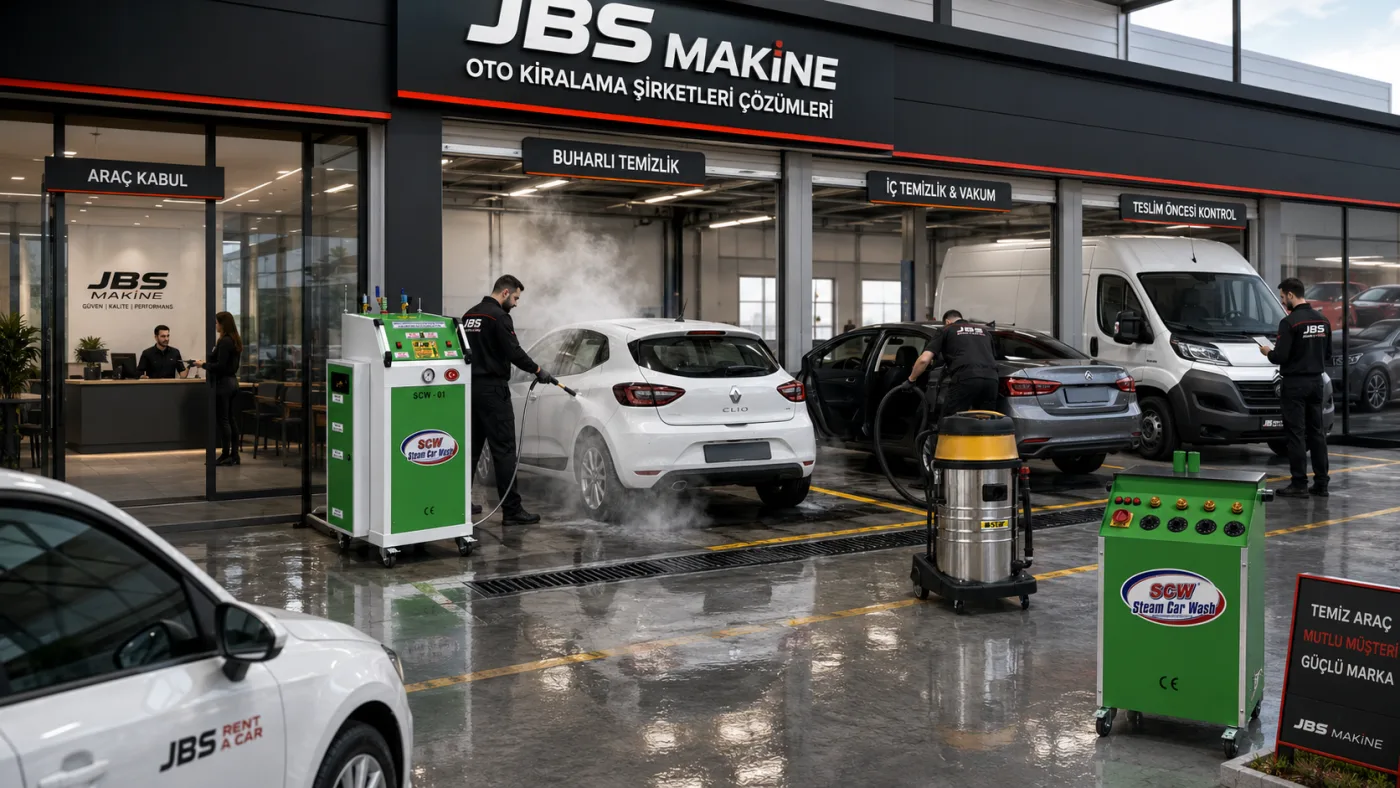
When choosing a car wash machine, considering only the price or maximum pressure rating is not sufficient. Daily vehicle volume, contamination level, water flow rate, electrical infrastructure, pump construction, and technical-service support should be evaluated together.
Choosing the wrong machine may result in poor cleaning performance, high energy consumption, frequent breakdowns, and unnecessary maintenance expenses. The following mistakes should be avoided before purchasing.
1. Considering Only the Pressure Rating
A high pressure rating does not always guarantee better cleaning. Pressure separates dirt from the surface, while the water flow carries the loosened contamination away.
Working pressure, water flow rate, pump construction, and nozzle type should be evaluated together. For professional use, models offering a balanced combination of pressure and flow, such as the Cold-Water Car Wash Machine JSK-200, may be considered.
2. Failing to Calculate Daily Vehicle Volume
A business washing only a few vehicles each day does not have the same equipment requirements as a professional car wash operating continuously.
Businesses with low or medium workloads can review the Cold-Water Car Wash Machine JSK-150. Businesses with higher daily vehicle volumes and longer operating hours may consider a higher-capacity option such as the Cold-Water Car Wash Machine JSK-250.
3. Confusing Maximum Pressure with Working Pressure
The maximum pressure stated for a product may not be the pressure at which the machine can operate continuously. Before purchasing, the continuous working pressure and whether the pressure can be adjusted should be checked.
The decision should not be based solely on the pressure rating in the product name. The technical table and expected operating conditions must also be reviewed.
4. Overlooking the Need for Hot Water
Cold water may be sufficient for ordinary mud and road dirt. Hot water can make cleaning easier when working with oily surfaces, engine components, and heavy contamination.
Businesses requiring both hot- and cold-water operation can review the Hot-and-Cold-Water Car Wash Machine JSC-200.
5. Failing to Check the Electrical Infrastructure
Discovering after purchase that the premises do not have a suitable electrical supply can cause a major installation problem.
Before ordering, check whether the machine requires a 220 V or 380 V connection, as well as its current demand, cable cross-section, circuit-breaker capacity, grounding, and residual-current protection. The electrical infrastructure should be inspected by a qualified electrician.
6. Failing to Evaluate the Trigger-Operated System
Trigger-operated machines can provide greater convenience by controlling how the system responds when the operator releases the washing gun. However, the trigger system should be evaluated together with daily operating time and maintenance requirements.
Businesses requiring this feature can review the Trigger-Operated Cold-Water Car Wash Machine JSKT-200.
7. Ignoring Pump Quality and Compatibility
The pump is one of the main components of a pressure washing machine. The pump brand, piston construction, operating speed, water flow rate, and spare-parts availability should be checked.
When pump replacement or a custom system installation is required, the HAWK NHDP-200 high-pressure washer pump and Annovi Reverberi AR pressure washer pump can be compared. Motor power, rotational speed, shaft design, and connection compatibility must be confirmed before ordering.
8. Failing to Check Hoses and Accessories
It is important to confirm which equipment is included in the machine price. High-pressure hoses, washing guns, nozzles, filters, pressure gauges, regulators, and connection fittings may not be included in the delivery.
If the hose is too short for the washing area, the operator’s movement may be restricted. All accessories must also be compatible with the machine’s pressure capacity.
9. Failing to Ask About Technical Service and Spare Parts
Components such as seals, valves, hoses, guns, nozzles, and regulators may require maintenance or replacement over time, particularly in machines used intensively.
Technical-service conditions, maintenance intervals, and spare-parts availability should be investigated before purchasing. Compatible components can be reviewed on the pressure washer spare parts page.
10. Choosing Only the Cheapest Machine
A machine with a low purchase price may become more expensive over time because of frequent breakdowns, insufficient performance, and high maintenance expenses.
When calculating the total cost, consider not only the machine price but also energy consumption, maintenance expenses, spare parts, service duration, and potential business losses.
How Do You Choose the Right Car Wash Machine?
Start by determining your daily vehicle volume, type of contamination, operating hours, hot-water requirements, and electrical infrastructure. Then compare models with suitable working pressure, water flow rate, and pump construction.
To review all available options, visit the pressure washing machines page or contact JBS Makina to request assistance in selecting a model suited to your requirements.
Recommended Solutions
Related Products and Categories
Common Questions
Frequently Asked Questions
What Should You Consider When Choosing a Car Wash Machine?
Learn what to consider when choosing a car wash machine, including pressure, water flow, pump quality, power requirements, accessories, service support and business usage needs.
Who Is a Trigger-Operated Hot and Cold Water System Suitable For?
It is suitable for professional businesses that wash many vehicles, work with oily surfaces, and want spray-gun-controlled operation.
How Is a Professional Cleaning Machine Selected?
The surface type, dirt characteristics, wet or dry operating requirement, area size, and daily operating time should be evaluated.