Airflow or Suction: What Actually Makes a Valeting Vacuum Faster?
UK valeters often see three figures on a commercial vacuum specification:
motor wattage, vacuum pressure and airflow.
They are not interchangeable.
For a business trying to reduce interior-cleaning time, wattage is usually the least useful figure on its own.
Vacuum Pressure Lifts the Difficult Debris
Sand embedded in carpet, grit around seat runners and heavier material need enough pressure difference to be lifted from the surface.
Manufacturers may express this as:
-
mbar,
-
kPa,
-
water lift,
-
mm H₂O.
This is often called vacuum or sealed suction.
Airflow Moves the Debris Through the Hose
Once dirt has been lifted, it still needs to travel through the hose.
That is where airflow becomes important.
Nilfisk specifically defines flow rate as the amount of air moving through the vacuum over time and lists it separately from other performance characteristics on professional machines.
A useful valeting machine therefore needs both lift and airflow.
Why Wattage Can Be Misleading
A 3,000 W machine does not automatically clean a vehicle faster than a lower-input machine.
Electrical input tells you how much power the motors consume.
Actual results are also affected by:
hose diameter → hose length → filtration → seals → nozzle → airflow restriction
A blocked filter can make a powerful vacuum feel weak even though the motors are operating normally.
Think in Minutes per Interior
For a commercial valeting bay, suction specification becomes a productivity calculation.
If an operator repeatedly goes over the same footwell because grit remains embedded in the carpet, labour time increases.
Better-performing vacuuming can mean:
-
fewer passes,
-
faster mat cleaning,
-
quicker seat-rail work,
-
shorter vehicle turnaround.
That matters more to a commercial operator than headline wattage.
JBS-603 in Valeting Terms
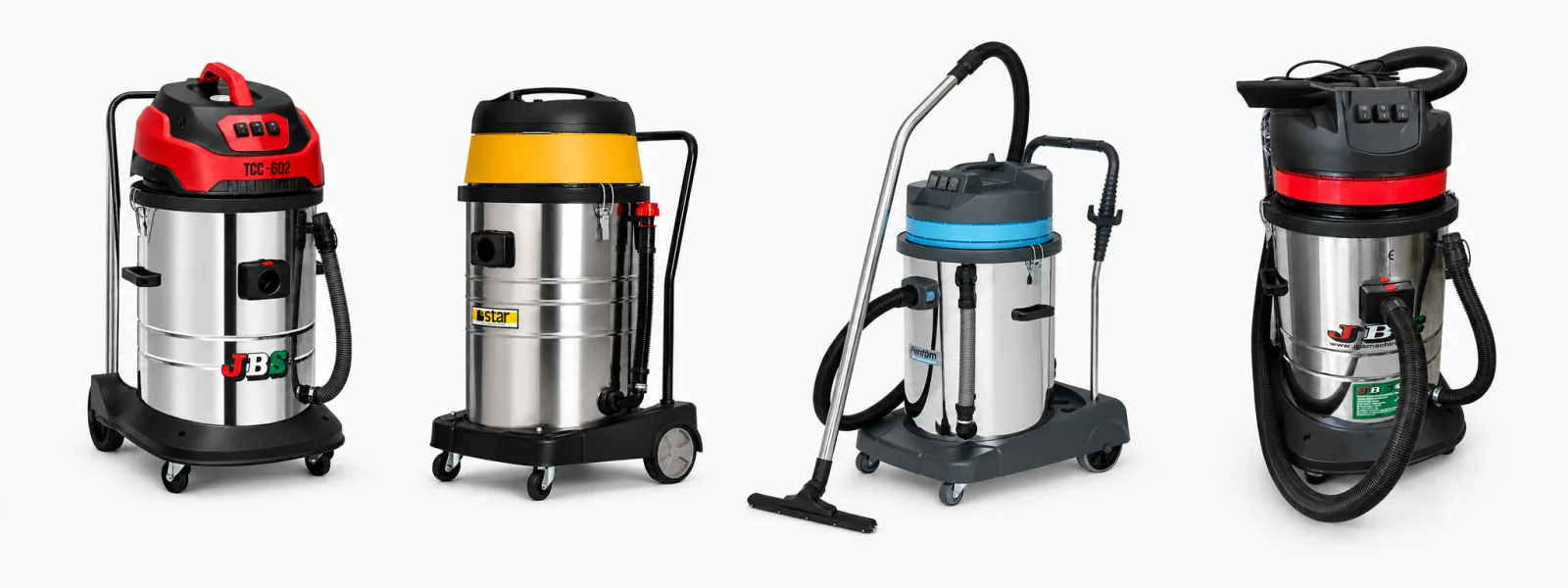
The JBS-603 commercial wet and dry vacuum combines 2,000 mm H₂O suction, 159 L/s airflow, a 70-litre tank and three motors producing 4,200 W total input.
For purchasing purposes, the 2,000 mm H₂O and 159 L/s figures are more useful for understanding vacuum behaviour than the wattage figure alone.
Filtration Protects Your Real-World Airflow
UK commercial machines increasingly highlight filtration and filter-cleaning systems because suction normally deteriorates as filters load with dust.
Nilfisk also positions filter design and maintenance as core commercial considerations rather than optional details.
For a busy valeting operation, check how quickly a filter can be cleaned or replaced between jobs.
Choose for Throughput, Not Marketing Power
Compare the JBS-603 Wet and Dry Vacuum, browse the Industrial and Car Vacuum Cleaner range, and see how the equipment fits an Auto Detailing Centre. For wider equipment planning, read the Car Wash Equipment Buying Guide. Share daily vehicle throughput and interior-cleaning workload to request a technical quotation.
Recommended Solutions
Related Products and Categories
Common Questions
Frequently Asked Questions
Are a Car Vacuum and a Carpet and Upholstery Cleaner the Same?
No. A vacuum cleaner performs suction, while a carpet and upholstery cleaner washes the surface and extracts dirty water with the appropriate system.
What is a car vacuum cleaner?
A car vacuum cleaner is a cleaning machine designed to remove dust, dirt, sand, crumbs, hair, and other debris from vehicle interiors. Professional models may also offer wet and dry vacuuming, large tank capacity, powerful suction, and durable construction for frequent use in car washes and detailing centers.
Where are car vacuum cleaners used?
Car vacuum cleaners are commonly used in professional car washes, detailing centers, service stations, car dealerships, rental car companies, garages, and self-service car wash areas. They are designed to clean seats, carpets, floor mats, trunks, and other interior surfaces quickly and efficiently
What determines the price of a car vacuum cleaner?
The price of a car vacuum cleaner depends on factors such as suction power, motor performance, tank capacity, wet and dry cleaning capability, filtration system, build quality, included accessories, and suitability for professional use. Commercial-grade models designed for frequent and intensive use are generally more expensive due to their higher durability and performance.