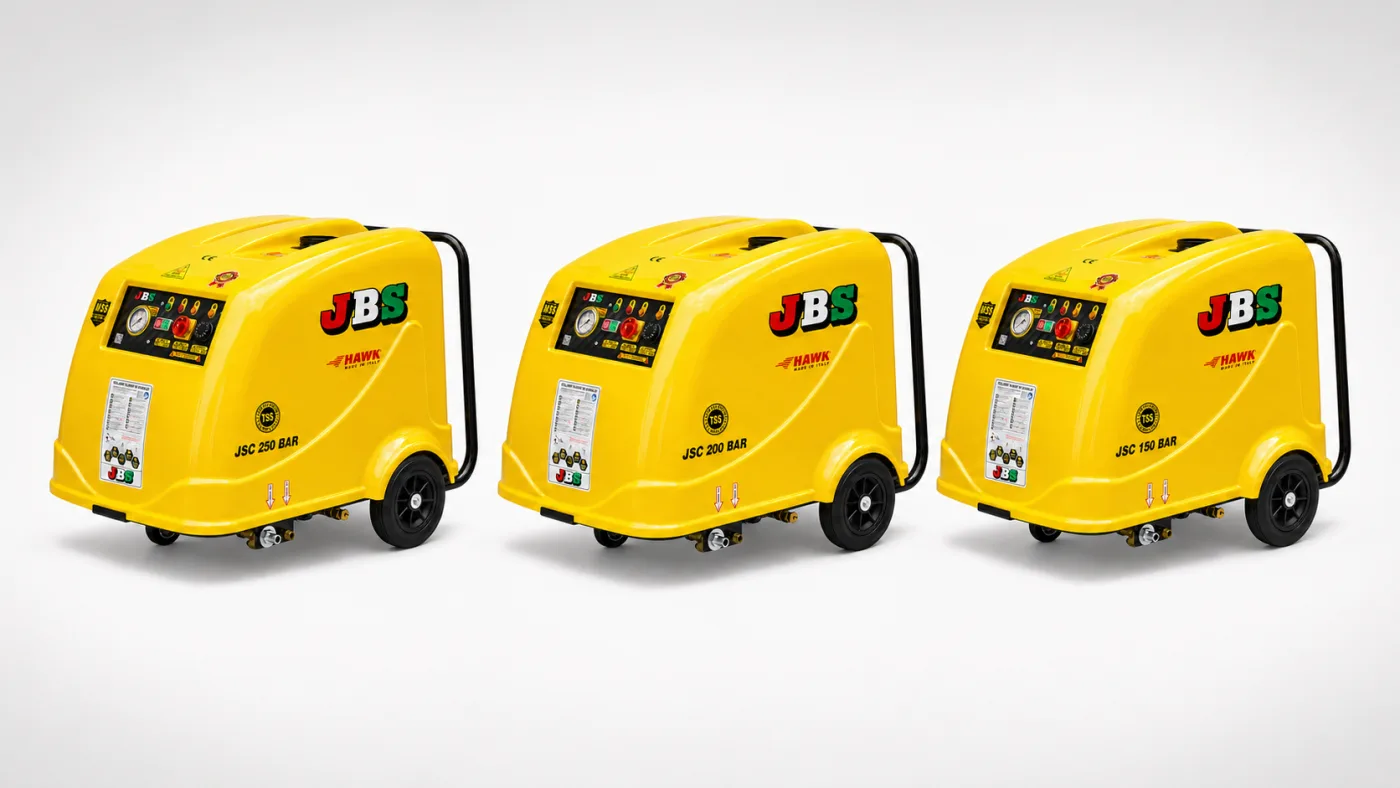
When buying a car wash machine, it is not enough to consider only the price and pressure rating. Daily operating time, vehicle type, water flow rate, pump and motor construction, electrical requirements, service support, and spare-parts availability should be evaluated together. A machine that does not match the business’s requirements may cause longer washing times, frequent breakdowns, unnecessary water and energy consumption, or insufficient capacity.
The right car wash machine is not simply the most powerful one. It is the machine that meets the business’s actual requirements continuously and economically. Before purchasing, the daily vehicle volume, services to be offered, and available infrastructure should be clearly defined.
1. Determine Your Intended Use
The first step is to identify where and for which cleaning tasks the machine will be used. The same machine may not be suitable for standard car washing, truck and construction-equipment cleaning, greasy service components, interior detailing, and self-service washing.
Answer the following questions before purchasing:
-
How many vehicles will be washed per day?
-
How many hours will the machine operate each day?
-
Will it clean cars, light commercial vehicles, trucks, or construction equipment?
-
Will the surfaces contain mud and dust or heavy grease and industrial dirt?
-
Will the machine be used only for exterior washing or also for interior detailing?
-
Will more than one operator use the machine simultaneously?
-
Does the business have a 220 V or 380 V electrical supply?
A business washing a few vehicles per day has different requirements from a professional car wash operating continuously throughout the day. Intensive use of an undersized machine may cause overheating and premature component wear. A system with excessive capacity may unnecessarily increase purchase and energy costs.
2. Evaluate Pressure and Water Flow Together
Pressure, measured in bar, is one of the most frequently promoted specifications for car wash machines. However, cleaning performance does not depend on pressure alone. Water flow rate, stated in liters per minute or liters per hour, also plays an important role in carrying dirt away from the surface.
A machine with very high pressure but insufficient water flow may not provide the expected washing speed. Adequate flow helps remove loosened mud, foam, and dirt more quickly. Therefore, both the pressure rating and flow rate should be checked when comparing machines.
Machines in the 150, 200, and 250 bar classes are commonly considered for professional vehicle washing. However, choosing the highest pressure is not always the right decision. A suitable nozzle, safe working distance, and appropriate pressure must be used to protect vehicle paintwork. Heavy vehicles, construction equipment, and industrial cleaning applications may require systems with higher flow rates and capacities suited to the task.
3. Examine Pump Quality
The pump is one of the most important components of a pressure washing machine. Operating stability, maintenance requirements, and service life depend largely on its construction. For professional use, businesses should consider pumps that can be maintained, repaired, and supported with replaceable spare parts.
The following pump specifications should be checked:
-
Pump brand and model
-
Pump-body and piston construction
-
Maximum pressure and continuous working pressure
-
Supported water flow rate
-
Oil-maintenance interval
-
Availability of seals, valves, pistons, and other parts
-
Service and overhaul options
The maximum value stated in a catalogue may differ from the machine’s actual continuous working pressure. Ask the supplier for clear information about operating pressure and suitability for extended professional use.
4. Check Motor Power and Operating Speed
The motor must supply the power required by the pump without interruption. Insufficient motor power may cause pressure loss, excessive strain, and overheating. Even a powerful motor may operate inefficiently if it is incompatible with the pump, water flow, or electrical infrastructure.
Low-speed motor and pump systems may be considered for intensive commercial applications requiring longer operating life. However, motor speed alone is not a measure of quality. Insulation class, thermal protection, manufacturing quality, pump compatibility, and serviceability should also be evaluated.
5. Choose the Correct 220 V or 380 V Supply
Depending on the model, car wash machines may operate with a single-phase 220 V or three-phase 380 V electrical supply. High-capacity professional models commonly require three-phase power. Before installation, the electrical system should be checked, and the correct cable size, circuit breaker, residual-current protection, and grounding should be prepared.
A machine requiring 380 V cannot be operated safely simply by installing a compatible socket. The distribution board and line capacity must be assessed by a qualified electrician. The electrical requirements of heating elements, burners, and auxiliary systems should also be checked for steam and hot-and-cold-water machines.
6. Choose Between Cold-Water, Hot-and-Cold-Water, and Steam Machines
The machine type should be selected according to the type of dirt and the services the business plans to offer. Each system has different applications and operating costs.
| Machine type | Suitable applications | Key selection criteria |
|---|---|---|
| Cold-water pressure washing machine | Standard cars, light commercial vehicles, motorcycles, and routine surface cleaning | Pressure, flow rate, pump quality, and continuous operating time |
| Hot-and-cold-water car wash machine | Greasy components, service centers, heavy dirt, trucks, and industrial cleaning | Water temperature, burner, fuel consumption, and maintenance requirements |
| Steam car wash machine | Interior detailing, seats, upholstery, door jambs, engine compartments, and low-water applications | Steam pressure, temperature, heating time, tank capacity, and number of steam guns |
| Self-service car wash system | Coin-, card-, or payment-operated customer-controlled wash stations | Chemical dosing, payment system, water treatment, and remote monitoring infrastructure |
A professional cold-water car wash machine may be sufficient for standard exterior washing. Hot-and-cold-water car wash machines can be considered for businesses dealing with grease and heavy dirt, while steam car wash machines may be suitable for businesses offering interior detailing and additional cleaning services.
JBS Makina offers professional pressure washing machines, steam vehicle-cleaning systems, self-service car wash systems, foam tanks, vacuum cleaners, and auxiliary equipment. Explore all options on the car wash machines and equipment page or contact JBS Makina to request a quotation for a system suited to your business.
Recommended Solutions
Related Products and Categories
Common Questions
Frequently Asked Questions
Can a 220 V Car Wash Machine Be Used to Wash Commercial Vehicles?
It can be used for light commercial vehicles. However, more powerful three-phase machines should be preferred for intensive commercial-vehicle washing, chassis cleaning, and heavy dirt.
What Is a 200-Bar Car Wash Machine Used For?
A 200-bar machine provides stronger cleaning performance than a 150-bar model. It helps achieve more effective results on wheels, chassis, wheel arches, commercial vehicles, service areas, and more heavily soiled surfaces.
What are the differences between hot-water and cold-water car wash machines? Which should I choose?
When choosing a car wash machine, the type of dirt to be removed and your budget are the most important criteria. The main differences are: Cleaning Power: Hot water dissolves oil and grease, reduces detergent consumption, and can shorten washing time by up to 35%. Cold water is effective for everyday dirt such as mud and dust. Cost and Maintenance: Cold-water machines have lower initial purchase and maintenance costs. Hot-water machines require a higher budget and regular maintenance because they include a burner/heating-coil system. Applications: Hot water should be preferred for demanding jobs such as cleaning trucks, heavy vehicles, construction machinery, and engines; cold water is suitable for routine passenger-car cleaning and home use.
Can car wash machines be used intensively every day?
Professional models are designed for regular and intensive use. However, the permitted operating time depends on the motor, pump, cooling system, and the technical specifications of the particular model.