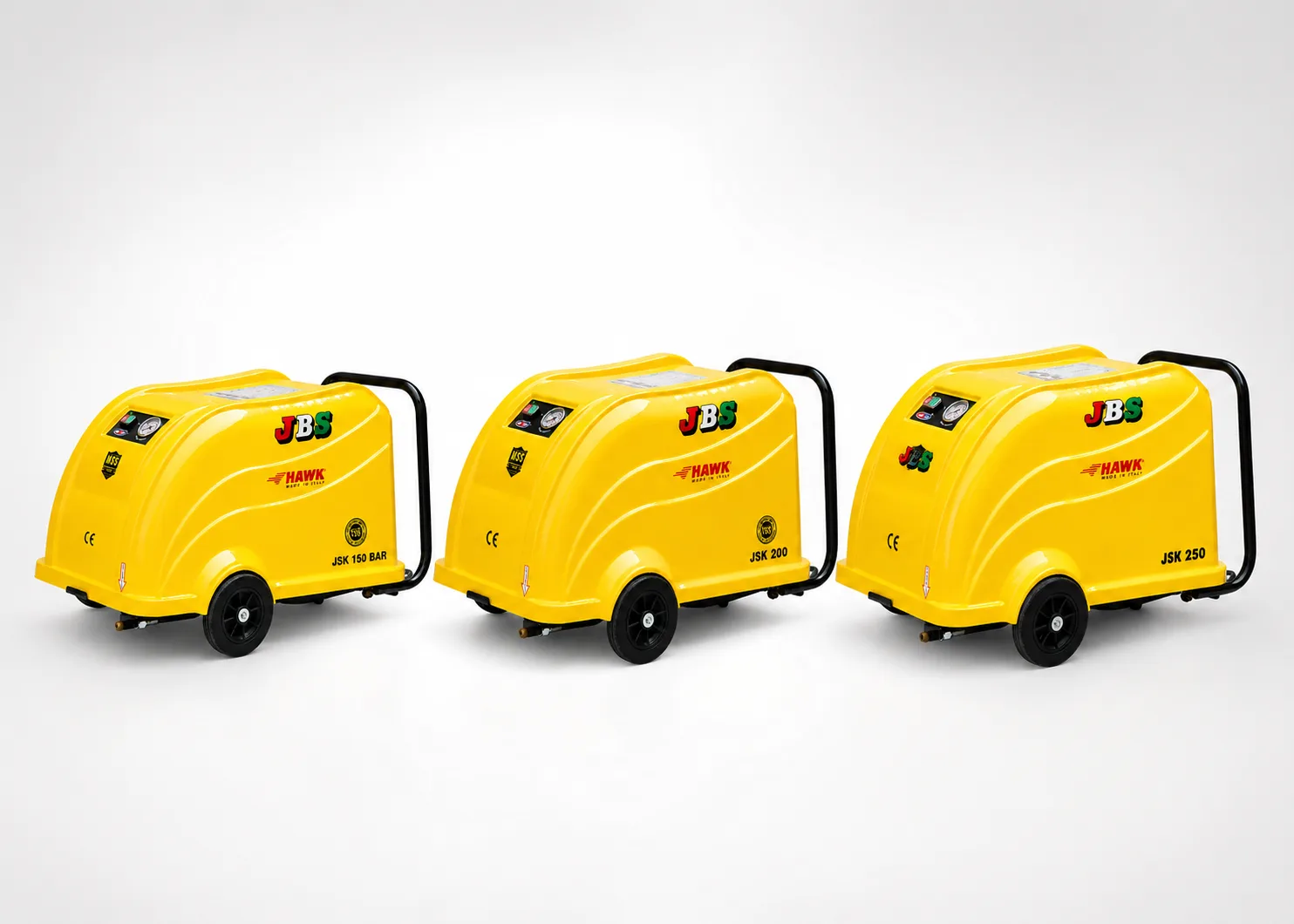
When buying a pressure car washer, do not consider only the pressure rating and price. Water flow, pump quality, motor power, and daily operating capacity should also be evaluated.
Pressure and Water Flow
Professional machines in the 150–200 bar range are generally sufficient for passenger-car washing. However, water flow is just as important as pressure. Pressure loosens dirt, while adequate water flow removes it from the surface.
Pump and Motor Quality
For professional use, choose a machine with ceramic pistons, a brass pump head, and readily available spare parts. The motor must also provide enough power for the pump’s pressure and flow requirements.
Single-Phase or Three-Phase Power?
Some lower-capacity machines can operate on single-phase electricity. For intensive professional use, three-phase machines are generally more suitable. Always check the electrical infrastructure before purchasing.
Hot and Cold or Cold-Water Washer?
Cold-water pressure washers are sufficient for standard vehicle cleaning. A hot-and-cold pressure washer may be preferable for oily surfaces, engine bays, commercial vehicles, and stubborn dirt.
Technical Service and Spare Parts
Machine failure can cause direct revenue loss. Therefore, warranty coverage, technical service, maintenance support, and spare-parts availability should be checked before purchase.
Conclusion
The right pressure car washer should match the business’s daily vehicle volume, operating hours, and electrical infrastructure. Pressure, water flow, pump quality, motor power, and after-sales service should be considered together.
Contact JBS Makina to choose a professional pressure car washer suitable for your business and request a current quotation.
Recommended Solutions
Related Products and Categories
Common Questions
Frequently Asked Questions
Is the bar rating alone sufficient when choosing a pressure washer?
No. Bar pressure alone is not enough when choosing a pressure washer. Water flow rate, motor power, pump quality, operating temperature and intended use should also be considered.
How do you choose the most suitable car wash machine?
The most suitable car wash machine is not simply the cheapest one. The number of vehicles to be washed per day, operating time, required pressure level, water flow rate, and technical service options should be evaluated together. Choosing a machine with the correct capacity can help keep operating costs under control.
How Much Does It Cost to Open a Car Wash?
The cost of opening a car wash depends on the location, rent and renovation expenses, number of wash bays, and equipment capacity. Major expenses include a high-pressure washer, air compressor, foam tank, industrial wet and dry vacuum, plumbing, electrical infrastructure, licences, signage, and cleaning supplies. Adding steam cleaning, upholstery cleaning, vehicle drying, or self-service systems will increase the initial investment. For an accurate budget, the facility’s infrastructure and expected daily vehicle capacity should be evaluated together.
What is the difference between a 220 V and a 380 V pressure washer?
The main difference is the electrical power supply and the performance level the machine can support. 220–230 V pressure washers are generally suitable for lighter-duty applications and locations with a standard single-phase power supply. 380–400 V three-phase models are typically used for professional and industrial applications because they can support more powerful motors, higher water flow, and longer operating times. The right choice depends on the required cleaning performance, daily usage, and available electrical infrastructure.
Can detergent be added to a pressure washer?
Detergent should only be added to the machine's designated detergent tank or foam attachment. Feeding chemicals directly into the water tank or pump may damage the machine unless this is approved by the manufacturer.
How does a pressure washer work?
A pressure washer uses a motor or engine to power a pump that increases the pressure of the incoming water. The pressurized water is then directed through a hose and spray gun, allowing it to remove dirt, mud, grease, and other contaminants from surfaces. Different nozzles can be used to adjust the spray pattern and pressure for various cleaning tasks.