Buy for Vehicle Turnaround, Not Headline Wattage
For a UK valeting business, the commercial value of a vacuum is measured in how quickly an operator can finish an interior and move to the next vehicle.
That makes motor wattage a poor starting point.
Nilfisk's UK commercial range separates airflow, tank capacity, filtration and operating requirements, while specialist UK valeting suppliers sell dedicated wet-and-dry valeting models rather than treating them as domestic car vacuums.
Airflow and Vacuum Pressure Do Different Jobs
A useful specification should provide both.
Vacuum pressure helps lift embedded sand and heavier debris.
Airflow carries that material through the hose and into the collection tank.
A machine with a large motor input but a restrictive hose, dirty filter or weak airflow can still be slow in real-world vehicle interiors.
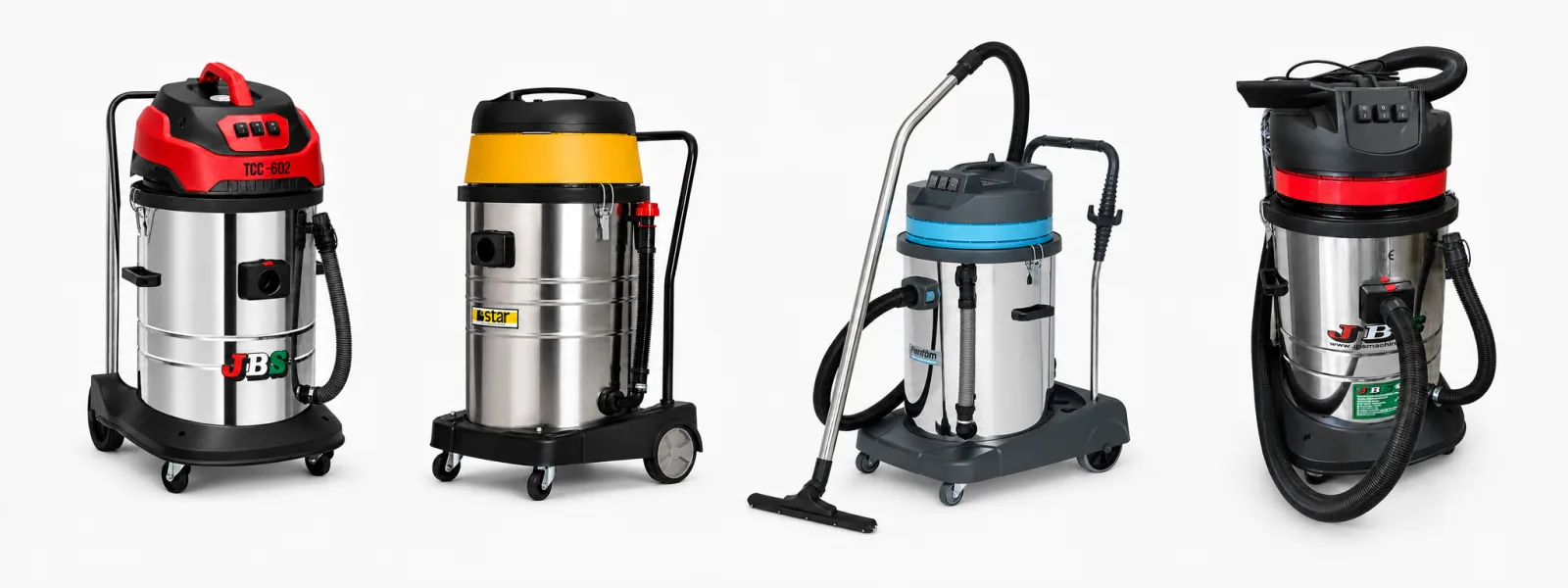
The JBS-603 commercial wet and dry vacuum is specified at 159 L/s airflow, 2,000 mm H₂O suction and a 70-litre tank alongside its three-motor configuration.
Think in Cars per Shift
Tank capacity becomes valuable when emptying the vacuum interrupts paid work.
A busy hand car wash or valeting bay may benefit from a larger tank because the operator can process more vehicles between stops.
For a mobile valeter, however, machine weight and van space may matter more than maximum container size.
There is no universal “bigger tank is better” rule.
Hose Reach Is a Productivity Specification
A valeting operator needs to reach:
-
front footwells,
-
rear seats,
-
seat rails,
-
door pockets,
-
boot areas,
-
narrow interior gaps.
A suitable hose and crevice tool can save more working time than a small increase in headline motor power.
Also check cable length, wheel quality and where the accessories are stored when the machine is moved between vehicles.
Filtration Determines Whether Performance Stays Consistent
A blocked filter reduces airflow.
For a commercial buyer, filter access and cleaning time therefore affect productivity.
Check whether replacement filters are readily available and whether changing from dry debris to liquid recovery requires a different filter arrangement.
Some UK commercial systems specifically market simplified wet/dry switching because it reduces downtime between jobs.
Wet Vacuum or Extraction Machine?
These are not automatically the same machine.
A wet vacuum can recover compatible liquids.
An upholstery extractor applies cleaning solution into fabric and then recovers contaminated water.
A business selling seat shampooing and deep upholstery cleaning should budget for extraction separately rather than assuming a wet vacuum performs both jobs.
Noise Matters in Customer-Facing Premises
For a garage this may be secondary.
For a premium detailing studio operating beside reception or customer waiting areas, sound level can influence the working environment.
UK commercial specifications therefore often publish dB(A) alongside airflow and tank capacity.
Specify the Vacuum Around Your Valeting Business
Review the JBS-603 Wet and Dry Vacuum, compare the Industrial and Car Vacuum Cleaner range and see how professional vacuuming fits into an Auto Detailing Centre. For background on the equipment type, read What Is a Car Vacuum Cleaner?. Then provide vehicle throughput, wet/dry requirements and required accessories to request a commercial quotation.
Recommended Solutions
Related Products and Categories
Common Questions
Frequently Asked Questions
How Many Vacuum Motors Should Be Preferred?
Motor capacity should be determined according to the area size, operating time, and dirt intensity.
What should you consider when buying a car vacuum cleaner?
When buying a car vacuum cleaner, you should consider suction power, motor performance, tank capacity, wet and dry cleaning capability, filtration system, hose length, accessories, durability, and ease of maintenance. For professional car washes and detailing businesses, it is also important to choose a model designed for frequent and intensive commercial use
Why is suction power important in a car vacuum cleaner?
Suction power is important because it determines how effectively a car vacuum cleaner can remove dust, sand, hair, crumbs, and other debris from seats, carpets, floor mats, and hard-to-reach areas. Strong suction helps achieve faster and more thorough cleaning, making it especially important for professional car washes and detailing businesses.
Why is tank capacity important in a car vacuum cleaner?
Tank capacity is important because it determines how much dust, dirt, debris, or liquid the vacuum can collect before it needs to be emptied. A larger tank allows for longer, uninterrupted cleaning sessions, which is especially useful for professional car detailing and high-volume use. It also reduces the frequency of emptying the tank, helping save time and improve cleaning efficiency.