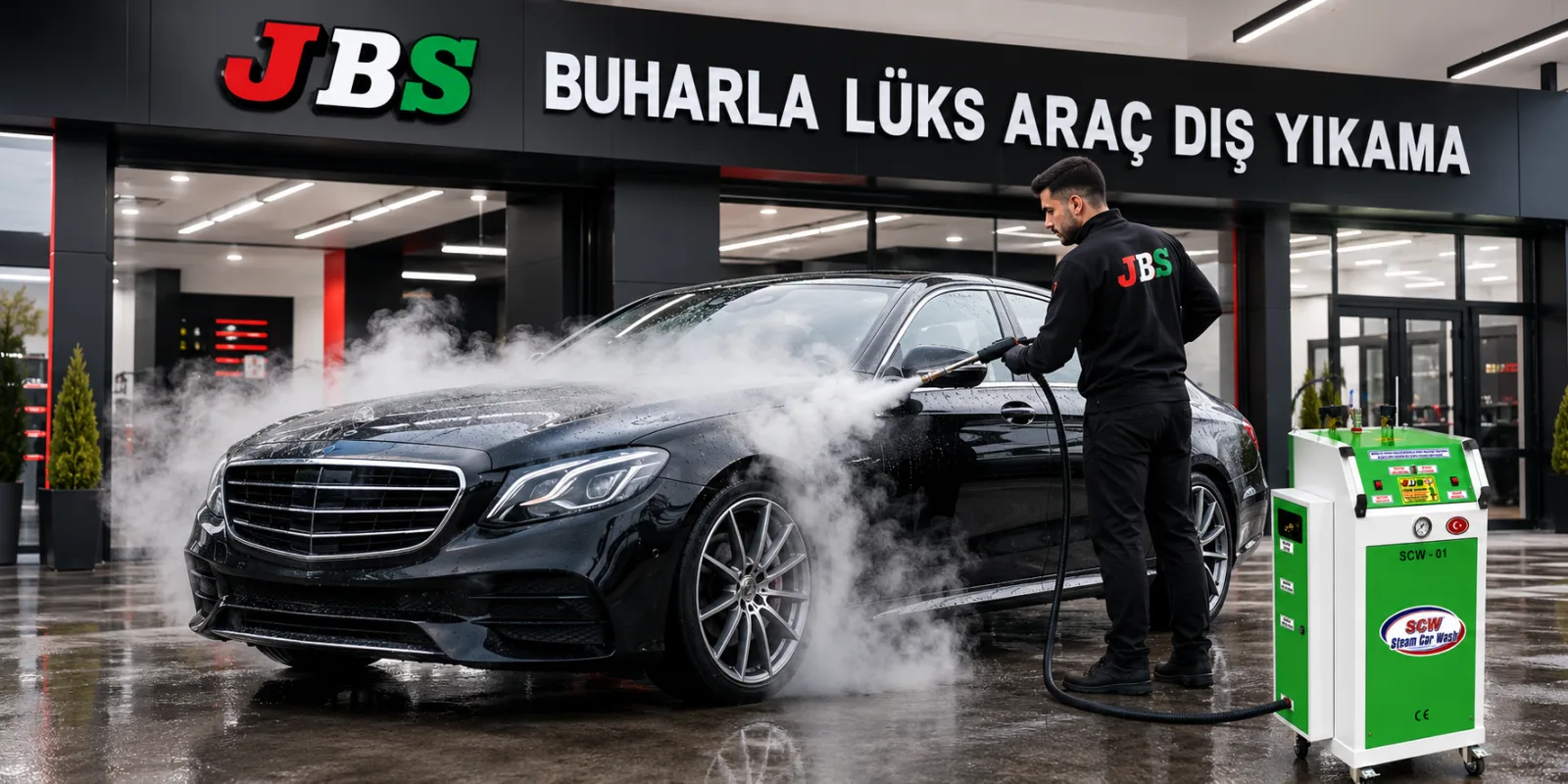
A steam car wash machine is a professional vehicle-cleaning system that heats water under controlled conditions to generate high-temperature, pressurized steam.
The steam helps soften dirt on vehicle bodywork, wheels, door jambs, seat areas, air vents, engine compartments, and other hard-to-reach detailing points.
Depending on the application method, steam systems can support more controlled water consumption than conventional washing methods. However, they do not completely replace pressure washing or professional cleaning chemicals for every type of dirt.
You can compare models with different capacities on the steam car wash machines page.
How Does a Steam Car Wash Machine Work?
Water supplied to the machine’s tank is heated to a specified temperature inside the boiler or heating system. The resulting pressurized steam is directed onto the surface through a hose and steam gun.
High-temperature steam helps soften oily residue and dirt attached to the surface. Depending on the surface, the loosened dirt is then removed using a microfiber cloth, brush, vacuum, or suitable professional cleaning equipment.
The basic operating process is as follows:
- Check the water tank and energy connections.
- Start the machine and allow the water to heat.
- Select a steam gun, nozzle, or detailing attachment suitable for the surface.
- Apply steam from an appropriate distance in a controlled manner.
- Remove the loosened dirt and moisture from the surface.
- Check the tank, hose, and attachments after use.
The steam gun should not be held in the same position for an extended period. Painted surfaces, vehicle wraps, plastics, leather, displays, and electronic components should first be tested carefully on a small area.
Where Are Steam Car Wash Machines Used?
Steam car wash machines can be used for both interior and exterior vehicle detailing:
- Vehicle bodywork and exterior details
- Wheels and tyre areas
- Door jambs and seals
- Emblems and grille areas
- Seat gaps and seat rails
- Dashboards and plastic surfaces
- Air vents
- Floor mats and luggage compartments
- Engine compartments
- Motorcycles and light commercial vehicles
- Minibuses, shuttle vehicles, and fleets
- Suitable industrial surfaces
Open connectors, control units, sensors, fuse boxes, and moisture-sensitive electronic components must be protected during engine-compartment cleaning.
What Are the Advantages of Steam Vehicle Cleaning?
When used correctly, a professional steam car wash machine can provide the following advantages:
- Controlled cleaning of narrow and hard-to-reach areas
- Versatile use in vehicle interior and exterior applications
- Softening of oily dirt and surface residue
- Controlled water consumption
- Model options suitable for mobile vehicle-cleaning services
- Simultaneous operation with multiple steam guns
- Expansion of professional detailing services
- Detailed cleaning of wheels, door jambs, and engine compartments
Steam cleaning is not a complete alternative to conventional pressure washing in every situation. Vehicles with heavy mud or thick surface contamination may require prewashing or a suitable pressure washing machine.
Can a Steam Car Wash Machine Damage a Vehicle?
Steam can be used safely on sound vehicle surfaces when the correct temperature, pressure, attachment, and working distance are selected.
Additional care should be taken with:
- Damaged or repainted surfaces
- Loose vehicle wraps and coatings
- Sensitive plastic components
- Leather and specialist textile surfaces
- Electronic displays
- Open electrical connections
- Sensors and control units
- Moisture-sensitive components
Safe application requires a trained operator and compliance with the manufacturer’s operating instructions.
JBS Steam Car Wash Machine Models
The JBS Makina SCW series includes models intended for different business volumes and numbers of operators.
| Model | Key feature | Recommended use |
|---|---|---|
| SCW-01 | High-capacity system with four steam guns | Busy businesses with multiple operators |
| SCW-02 | Professional system with three steam guns | Car wash and detailing centres |
| SCW-03 | 220 V operation with two steam guns | Mobile services and medium-volume businesses |
| SCW-04 | Compact 220 V system with one steam gun | Single-operator businesses |
| SCW-05 | 15 bar, 170–210 °C, and two steam guns | Intensive vehicle and suitable industrial cleaning applications |
A model should not be selected according to maximum pressure alone. Steam temperature, steam-production capacity, number of guns, heating time, available energy infrastructure, and continuous operating performance should be evaluated together.
What Should You Consider When Choosing a Steam Car Wash Machine?
The following features should be checked before purchasing:
- Number of vehicles cleaned each day
- Daily operating time
- Number of operators working simultaneously
- Actual working pressure
- Steam temperature and production capacity
- Heating and steam-recovery time
- Water-tank and boiler capacity
- 220 V or 380 V electricity requirements
- Fuel or energy system
- Number of steam guns and hoses
- Standard accessories
- Safety and control systems
- Warranty coverage
- Technical service and spare-parts support
Businesses planning to offer mobile services should also evaluate the machine’s dimensions, weight, power requirements, and transportation conditions. For more information, review the mobile steam car wash machine guide.
Why Should You Not Choose Based on Price Alone?
Machines available on the market may appear similar in terms of design or maximum pressure. However, the boiler, valves, hoses, steam guns, control system, safety components, and body construction can affect actual operating performance.
A low purchase price does not always mean a low total cost of ownership. Breakdown frequency, business interruptions, spare-parts availability, service time, and expected operating life should be evaluated together.
When comparing quotations, request the following information in writing:
- Working and maximum pressure
- Steam temperature
- Continuous operating capacity
- Main components used
- Included steam guns and accessories
- Warranty coverage
- Technical service conditions
- Spare-parts supply time
- Installation and operator training
JBS Makina model prices are determined according to professional operating capacity, number of steam guns, energy system, equipment quality, delivery scope, and after-sales support.
Steam Car Wash Machine Prices
Steam car wash machine prices vary according to the selected model, steam capacity, temperature, number of steam guns, electricity or fuel system, accessory package, and delivery scope.
For accurate pricing, the business’s daily vehicle volume, operating hours, available energy infrastructure, and planned services should be determined. An undersized machine may increase operating time, while an unnecessarily large system may increase both purchase and energy costs.
Contact JBS Makina to receive technical assistance and a current quotation for the model best suited to your business.
Recommended Solutions
Related Products and Categories
Common Questions
Frequently Asked Questions
What is a steam car wash machine?
A steam car wash machine is a professional cleaning system that uses high-temperature steam to clean vehicle exterior surfaces, rims, door edges, engine areas and detailed cleaning points.
Can a vehicle interior be cleaned with steam?
Yes. Seats, upholstery, carpets, the dashboard, and hard-to-reach areas can be cleaned.
Can steam remove grease and stubborn dirt?
Yes. Hot steam effectively loosens grease, oil, mud, and stubborn dirt.
Can steam reduce bad odors inside a vehicle?
Steam can help loosen dirt and odor-causing residues in upholstery, carpets, and hard-to-reach areas. The result, however, depends on the source of the odor and how deeply it has penetrated the material.
Is a steam car wash business profitable?
Profitability depends on the machine investment, energy and water costs, staffing expenses, service prices, and number of vehicles per day. Additional services such as interior cleaning, engine-bay cleaning, and detailing can increase revenue.