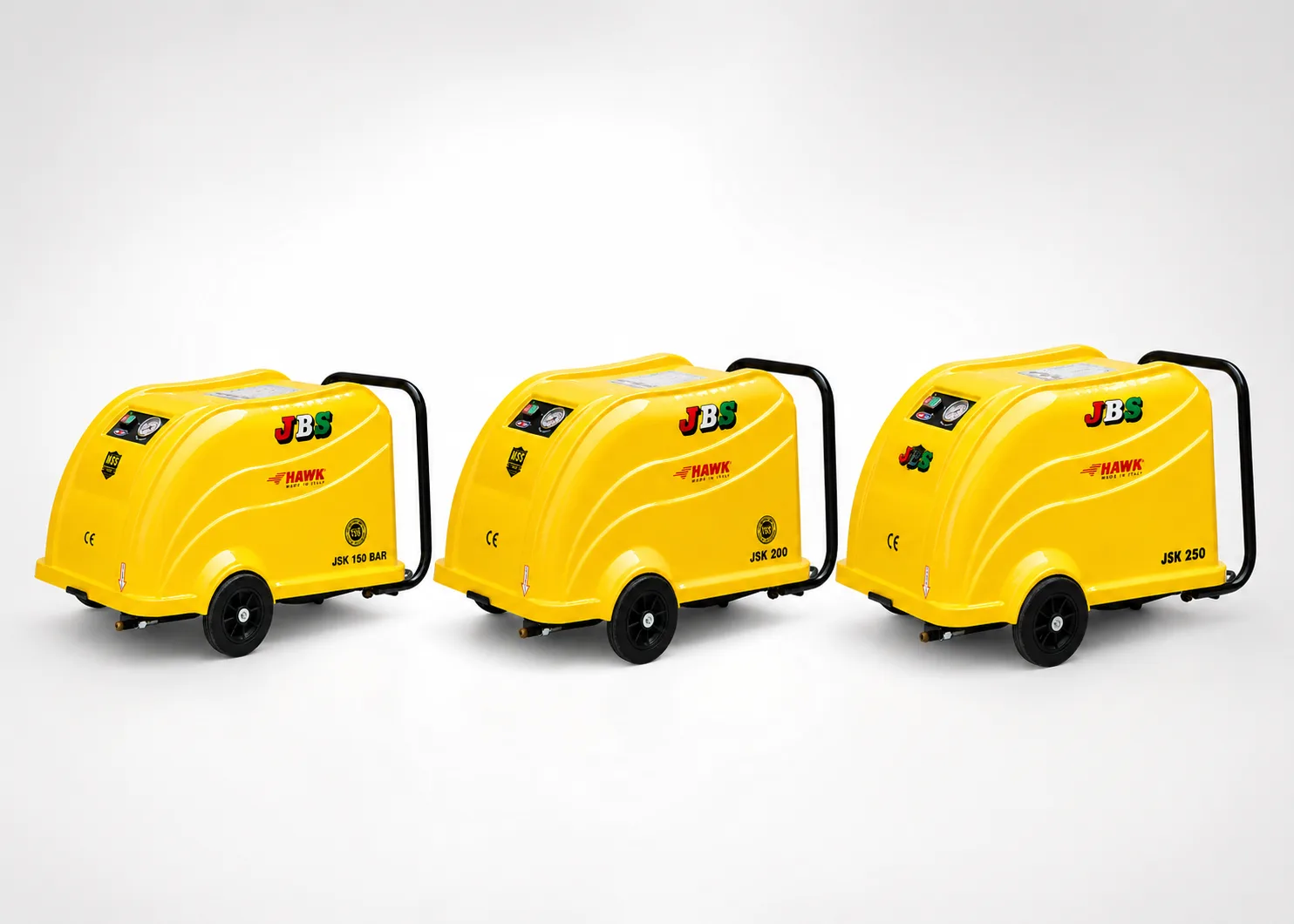
What Is a Pressure Washer?
A pressure washer is a cleaning machine that uses a motor-driven pump to increase water pressure. The pressurised water travels through a reinforced hose and exits through a spray gun and nozzle, helping remove mud, dust, grease and stubborn deposits.
Domestic models are generally intended for occasional vehicle, patio and garden cleaning. Commercial pressure washers are designed for car washes, workshops, fleets, factories and other applications requiring longer operating periods.
How Does a Pressure Washer Work?
Water enters the machine from a mains supply or suitable tank. A filter protects the pump from contaminants, while the motor drives the high-pressure pump. The pressurised water then passes through the hose, spray gun and selected nozzle.
The main components include:
- Electric or petrol motor
- High-pressure pump
- Pressure regulator
- Water inlet filter
- Pressure-rated hose
- Trigger gun and nozzle
- Electrical and pump protection systems
The nozzle determines the spray angle and concentration of the water jet. A narrow jet provides concentrated impact, while a wider pattern covers a larger surface more gently.
Pressure or Flow Rate: Which Matters More?
Pressure, expressed in bar or PSI, helps separate dirt from the surface. Flow rate, expressed in litres per minute or gallons per minute, helps carry the loosened material away.
A professional machine should therefore not be selected by pressure alone. A model with high pressure but insufficient water flow may clean slowly during demanding commercial work.
Hot Water or Cold Water?
Cold-water pressure washers are suitable for mud, dust and general vehicle cleaning. They have a simpler construction and are widely used by car wash businesses.
Hot and cold-water pressure washers help break down oil, grease and stubborn contamination. They can be advantageous in workshops, industrial facilities and heavy-equipment cleaning.
How Much Pressure Is Required?
- 150 bar: Cars, motorcycles and light commercial vehicles
- 200 bar: Busy car washes, fleets and commercial vehicles
- 250 bar: Trucks, machinery and demanding professional cleaning
- 500–600 bar: Rust, paint and hardened deposits on durable industrial surfaces
Ultra-high-pressure equipment is not suitable for normal vehicle bodywork and must only be operated by trained personnel.
Explore JBS Makina’s commercial car wash machines to compare pressure, flow rate and equipment options before requesting a technical quotation.
Recommended Solutions
Related Products and Categories
Common Questions
Frequently Asked Questions
Is the bar rating alone sufficient when choosing a pressure washer?
No. Bar pressure alone is not enough when choosing a pressure washer. Water flow rate, motor power, pump quality, operating temperature and intended use should also be considered.
Does Every Pressure Washer Pump Fit Every Machine?
No. Pressure, water flow rate, rotational speed, shaft, connection, and motor-power compatibility must be checked.
Which Machine Should Be Used for Heavy-Duty and Commercial Vehicle Washing?
High-flow, powerful pressure washers should be preferred for trucks, buses, minibuses, vans, and heavy-duty vehicles. Adequate pressure and water flow rate reduce cleaning time on chassis, wheels, cargo bodies, and large surfaces.
What type of oil should be used in a car wash pressure washer?
The correct oil depends on the pump and motor type of the pressure washer. Oil-lubricated high-pressure pumps should only be filled with the pump oil grade recommended by the manufacturer. Some pumps are maintenance-free and do not require oil changes. If the machine has a gasoline or diesel engine, the engine oil must be selected separately according to the engine manufacturer’s specifications. Always check the operating manual before adding or changing oil.
How many hours can a professional pressure washer operate continuously?
There is no single fixed operating time for every professional pressure washer. Continuous-duty models are specifically designed for long and intensive operation, while compact or light-duty professional machines may require regular breaks. The actual continuous operating time depends on the pump, motor, cooling system, water supply, operating pressure, and manufacturer specifications. For car washes and industrial applications with long daily operating hours, a pressure washer explicitly rated for continuous duty should be selected.