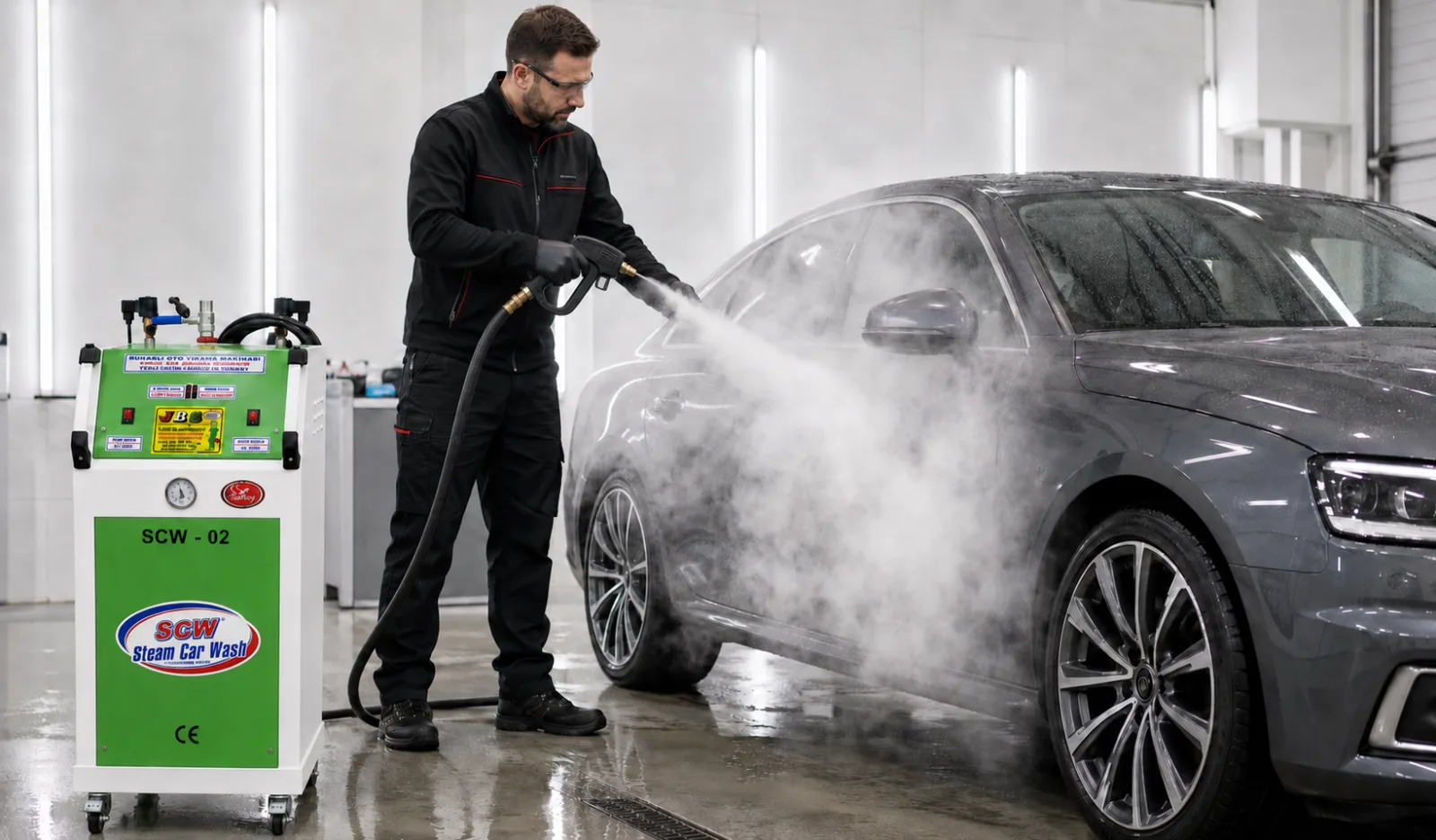
Waterless car wash machines is a general term used for cleaning systems designed to reduce the amount of water required in traditional vehicle washing. However, waterless cleaning does not refer to a single technology.
Two main methods are commonly used:
- Chemical-based waterless car washing with microfiber cloths
- Steam cleaning systems that convert a controlled amount of water into high-temperature steam
JBS Makina steam car wash machines are designed for professional interior and exterior detailing applications where controlled steam cleaning is required.
How Does Waterless Car Washing Work?
Chemical waterless cleaning uses special products to loosen surface dirt before it is removed with microfiber cloths.
Steam systems heat water and apply it as pressurized steam. The steam helps soften grease, dirt and residues.
Professional steam systems are therefore not completely waterless, but they can operate with significantly more controlled water consumption than conventional washing methods.
Are Steam Washing and Waterless Washing the Same?
Not exactly.
Waterless car washing mainly relies on cleaning chemicals and microfiber cloths.
Steam car washing uses water converted into steam.
For vehicles covered with heavy mud, sand or thick contamination, steam or waterless cleaning alone may not always be sufficient. In these situations, professional car wash machines using high-pressure water may be more suitable.
Advantages of Steam and Low-Water Car Washing
Depending on the application, professional systems can offer:
- Reduced water consumption
- Interior detailing
- Seat and upholstery cleaning
- Controlled cleaning around doors and wheels
- More precise cleaning around engine areas
- Reduced water transportation requirements for mobile car wash services
Steam systems can be particularly useful for detailing businesses where controlled cleaning and lower water consumption are important.
Waterless Car Wash Machine Prices
Waterless car wash machine prices depend on the technology and operating capacity of the system.
For professional steam machines, price can be affected by:
- Steam pressure
- Operating temperature
- Boiler capacity
- Number of guns
- Electrical requirements
- Daily operating capacity
- Safety systems
- Technical service and spare-parts support
For this reason, machine capacity and intended application should be compared alongside purchase price.
Which System Should You Choose?
Steam systems can be considered for interior detailing, seats, upholstery, wheels and other controlled cleaning applications.
For heavily soiled vehicle exteriors, high-pressure water systems may be more suitable.
Businesses offering both types of cleaning should consider steam and high-pressure washing as complementary technologies rather than direct substitutes.
Explore JBS Makina steam car wash machines and compare professional SCW models.
Recommended Solutions
Related Products and Categories
Common Questions
Frequently Asked Questions
Who Can Use a Steam Car Wash Machine?
Steam car wash machines can be used by car wash businesses, detailing centers, auto dealerships, service centers, rent a car companies, fleet operators and mobile vehicle cleaning services.
How much water does steam car washing use?
Actual water consumption depends on the machine, steam flow rate, vehicle size, and cleaning time. Professional steam cleaning generally uses much less water than conventional pressure washing.
Steam Washing or Pressure Washing?
Steam washing is suitable for low water consumption and detailed cleaning, while pressure washing is better suited to heavy mud and exterior cleaning. The choice should be based on the type of dirt and the application.
Is steam cleaning safe for the food industry?
Yes. Steam cleaning can be safely used in food processing facilities when suitable equipment and proper cleaning procedures are followed. High-temperature steam can help remove grease, food residues, and other contaminants while reducing the need for chemical cleaning agents. For food-contact surfaces, the process should comply with the facility’s hygiene and HACCP procedures, and the equipment should be suitable for food industry applications.