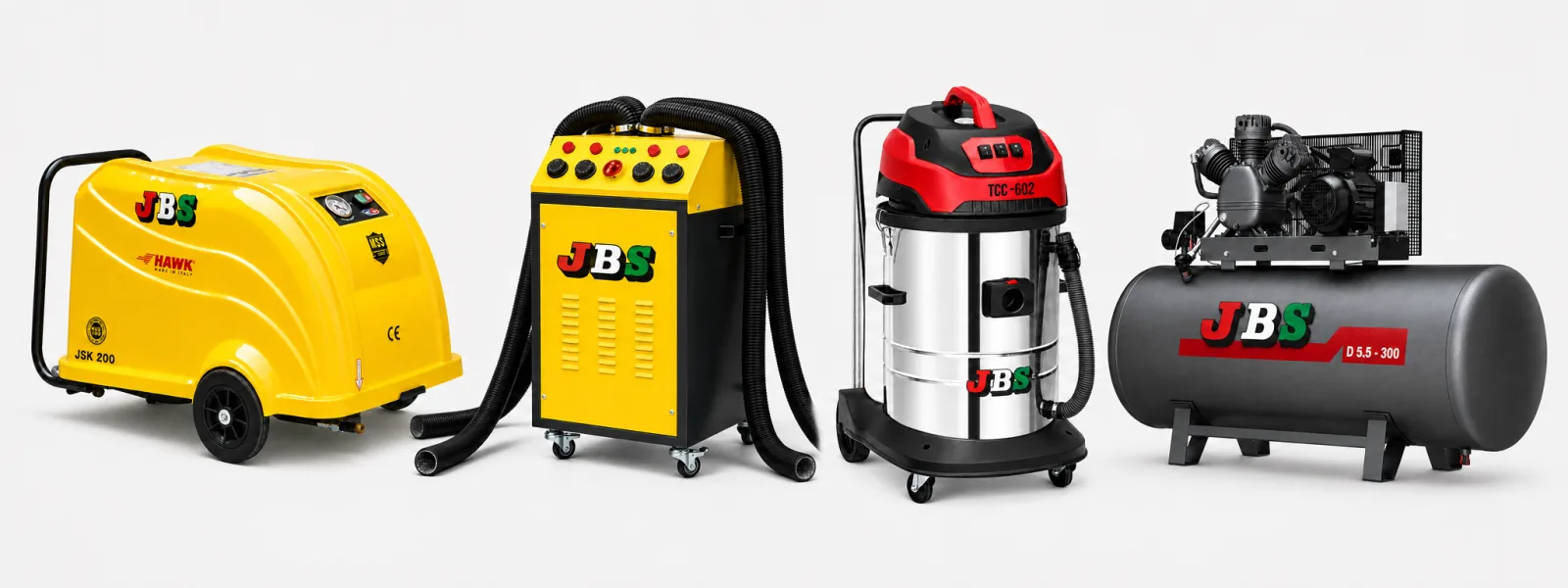
A car wash machine is a professional system designed to remove mud, dust, road grime, grease and other contamination from cars, commercial vehicles, trucks and machinery using pressurized water, hot water or steam.
Professional models are used by car wash businesses, workshops, dealerships, rental companies, fleet operators and industrial facilities.
Explore JBS Makina’s professional pressure washing machines for different cleaning requirements.
How Does a Car Wash Machine Work?
The motor powers the pump, which draws water from the mains supply or a tank. The pump pressurizes the water and delivers it through the hose, spray gun and nozzle.
Cleaning performance depends on working pressure, water flow rate, pump quality, motor power and nozzle selection. A higher pressure rating alone does not always provide better cleaning.
Types of Car Wash Machines
Cold-water car wash machines
Cold-water car wash machines use unheated pressurized water to remove mud, dust and routine road dirt. They are suitable for general vehicle washing.
Hot and cold-water car wash machines
Hot and cold-water car wash machines can operate with either hot or cold water. Hot water helps soften oil, grease and stubborn contamination.
Steam car wash machines
Steam car wash machines provide controlled cleaning for vehicle interiors, seats, upholstery, wheels, door jambs and engine compartments.
Self-service car wash systems
Self-service car wash systems can combine pressure washing, foam, rinsing, wax, vacuum and blower functions for customer-operated wash bays.
How Much Pressure Is Required?
A 150-bar machine can be considered for standard vehicle washing. Professional businesses with heavier workloads may prefer 200-bar models, while 250-bar machines can be evaluated for commercial vehicles, machinery and heavily soiled durable surfaces.
Pressure, water flow rate, daily vehicle volume, pump construction and electrical requirements should always be evaluated together.
What Should You Consider When Choosing?
- Daily number and type of vehicles
- Working pressure and water flow
- Pump and motor quality
- Cold-water, hot-water or steam requirements
- 220 V or 380 V power supply
- Hose, spray gun and nozzle package
- Technical service and spare-parts support
Car Wash Machine Prices
Car wash machine prices vary according to machine type, pressure, water flow, pump brand, motor power, heating system and included accessories.
Explore the JBS Makina product catalogue or contact JBS Makina for technical information and a current quotation.
Recommended Solutions
Related Products and Categories
Common Questions
Frequently Asked Questions
What Tasks Is a Cold Water Car Wash Machine Suitable For?
It is used for general vehicle washing, fleet cleaning, and cleaning suitable durable surfaces with pressurized water.
What Machines Are Needed to Open a Car Wash?
To open a professional car wash, you may need pressure washers, steam car wash machines, vacuum cleaners, foam tanks, air compressors, water treatment systems and detailing equipment depending on your business model.
Can a car be washed with high-pressure water?
Yes. A car can be washed with a pressure washer when the correct pressure, nozzle, and spraying distance are used. High-pressure water can effectively remove mud, dust, and road dirt, but the spray should not be held too close to the paint, seals, sensors, tires, or other sensitive parts. Using a suitable fan nozzle and moderate pressure helps provide safer and more effective vehicle cleaning.
Why is a pressure washer not building pressure?
A pressure washer may fail to build pressure because of a clogged nozzle or filter, insufficient water supply, air in the system, a leaking hose or connection, worn pump seals, a faulty unloader valve, or internal pump wear. The water inlet, nozzle, hoses, and filters should be checked first. If the problem continues, the pump and pressure control components should be inspected by a qualified technician.
How does a pressure washer work?
A pressure washer uses a motor or engine to drive a pump that increases the pressure of the incoming water. The pressurized water then travels through a high-pressure hose and spray gun, where it is directed through a nozzle to remove dirt, mud, grease, and other contaminants from surfaces. The cleaning performance depends on factors such as working pressure, water flow rate, pump capacity, and nozzle type.