A UK wash bay should start with flow and workload
In UK commercial washing, a practical specification is often read as a package: pressure, litres per minute, motor speed, electrical supply and shutdown arrangement.
That matters more than simply choosing the machine with the highest bar figure.
A commercial pressure washer running at around 200 bar and 15 L/min sits in a common professional performance class for busy hand car washes, valeting operations and wash bays.
Trigger control and timed shutdown are different features
A trigger gun lets the operator interrupt water delivery while moving around the vehicle.
That can be useful where operators repeatedly switch between wheels, arches, body panels and lower sections.
However, UK buyers should not assume that “trigger-controlled” automatically means automatic timed motor shutdown or Total Stop.
Those functions must be checked separately in the machine specification.
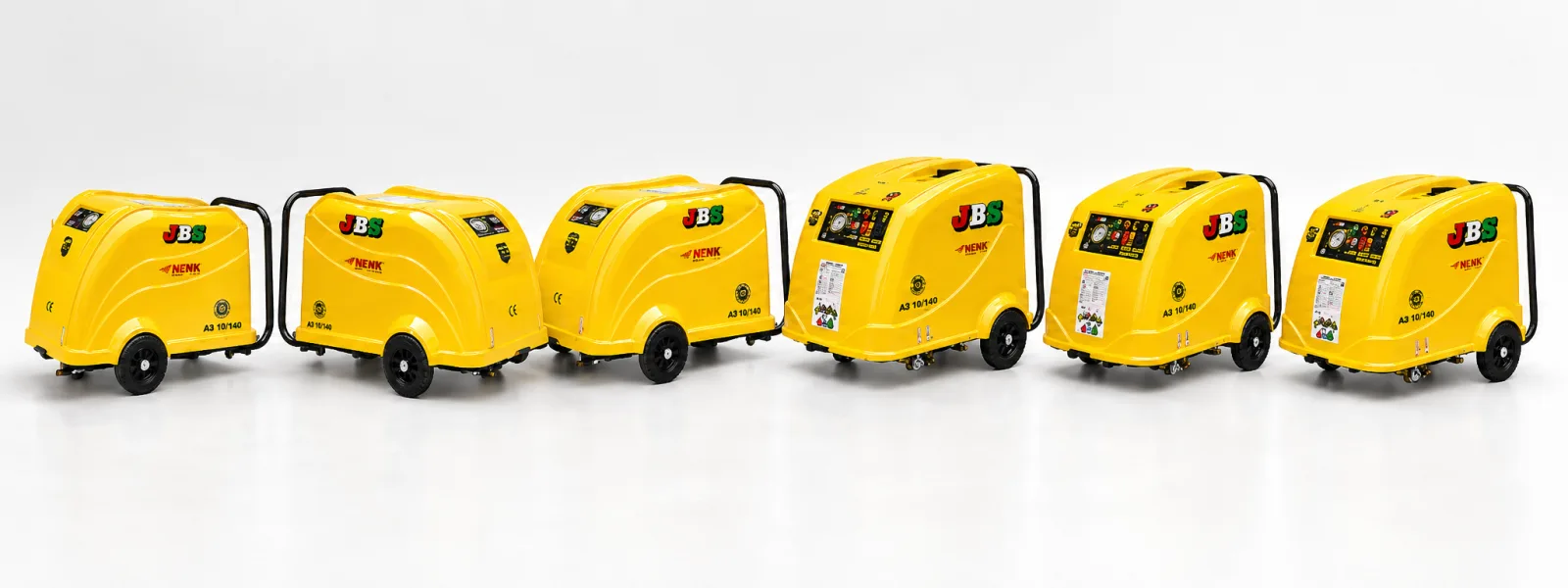
JBS JSKT models use trigger-controlled operation with a BY-PASS regulator; the actual control architecture should therefore be compared like-for-like with competing wash-bay equipment.
Think in vehicles per hour
For a low-volume valeting bay, ease of installation and operator control may matter more than maximum output.
For a busy hand car wash, throughput becomes more important. Flow rate, hose layout, operator movement and available three-phase power can have more effect on productivity than another 50 bar of headline pressure.
UK installations should also confirm compatibility between the local electrical supply and the machine’s rated electrical specification before commissioning.
Cold water or hot water?
Routine road film, mud and exterior washing can often be handled with cold-water systems.
Where the site regularly handles grease, workshop contamination or heavier commercial cleaning, a hot-water configuration can reduce cleaning time.
That makes JSK versus JSKT one decision, and JSC versus JSCT another. Control method and water temperature should not be treated as the same choice.
Specify the machine around the wash bay
If your site uses frequent stop-start washing, review the JSKT-200 trigger-controlled pressure washer. You can compare the wider commercial car wash machine range and see typical requirements for car wash businesses. Before finalising capacity, the pressure-washer flow-rate guide explains why litres per minute matter alongside pressure. Share your vehicle throughput, power supply and cleaning tasks with JBS through the contact and quotation page.
Recommended Solutions
Related Products and Categories
Common Questions
Frequently Asked Questions
What Is a Trigger-Operated Cold Water Car Wash Machine?
It is a cold-water system whose operating cycle is controlled by the trigger on the washing gun.
What Is the Difference Between Trigger-Operated and Non-Trigger Models?
The main difference is the control and operating system. The appropriate choice should be based on the business's usage pattern and technical setup.
How Does a Trigger-Operated System Work?
When the spray gun trigger is pressed, pressure in the system drops and the machine starts. When the trigger is released, the motor and pump stop automatically.
Does a Trigger-Operated System Save Water and Electricity?
Yes. Because the machine stops when the spray gun is not in use, it helps reduce unnecessary water and electricity consumption.