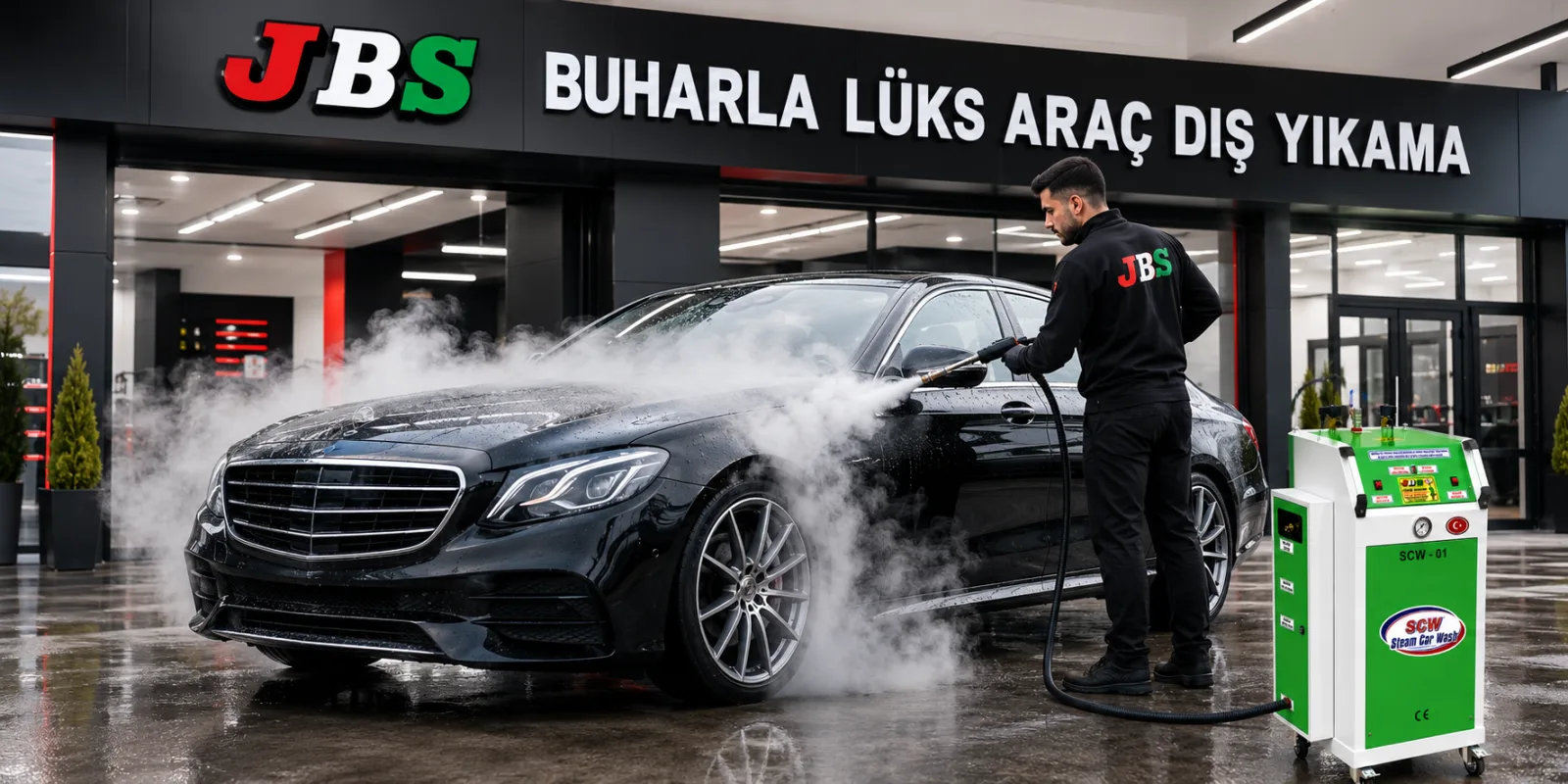
Steam car washing is a professional cleaning method in which high-temperature steam is applied to vehicle surfaces at controlled pressure. Because it can work with relatively little water and reach detailed areas, it is used by detailing centres, mobile wash teams, car wash businesses and vehicle fleets.
How Does Steam Car Washing Work?
Good results depend on more than steam temperature alone. Pressure, steam moisture, nozzle type, working distance and surface sensitivity must be considered together.
Basic Washing Process
- Inspect the vehicle and remove heavy loose contamination.
- Prepare the machine and select the correct attachment.
- Clean exterior panels with controlled movement and distance.
- Work on wheels, door jambs and detailed areas separately.
- Clean suitable interior surfaces using reduced moisture and careful application.
Advantages
- Lower liquid-water use in suitable applications
- Access to narrow and detailed areas
- Suitable for both interior and selected exterior cleaning
- Heat helps loosen grease and stubborn residue
Limitations and Surface Safety
Heavy sand or mud should be removed before close-contact cleaning. Damaged paint, sensitive plastics, electronics and certain upholstery materials require special care.
Steam vs. Pressure Washing
Pressure washing is efficient for heavy exterior contamination, while steam is particularly useful for detailed, low-water and interior work. Many professional businesses use both methods according to the task.
Choosing a Steam Car Wash Machine
Compare steam output, continuous-duty capability, power supply, number of guns, water supply, service and spare-parts support.
Conclusion
Steam car washing can be an efficient professional method when the machine and technique are matched to the vehicle, contamination and daily workload.
Recommended Solutions
Related Products and Categories
Common Questions
Frequently Asked Questions
Is steam car washing really effective?
Yes. Steam car washing can be highly effective when the correct equipment and application method are used. High-temperature steam helps loosen oil, dirt, dust, and stains from surfaces while potentially using less water than conventional washing. It can be used on interior seats, upholstery, plastic surfaces, wheels, and the engine bay. Cleaning performance depends on the machine's steam pressure, temperature, the level of dirt, and the application technique. On sensitive surfaces, the correct distance and attachment should be used; on exterior surfaces with heavy mud, steam cleaning should be supported with pressure washing.
What is the difference between steam car washing and conventional car washing?
Steam car washing loosens dirt and oily residues with high-temperature steam and provides cleaning with less water. It is especially effective for detailed areas such as interior upholstery, seats, plastic surfaces, wheels, and the engine bay. Conventional car washing uses pressurized water, foam, and cleaning chemicals. It is faster for removing heavy mud, sand, and thick exterior dirt, but generally consumes more water. Steam washing stands out for detailed cleaning and low water consumption, while conventional washing is stronger for heavy exterior dirt. The most suitable method should be selected according to how dirty the vehicle is and which area needs to be cleaned.
Is steam car wash safe for car paint?
Yes, steam car washing can be safe for car paint when the correct steam pressure, nozzle type, distance and cleaning method are used according to the vehicle surface condition.
Can steam cleaning be used inside a car?
Yes, steam cleaning can be used for vehicle interiors, including seats, floor mats, door panels, air vents and hard-to-reach detail areas when suitable accessories and controlled application are used.
How does a steam car wash machine work?
A steam car wash machine heats water and produces steam. The steam softens dirt, grease and road residues, allowing controlled cleaning with lower water consumption compared to traditional washing methods.
Does steam car washing produce wastewater?
It may produce less wastewater than conventional washing, but it cannot be generalized as completely wastewater-free. Waste containing dirt, oil, and cleaning products must be managed in accordance with local regulations.