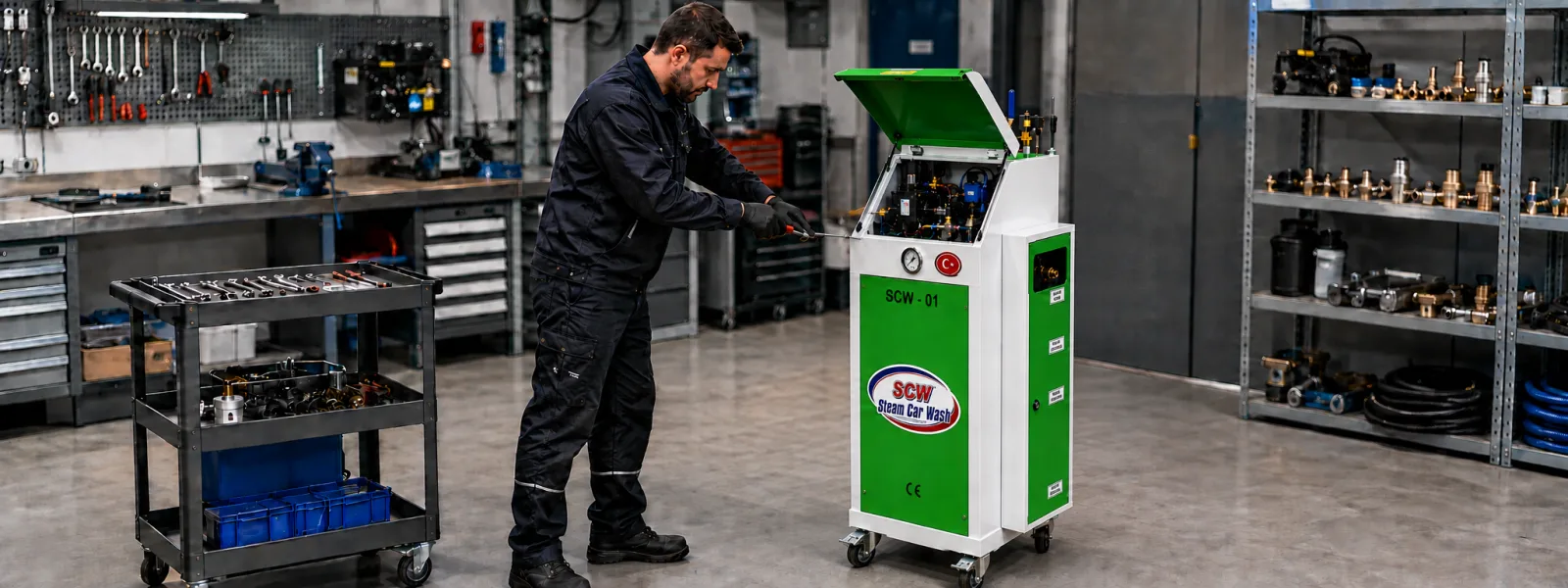
Steam car wash machines heat water inside a boiler to produce pressurised steam. The system can include a water tank, feed pump, boiler, heater or burner, pressure controls, safety valve, hose and steam gun. A problem in any of these components can affect steam output.
Why Is There No Steam?
Check water level, water supply, basic electrical power and whether the machine has reached operating temperature. A blocked nozzle, scale buildup or a feed problem can also restrict steam output.
Why Is Steam Pressure Low?
Low pressure can result from insufficient heating, excessive steam demand, leaks, scale, worn seals, valve problems or a pressure-control fault.
Why Does Water Come from the Steam Gun?
Condensation in a cold hose can produce water at startup. Persistent wet output may indicate incorrect temperature, excessive feed water, poor steam separation or a control issue.
Why Does Pressure Drop During Work?
If steam consumption exceeds the machine's continuous production capacity, pressure can fall. Boiler scale, heating faults or leaks can cause similar symptoms.
Why Does the Machine Heat Slowly?
Low heater output, electrical supply problems, burner issues or scale on heat-transfer surfaces can extend warm-up time.
Water and Steam Leaks
Damaged seals, hoses, fittings or valves can leak. Steam leaks are a burn hazard and the machine should be depressurised before inspection.
Steam Gun Does Not Work
A blocked nozzle, damaged trigger valve, kinked hose or internal valve fault can prevent normal flow.
Scale-Related Problems
Hard-water scale reduces heat transfer and can restrict internal passages. Water treatment and manufacturer-approved descaling schedules help reduce these problems.
Electrical Trips
A machine that repeatedly trips fuses or residual-current protection may have an electrical fault, moisture ingress or excessive load and should be inspected by a qualified technician.
When to Call Technical Service
Boiler, burner, safety-valve, pressure-control and internal electrical repairs should be handled by trained service personnel. Safety devices must never be bypassed.
Conclusion
Regular water-quality control, filter cleaning, inspection of seals and scheduled maintenance can prevent many common steam-machine faults.
Recommended Solutions
Related Products and Categories
Common Questions
Frequently Asked Questions
How much water does steam car washing use?
Actual water consumption depends on the machine, steam flow rate, vehicle size, and cleaning time. Professional steam cleaning generally uses much less water than conventional pressure washing.
Steam Car Wash Machines for Businesses
Steam car wash machines are suitable for car wash businesses, auto detailing centers, car dealerships, service centers, rent a car companies, fleet operators and mobile vehicle cleaning services.
What is a steam car wash machine?
A steam car wash machine is a professional cleaning system that uses high-temperature steam to clean vehicle exterior surfaces, rims, door edges, engine areas and detailed cleaning points.
Is a generator required for steam car washing?
A generator may be required for mobile applications where no fixed electrical connection is available. Generator selection should be based on the machine's voltage and continuous power requirement, not only on the generator's maximum power rating.
What is the difference between steam car washing and conventional car washing?
Steam car washing loosens dirt and oily residues with high-temperature steam and provides cleaning with less water. It is especially effective for detailed areas such as interior upholstery, seats, plastic surfaces, wheels, and the engine bay. Conventional car washing uses pressurized water, foam, and cleaning chemicals. It is faster for removing heavy mud, sand, and thick exterior dirt, but generally consumes more water. Steam washing stands out for detailed cleaning and low water consumption, while conventional washing is stronger for heavy exterior dirt. The most suitable method should be selected according to how dirty the vehicle is and which area needs to be cleaned.