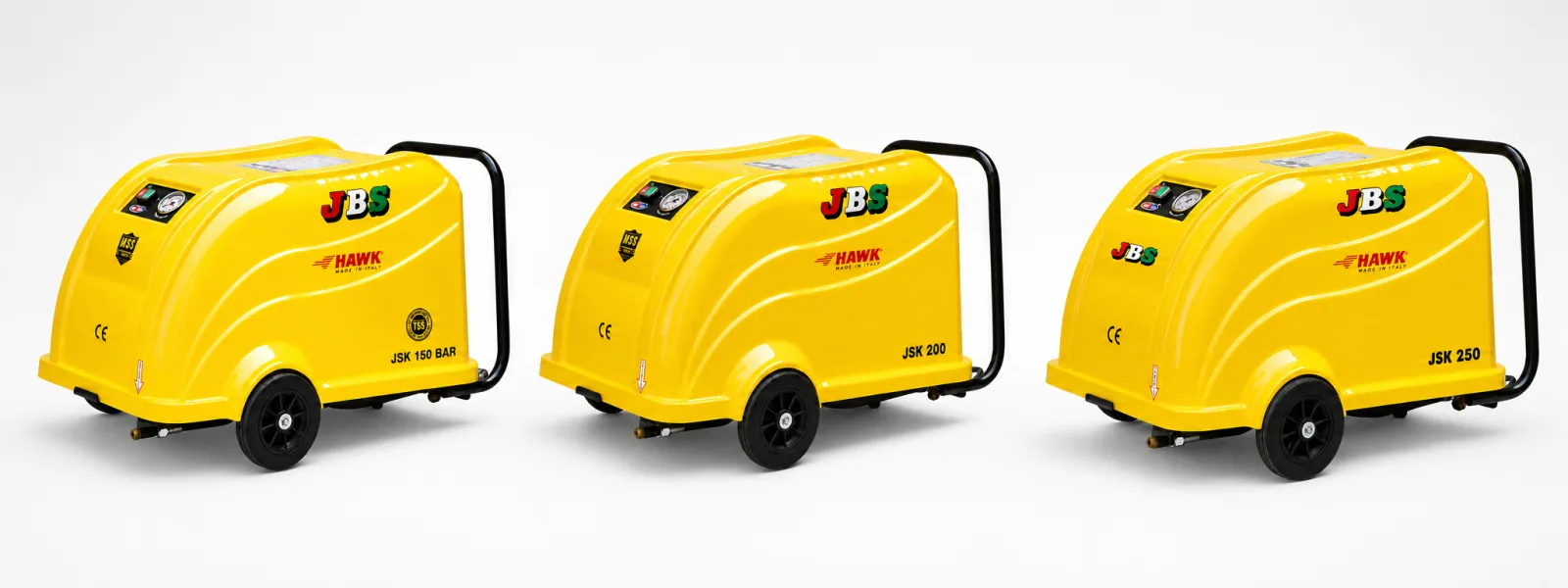
The choice between a single-phase and three-phase car wash machine should not be based only on the available socket. Daily vehicle volume, operating hours, motor power, working pressure, water flow rate and electrical infrastructure must be considered together.
Single-phase machines generally operate on a 220–230 V supply and are practical for low- or medium-duty use. Three-phase models normally require a 380–400 V supply and are commonly selected for high-capacity professional applications.
What Is a Single-Phase Car Wash Machine?
A single-phase car wash machine operates from a suitable 220–230 V circuit. It may be selected by small car washes, workshops, mobile cleaning businesses and facilities with a limited daily vehicle volume.
Its main advantages include:
- Widely available electrical infrastructure
- Relatively simple installation when a suitable circuit exists
- Options for low- and medium-duty operation
- Suitability for mobile or compact workplaces
A single-phase machine is not automatically unsuitable for professional use. It can provide sufficient performance when its pump, motor, working pressure and water flow match the workload.
Businesses requiring a single-phase option can review the JSK-150 cold-water car wash machine.
What Is a Three-Phase Car Wash Machine?
Three-phase machines normally operate from a 380–400 V electrical supply. They are commonly used in professional facilities requiring higher motor output, longer operating hours and greater water flow.
They are particularly suitable for:
- High-volume car wash businesses
- Fleet and commercial-vehicle washing
- Facilities operating for extended periods
- Applications requiring higher pressure and water flow
- Industrial and heavy-equipment cleaning
The JSK-200 cold-water car wash machine offers a 380 V connection, 5.5 kW motor, adjustable 20–200 bar pressure and a water flow rate of 14 litres per minute.
Single-Phase and Three-Phase Comparison
| Feature | Single-phase | Three-phase |
|---|---|---|
| Typical supply | 220–230 V | 380–400 V |
| Workload | Low to medium | Medium to high |
| Motor capacity | Generally more limited | Higher-power options |
| Operating duration | Intermittent or medium-duty, depending on model | Better suited to long and intensive operation |
| Installation | Easier where a suitable circuit exists | Requires three-phase infrastructure |
| Suitable businesses | Small washes, workshops and mobile services | Professional washes, fleets and industrial facilities |
| Initial cost | Generally lower | May be higher depending on model and installation |
These are general differences. Always check the machine rating plate and technical specifications.
Does Three-Phase Power Clean Better?
Three-phase power does not directly improve cleaning performance. Cleaning results depend on working pressure, water flow, pump quality, nozzle design, water temperature, application distance and the type of contamination.
Three-phase infrastructure makes it easier to operate higher-powered motors and larger pumps. Its advantage therefore comes from the machine capacity it can support, not simply from the number of phases.
Does a Three-Phase Machine Consume More Electricity?
Not necessarily. Energy consumption depends on motor input power, actual load, efficiency and operating time.
A larger three-phase motor may consume more energy per hour, but it may also complete the work faster. Comparisons should therefore consider motor kW and estimated operating time rather than voltage alone.
Electrical Installation Checklist
Before ordering, have a qualified electrician check:
- Available number of phases
- Supply voltage and frequency
- Motor full-load current
- Cable cross-section
- Circuit-breaker and thermal-protection capacity
- Earthing and residual-current protection
- Socket and connection suitability
- Phase-loss protection for three-phase systems
A 380–400 V machine should not be connected directly to a 220–230 V supply without an engineered and professionally approved solution.
Which Machine Should You Choose?
A single-phase machine may be sufficient when daily vehicle volume is low or moderate, no three-phase supply is available and the business mainly washes passenger vehicles.
A three-phase model may be preferable when vehicle volume is high, the machine will operate for long periods, or the application requires 200–250 bar and greater water flow. For intensive work, the JSK-250 cold-water car wash machine can be considered.
Compare all available options on the pressure washing machines page.
Recommended Solutions
Related Products and Categories
Common Questions
Frequently Asked Questions
Can a 220 V Car Wash Machine Be Used to Wash Commercial Vehicles?
It can be used for light commercial vehicles. However, more powerful three-phase machines should be preferred for intensive commercial-vehicle washing, chassis cleaning, and heavy dirt.
What Power Supply Is Required for a Car Wash Machine?
The required electrical infrastructure for a car wash machine depends on the selected model, motor power, heating system, voltage requirement, working intensity and installation area.
What is the difference between a 220 V and a 380 V pressure washer?
The main difference is the electrical power supply and the performance level the machine can support. 220–230 V pressure washers are generally suitable for lighter-duty applications and locations with a standard single-phase power supply. 380–400 V three-phase models are typically used for professional and industrial applications because they can support more powerful motors, higher water flow, and longer operating times. The right choice depends on the required cleaning performance, daily usage, and available electrical infrastructure.
Reicht ein 220-V-Stromanschluss für eine Autowaschanlage aus?
A 220 V supply may be sufficient for a small car wash operating at low or medium intensity with single-phase equipment. However, a 380 V supply may be required if the pressure washer, vacuum cleaner, air compressor and steam machine will operate simultaneously. Before installation, a qualified electrician should calculate the equipment’s total power demand and starting current. The electrical panel, cable sizes, circuit breakers, residual-current protection and grounding must be designed accordingly.