Choosing a Self-Service Car Wash System Manufacturer
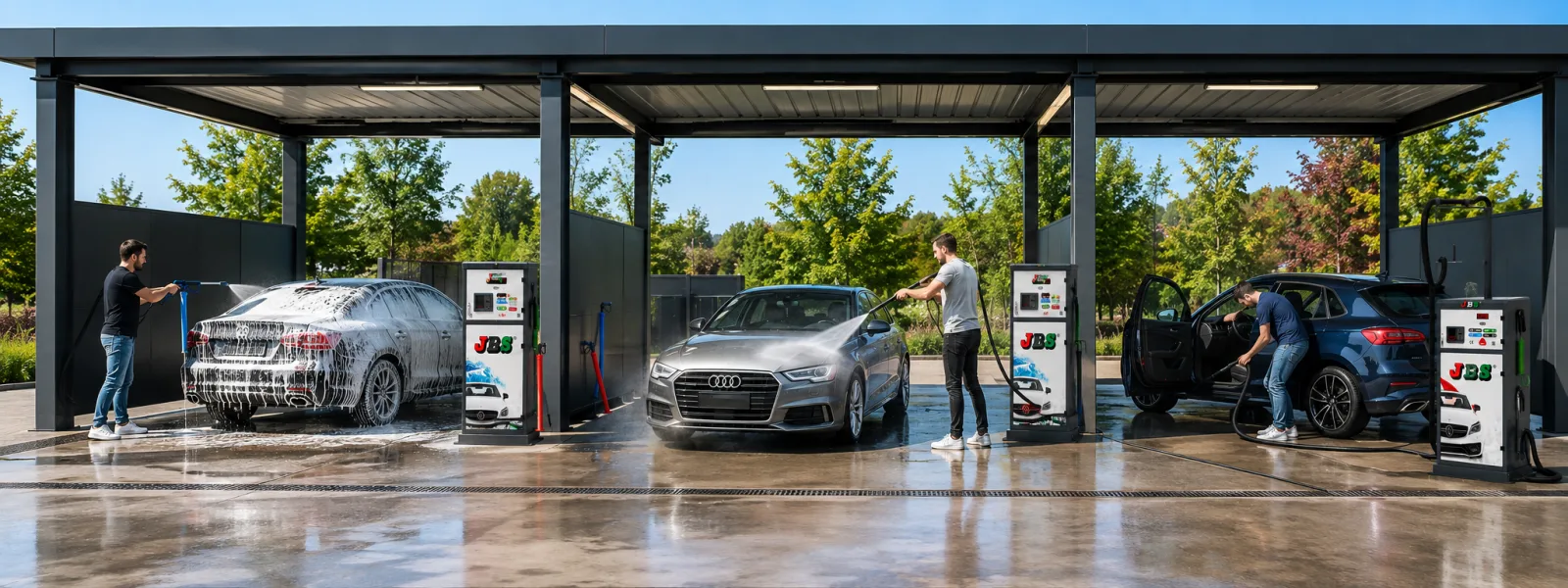
For a forecourt operator or independent wash-park investor, selecting a self-service car wash manufacturer is a procurement decision with long-term operating consequences. An attractive machine price means little if the equipment cannot support peak traffic, local utilities or the required payment process. Buyers should compare written specifications, site responsibilities and after-sales arrangements before committing to an order. JBS Makina manufactures commercial wash equipment with configurations for single-bay, dual-bay and central installations.
What Should a Manufacturer's Quotation Specify?
Ask for working pressure, water flow, motor rating, electrical input, pump configuration, control functions and the supplied accessories. JBS self-service equipment includes configurations rated up to 200 bar with a nominal 15 L/min flow class. Those figures must be interpreted alongside simultaneous-use capacity; a multi-bay site cannot be assessed from the maximum pressure printed on one product sheet.
The quotation should distinguish factory-supplied equipment from items provided by the local installer. Confirm whether hoses, lances, payment hardware, electrical cabinets and commissioning are included rather than assuming a turnkey package.
Selecting Equipment for a Forecourt or Wash Park
A petrol station with one washing position may need straightforward pressure washing and foam. An operator facing queues at peak hours should evaluate whether two simultaneous bays provide more useful capacity. Larger commercial sites may prefer central equipment in a dedicated technical space to organise maintenance access and shared services.
The JBS 4FMS central configuration combines washing, foam, wax and rinsing programmes. Review the JBS self-service car wash systems range to match the configuration to the actual number of users, rather than choosing programmes solely for marketing appeal.
Payment Integration, Water and Site Compliance
Coins, tokens and banknotes are established JBS payment options. Bank cards, mobile wallets and contactless terminals should be treated as project requirements until controller compatibility, currency support and the quotation scope are confirmed. Avoid purchasing an attractive terminal that cannot communicate reliably with the wash programme controller.
Water supply, drainage, detergent storage and wastewater treatment are separate infrastructure decisions. Reverse osmosis and recycling must not be assumed to be standard machine features. Local authorities and installation specialists should verify drainage and discharge obligations for the destination site.
International Purchasing and After-Sales Questions
Request applicable conformity documents for the exact supplied machinery, operating instructions, wiring information, warranty terms and a spare-parts identification process. A UK purchaser should specifically confirm compatibility with the local electrical installation rather than interpreting a 380 V catalogue figure as automatic approval. Agree who installs, commissions and services equipment in the destination country.
The existing self-service equipment buying guide covers broader site components; the manufacturer's proposal should convert those requirements into a clear supply schedule.
Request a Manufacturer-Direct Project Quotation
A credible procurement conversation starts with your site plan. Share the number of bays, peak vehicle demand, power and water capacity, payment requirements and destination country. Ask JBS Makina to confirm the suitable equipment arrangement, documented specifications and supply boundaries before comparing quotations. Request a manufacturer-direct self-service car wash system proposal tailored to your commercial operation.
Recommended Solutions
Related Products and Categories
Common Questions
Frequently Asked Questions
How do I calculate the investment and operating costs of a self-service car wash?
The total investment in a self-service car wash business depends on the number of wash bays, equipment configuration, site construction and required utilities. A realistic budget should include the washing units, payment equipment, electrical installation, water supply, drainage, chemical dosing, commissioning and ongoing maintenance. Operating costs are influenced by electricity, water, chemicals, spare parts, servicing and equipment downtime. Revenue planning should consider actual vehicle demand, average spend per wash and peak-hour utilisation rather than relying only on maximum theoretical capacity. JBS systems offer different configurations for single, dual and multi-bay operations. Additional vacuum and blower services may create separate revenue opportunities.
Which wash programs can be used in a self-service car wash system?
Self-service car wash systems can offer programs such as high-pressure washing, foam application, rinsing and wax treatment. The number of programs can be adapted according to the business model and target customers. Simple switching between wash functions also helps provide a more convenient user experience.
What should be considered when choosing self-service car wash equipment?
When selecting self-service car wash equipment, businesses should evaluate pump quality, operating pressure, water flow, motor power, wash functions, payment options, chemical dosing, service support and spare-parts availability. Daily operating capacity, climate conditions and future system expansion should also be considered.
How do you obtain a permit for a self-service car wash?
To obtain a permit for a self-service car wash, you generally need to register the business and obtain the necessary approvals from the local authorities. Depending on the location and project, requirements may include building approval, wastewater and drainage permits, environmental compliance, electrical and water infrastructure approvals, and operating permits. Because regulations vary by country and municipality, the local authorities should be consulted before construction or installation begins.