Commercial Pressure Washer Buying Guide: Which Machine Fits Your Operation?
Choosing a commercial pressure washer is not simply a matter of buying the machine with the highest PSI or bar rating.
Professional cleaning performance depends on the combination of pressure, water flow, pump construction, water temperature, electrical supply and expected daily runtime.
A vehicle wash, fleet depot, workshop and industrial facility can therefore require very different pressure-washing configurations.
Start With the Cleaning Application
Before comparing machines, define what will actually be cleaned.
| Application | Typical Requirement | Main Selection Factor |
|---|---|---|
| Passenger vehicle washing | 150–200 bar class | Controlled pressure and flow |
| Commercial car wash | Around 200 bar class | Throughput and pump durability |
| Fleet and commercial vehicles | 200–250 bar class | Flow rate and daily workload |
| Workshops and service centres | Hot-water system | Oil and grease removal |
| Industrial cleaning | Higher-duty system | Contamination and runtime |
| Machinery and heavy equipment | 200–250 bar+ | Flow and cleaning impact |
These ranges are selection references rather than universal operating settings. Surface type, nozzle configuration and working distance must always be considered.
Is 150 Bar Enough for Professional Cleaning?
A 150 bar commercial pressure washer can suit passenger vehicles, motorcycles and lower-to-medium commercial workloads.
For these applications, water flow and operating time may matter more than simply increasing maximum pressure.
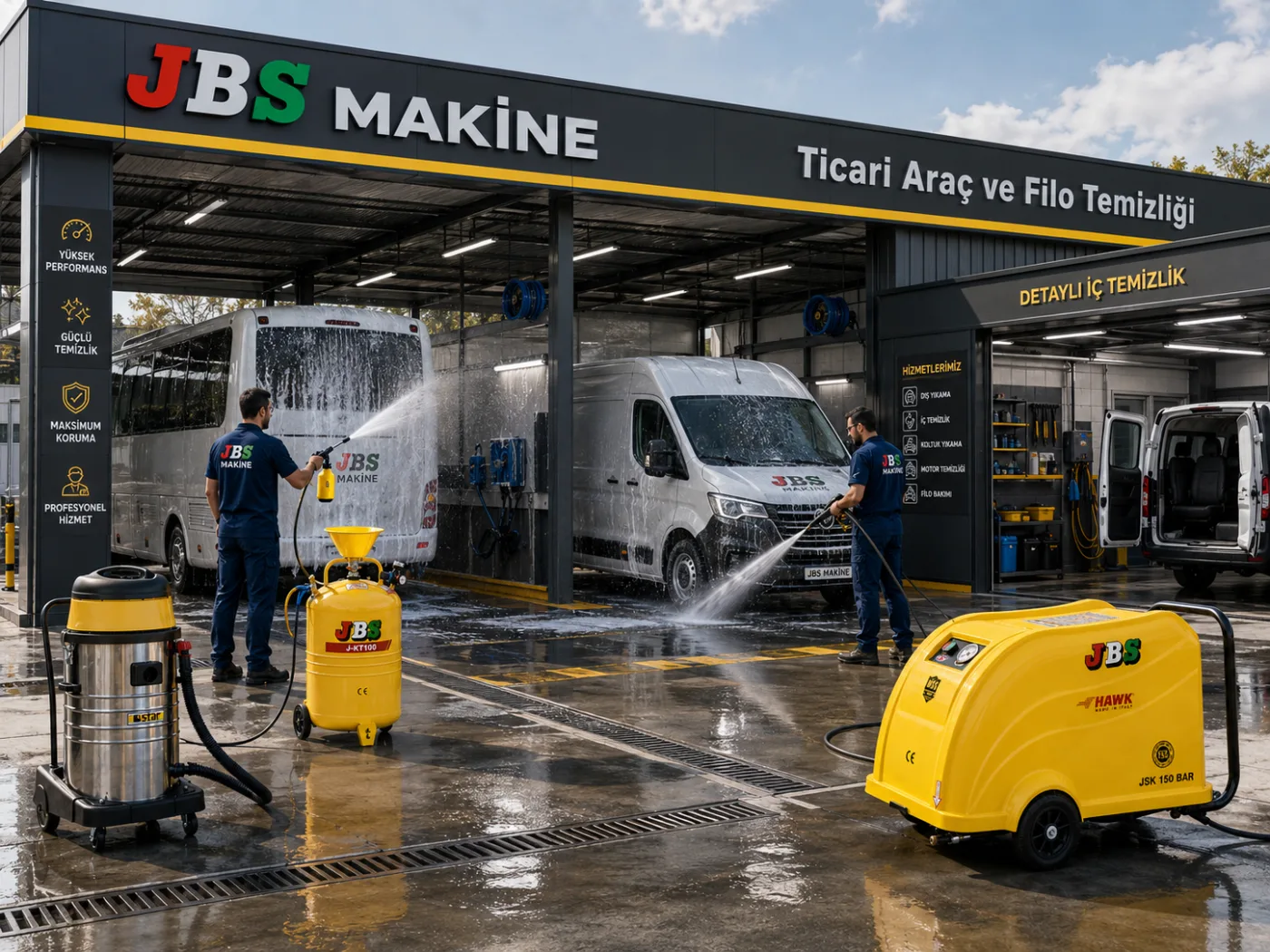
The JBS JSK-150, for example, operates with adjustable pressure up to 150 bar and an 11 L/min flow rate, making it a compact option for suitable professional applications.
When Does 200 Bar Make Sense?
For many professional vehicle-washing businesses, the 200 bar class provides a practical balance between cleaning power and commercial capacity.
It can be considered for:
-
busy car wash sites
-
garages and service centres
-
dealerships
-
fleet operators
-
commercial vehicle cleaning
The JBS JSK-200 combines adjustable pressure up to 200 bar with 14 L/min water flow and three-phase power.
The important point is that 200 bar alone does not determine productivity.
A machine with insufficient water flow may loosen contamination but take longer to rinse mud, foam and debris from larger surfaces.
When Should You Move to 250 Bar?
A 250 bar pressure washer becomes more relevant where heavier contamination, commercial vehicles, chassis, machinery or robust equipment are regularly cleaned.
Higher pressure should not automatically be treated as better.
Paintwork, seals, plastics and other sensitive surfaces require controlled working pressure and suitable nozzle distance.
For professional buyers, the question should be:
Does the application genuinely require additional pressure?
Not:
What is the highest-pressure machine available?
Pressure vs Flow Rate: Which Matters More?
Both.
Pressure helps break the bond between contamination and the surface.
Water flow carries the loosened dirt away.
This becomes particularly important when cleaning:
-
vans and trucks
-
vehicle fleets
-
large floors
-
machinery
-
heavily contaminated equipment
A commercial buyer should therefore compare bar/PSI and L/min together.
Professional manufacturers such as Nilfisk also separate pressure and flow as key selection criteria, rather than treating maximum pressure as the only performance measure.
Cold Water or Hot Water Pressure Washer?
Cold Water
Cold-water pressure washers are suitable for routine dirt, mud, road contamination and general vehicle or equipment cleaning.
They usually offer a simpler system where grease and oily contamination are not the main problem.
Hot Water
Hot water is particularly useful where the cleaning task regularly involves:
-
oil
-
grease
-
oily residues
-
workshop contamination
-
engine and machinery cleaning
For these jobs, increasing water temperature can be more useful than simply increasing pressure.
Compare JBS commercial pressure washers to review cold-water and hot-water configurations.
Pump Design Matters in Commercial Use
The pump is one of the most important components in a professional pressure washer.
Commercial buyers should consider:
-
pump construction
-
piston materials
-
operating speed
-
pressure-regulation system
-
seal and valve availability
-
spare-parts access
-
compatibility with the motor
A machine used occasionally does not experience the same operating stress as equipment running for several hours every day.
Pump and motor design should therefore match the expected workload.
Single Phase or Three Phase?
Electrical infrastructure should be confirmed before the machine is ordered.
Compact systems may operate on single-phase power, while higher-output professional machines commonly require three-phase supply.
Within the JBS range, for example, lower-capacity 150 bar machines can be available with 220 V configurations, while 200 and 250 bar commercial systems typically use 380 V three-phase power.
The electrical installation, circuit protection and available power should be checked before installation.
Daily Duty Cycle Changes the Buying Decision
A pressure washer used for five vehicles per day should not necessarily be specified in the same way as equipment serving dozens of vehicles during a commercial shift.
Before requesting a quotation, define:
-
vehicles or machines cleaned per day
-
average operating hours
-
longest continuous operating periods
-
vehicle type
-
contamination level
-
number of operators
These details provide a much better basis for equipment selection than pressure alone.
Which Commercial Pressure Washer Should You Choose?
There is no single best professional pressure washer for every business.
The correct system is the one that matches:
-
the surface being cleaned
-
contamination type
-
water flow requirement
-
working pressure
-
water-temperature requirement
-
daily operating hours
-
available electrical supply
-
service and spare-parts requirements
Review the JBS commercial car wash pressure washer range or compare all JBS professional equipment.
For a project-specific selection, provide your country, vehicle type, daily workload and electrical supply when requesting technical information from JBS Makina.
Recommended Solutions
Related Products and Categories
Common Questions
Frequently Asked Questions
What Should You Consider When Choosing a Car Wash Machine?
Learn what to consider when choosing a car wash machine, including pressure, water flow, pump quality, power requirements, accessories, service support and business usage needs.
How Are Car Wash Machine Prices Determined?
Car wash machine prices vary depending on pressure capacity, water flow rate, pump quality, heating system, power requirements, accessories, service support and business usage needs.
How do you choose a pressure washer for car washing?
When choosing a pressure washer for car washing, you should consider working pressure, water flow rate, pump quality, motor power, hose length, nozzle options, durability, and ease of maintenance. For professional car wash applications, it is also important to select a machine suitable for frequent use and capable of providing stable pressure without damaging vehicle paint or sensitive surfaces.
Should You Choose a Hot-Cold or Cold Water Car Wash Machine?
Choosing between a hot-cold and cold water car wash machine depends on dirt type, usage intensity, vehicle category and cleaning needs. Hot-cold machines are more effective for oily and heavy dirt, while cold water machines are suitable for standard vehicle washing.