Stop Asking Only “How Many Bar?”
For a UK valeting or detailing business, the useful question is not whether 8, 12 or 16 bar sounds more powerful.
It is whether the machine can provide usable steam for the work being sold, throughout the working day.
Professional equipment in the market spans different pressure classes. Kärcher’s SGV platform reaches 12 bar, while specialist vehicle-steam systems such as Fortador extend into the 12–16 bar range.
That does not make every 16-bar unit automatically more productive.
Peak Pressure Is Not Steam Delivery
Pressure tells you how forcefully steam can leave the system.
It does not tell you how much steam the machine can sustain.
For commercial buying, ask for:
-
continuous steam output;
-
operating temperature;
-
recovery after prolonged use;
-
warm-up time;
-
usable hose length;
-
performance with all required outlets operating.
A lower-pressure unit with stable delivery can be more useful than a higher headline figure that cannot maintain output through consecutive jobs.
Match Pressure to the Service Menu
Interior detailing needs control.
Air vents, door shuts, seat runners, trim and selected upholstery areas benefit from accurate steam placement rather than maximum force.
A fixed detailing centre that also cleans greasy components or carries out heavier workshop work may justify greater steam pressure and temperature.
For this reason, a mixed-use business can require a different machine from a mobile valeter even when both advertise “steam car washing”.
Two Guns Change the Capacity Question
If two technicians are working, pressure at a single gun is only part of the specification.
The machine must provide sufficient steam when both operators need it.
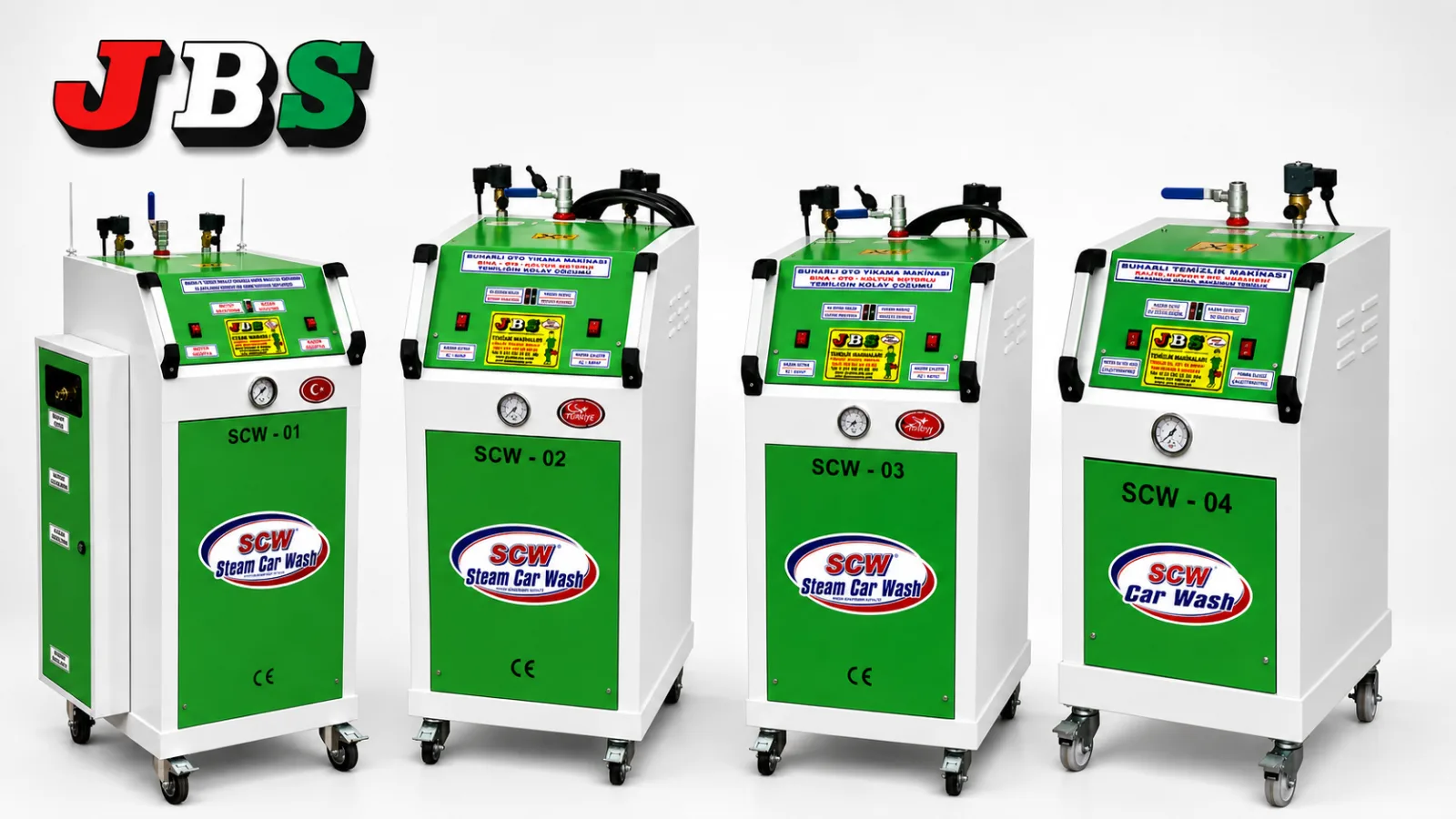
The JBS SCW-03 combines 8 bar, 110–140°C steam and two guns with a 220 V / 50 Hz specification.
For a small detailing team, that workflow can be commercially more relevant than simply buying the highest available pressure.
When Does 15 Bar Make Sense?
The JBS SCW-05 moves into a different operating class: 15 bar, 170–210°C, two guns and a three-phase 380 V supply.
It should therefore be considered where higher temperature and heavier cleaning duties are actually part of the business model.
It is not necessary simply because the machine will be used professionally.
Build the Purchase Around Revenue-Producing Jobs
Compare the full JBS Steam Car Wash Machine range against the jobs your staff perform most frequently.
For a typical workflow, see Auto Detailing Centers. For the commercial case for steam equipment, read Benefits of Steam Car Wash Machines.
Send JBS your number of technicians, operating hours, site power and service mix to request a configuration-specific quotation.
Recommended Solutions
Related Products and Categories
Common Questions
Frequently Asked Questions
Who Can Use a Steam Car Wash Machine?
Steam car wash machines can be used by car wash businesses, detailing centers, auto dealerships, service centers, rent a car companies, fleet operators and mobile vehicle cleaning services.
How much water does steam car washing use?
Actual water consumption depends on the machine, steam flow rate, vehicle size, and cleaning time. Professional steam cleaning generally uses much less water than conventional pressure washing.
Steam Car Wash Machines for Businesses
Steam car wash machines are suitable for car wash businesses, auto detailing centers, car dealerships, service centers, rent a car companies, fleet operators and mobile vehicle cleaning services.
What is a steam car wash machine?
A steam car wash machine is a professional cleaning system that uses high-temperature steam to clean vehicle exterior surfaces, rims, door edges, engine areas and detailed cleaning points.
What is the difference between steam car washing and conventional car washing?
Steam car washing loosens dirt and oily residues with high-temperature steam and provides cleaning with less water. It is especially effective for detailed areas such as interior upholstery, seats, plastic surfaces, wheels, and the engine bay. Conventional car washing uses pressurized water, foam, and cleaning chemicals. It is faster for removing heavy mud, sand, and thick exterior dirt, but generally consumes more water. Steam washing stands out for detailed cleaning and low water consumption, while conventional washing is stronger for heavy exterior dirt. The most suitable method should be selected according to how dirty the vehicle is and which area needs to be cleaned.