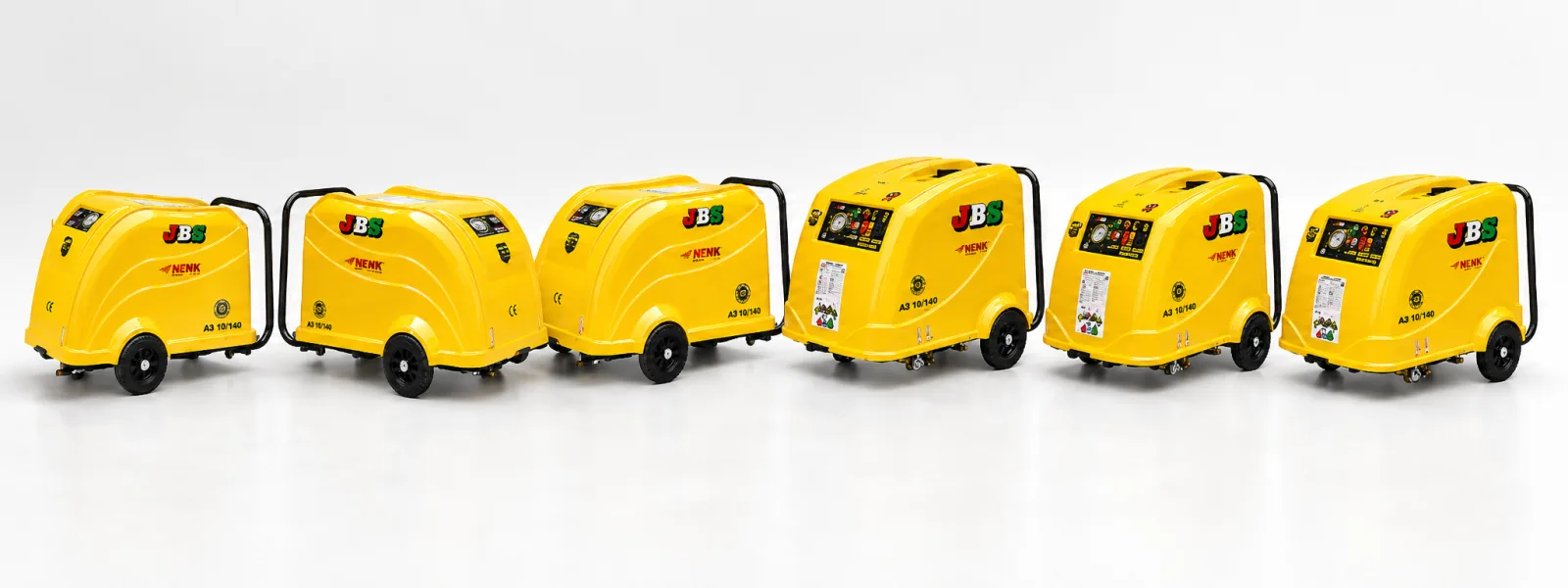
A high-pressure washing machine is a cleaning system that uses a pump to pressurize water supplied from the mains or a water tank and deliver it through a gun and nozzle. Pressurized water helps remove mud, road dirt, oil, dust, and other residues adhering to surfaces.
Professional machines can be used in car wash businesses, vehicle service centers, factories, fleets, agricultural facilities, construction sites, and industrial maintenance areas. Different working-pressure and capacity options can be compared on the pressure washing machines page.
How Does a High-Pressure Washing Machine Work?
The machine’s pump raises the pressure of the water supplied through the inlet. The pressurized water travels through a high-pressure hose to the gun and nozzle. The nozzle design determines the spray angle and the force applied to the surface.
The main factors affecting cleaning performance include:
-
Working pressure
-
Water flow rate
-
Pump quality
-
Motor power
-
Nozzle type
-
Operating distance
-
Water temperature
-
Type of contamination and surface
The machine must not be operated without water. The water-inlet filter should be cleaned regularly, and the water supply must provide the required flow rate continuously.
What Is the Difference Between Pressure and Water Flow Rate?
Pressure refers to the force with which water is applied to a surface. Water flow rate refers to the volume of water delivered by the machine per minute. Pressure helps separate dirt from the surface, while water flow carries the loosened contamination away.
For this reason, selecting a machine based solely on the highest pressure rating is not recommended. A high-pressure machine with a low flow rate may not provide the expected cleaning speed on large surfaces.
Working pressure and water flow rate should be evaluated together according to the surface, daily operating time, and contamination level.
Where Are High-Pressure Washing Machines Used?
Professional high-pressure washing machines can be used for:
-
Exterior cleaning of cars and commercial vehicles
-
Washing minibuses, buses, and fleet vehicles
-
Cleaning tractors and agricultural equipment
-
Cleaning construction machinery and site equipment
-
Washing wheels, chassis components, and wheel arches
-
Cleaning factory and workshop floors
-
Cleaning car parks, warehouses, and outdoor areas
-
Washing durable machinery and equipment surfaces
-
Drain and sewer cleaning
-
Industrial surface-preparation work
The same pressure level should not be used on every surface. Vehicle paintwork, plastics, seals, wraps, and coated components require different pressure settings from concrete, metal, and construction-machinery surfaces.
Should You Use Cold or Hot Water?
The machine type should be selected according to the contamination being removed.
| Machine type | Suitable application |
|---|---|
| Cold-water machine | Dust, mud, road dirt, and routine vehicle cleaning |
| Hot-and-cold-water machine | Oil, grease, and heavy contamination adhering to surfaces |
| Trigger-operated machine | Professional applications requiring controlled water use |
| 500–600 bar water jet | Durable surfaces with paint, rust, and hard industrial residues |
For routine exterior vehicle cleaning, cold-water car wash machines may provide a practical solution. For oily components, engine areas, chassis parts, and heavy equipment, hot-and-cold-water car wash machines may be considered.
Hot water can help loosen oily contamination. However, water temperature, pressure, and cleaning chemicals must be adjusted according to the surface.
Which High-Pressure Washing Machine Should You Choose?
The following cold-water models from JBS Makina can be reviewed for different operating requirements:
Businesses with low or medium workloads may consider more compact models. For businesses with higher daily vehicle volumes and longer continuous operating periods, a higher flow rate, more powerful motor, and pump designed for intensive use become increasingly important.
Businesses that regularly clean oily and heavy contamination can review the Hot-and-Cold-Water Car Wash Machine JSC-200.
Are 500 and 600 Bar Machines Suitable for Washing Cars?
Machines operating at 500 or 600 bar differ from standard car wash machines. These professional systems are designed to remove rust, paint, coatings, and hard industrial residues from durable surfaces.
Pressure at this level should not be applied directly to vehicle bodywork. An unsuitable nozzle, insufficient operating distance, or uncontrolled application may damage paintwork, plastic components, seals, and other surfaces.
For industrial applications, review the available high-pressure water jetting machines. Surface durability and the material to be removed must be determined before selecting a machine.
What Should You Consider When Buying a High-Pressure Washing Machine?
The following specifications should be checked before purchasing:
-
Actual continuous working pressure
-
Water flow rate per minute
-
Adjustable-pressure capability
-
Pump brand and piston construction
-
Motor power and operating speed
-
220 V or 380 V electrical connection
-
Daily operating time
-
Water-supply capacity and filtration system
-
Hose length and pressure resistance
-
Gun and nozzle options
-
Safety and pressure-regulation systems
-
Standard accessories included in the delivery
-
Technical-service and spare-parts support
The power line, cable cross-section, circuit breaker, grounding, and residual-current protection must be suitable for the machine’s electrical requirements. The electrical infrastructure should be inspected by a qualified electrician before installation.
What Should You Consider for Safe Operation?
High-pressure water must not be directed at people, animals, electrical installations, or sensitive surfaces. The gun should not be held over the same area for an extended period, and cleaning should begin at a lower pressure setting.
The operator should use slip-resistant footwear, eye protection, and personal protective equipment appropriate for the application. Hoses, guns, and connections must be checked for damage and leakage before the machine is started.
High-Pressure Washing Machine Prices
High-pressure washing machine prices vary according to working pressure, water flow rate, motor power, pump brand, hot-water capability, electrical connection, hose length, and included accessories.
The total cost calculation should include not only the purchase price but also energy consumption, maintenance expenses, spare-parts availability, and potential operational losses.
To determine the right model for your business, compare JBS Makina pressure washing machines or contact JBS Makina to request a technical assessment and current quotation.
Recommended Solutions
Related Products and Categories
Common Questions
Frequently Asked Questions
Why do professional car wash machine prices vary?
Professional car wash machine prices vary according to the machine's technical specifications and operating capacity. Machines that can run continuously for long periods, provide high pressure, and use durable pump systems are generally positioned in a higher price segment.
Does High Pressure Damage a Vehicle?
High pressure washing may damage vehicle paint, plastic parts, seals or coated surfaces if used incorrectly. Safe car washing depends on the right pressure level, nozzle type, washing distance and surface condition.
What is a professional pressure washer?
A professional pressure washer is a high-performance cleaning machine designed for frequent and intensive use in commercial and industrial environments. It uses pressurized water to remove dirt, mud, grease, and other contaminants from vehicles, machinery, floors, equipment, and outdoor surfaces. Professional models typically offer durable pumps, powerful motors, high water flow, robust components, and longer operating capability than household pressure washers.
How does a pressure washer work?
A pressure washer uses a motor or engine to drive a pump that increases the pressure of the incoming water. The pressurized water then travels through a high-pressure hose and spray gun, where it is directed through a nozzle to remove dirt, mud, grease, and other contaminants from surfaces. The cleaning performance depends on factors such as working pressure, water flow rate, pump capacity, and nozzle type.