Downtime Is a Commercial Cost
For a UK wash site, the important service metric is not simply the price of a replacement seal.
It is:
How long is the revenue-producing machine unavailable?
A pressure washer that fails during a busy week can create lost bookings, operator idle time and customer disruption.
This is why the UK professional market increasingly sells service in terms of uptime, response time and planned maintenance, not repair alone.
Ask for the Service Route Before Ordering
Before purchasing a commercial machine, establish exactly what happens if it develops a fault.
Confirm:
-
who provides first-line diagnosis;
-
whether support is remote or on site;
-
where the machine would be repaired;
-
which parts are stocked;
-
who handles warranty approval;
-
expected part lead times.
For internationally supplied equipment, establish whether a qualified local engineer can perform agreed work with manufacturer support.
Build a Critical-Spare List
Not every component needs to sit on the shelf.
Focus on items that are inexpensive but could stop the wash bay.
Depending on the equipment, these may include:
filters, O-rings, nozzles, couplings, trigger guns or selected hose components.
Pump seal and valve kits should only be stocked after the exact pump series has been confirmed.
Random spare parts are not contingency planning.
Record the Pump Identity
A request saying “I need parts for a 200 bar washer” is insufficient.
Record:
machine model + serial number + pump manufacturer + pump model + electrical specification.
This reduces the risk of ordering an incompatible seal kit, valve or regulator.
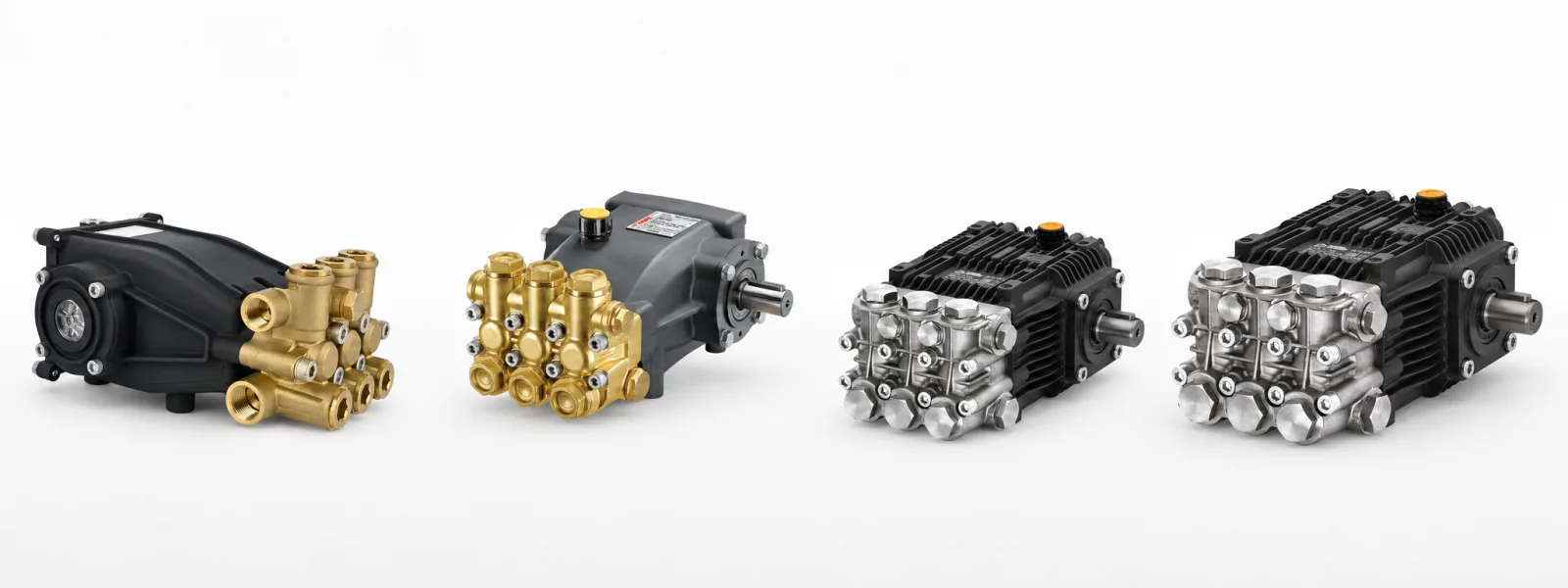
The principle is particularly important where a machine uses a serviceable HAWK or Annovi Reverberi pump.
Preventive Maintenance Should Follow Workload
A machine working occasionally should not be maintained on the same operating assumptions as equipment serving vehicles throughout the working week.
Inspection frequency should reflect:
operating hours, water quality, trigger cycles, hose condition and contamination.
Filters, hoses, connections and pump condition can often reveal developing problems before the machine fails during trading.
Warranty and Maintenance Are Different
Warranty addresses qualifying defects under agreed conditions.
Routine wear, filters, seals, hoses and maintenance items may follow different rules.
A business should therefore understand:
what is warranty, what is scheduled maintenance, and what is a chargeable wear item.
This prevents unrealistic expectations after the machine enters commercial service.
For wider supplier due diligence, use the Car Wash Equipment Manufacturer Checklist.
Buy Uptime Alongside the Machine
Review the JBS JSK-200 Commercial Pressure Washer, compare compatible components under Car Wash Equipment, and plan support around your Car Wash Business. Use the Car Wash Equipment Manufacturer Checklist to assess parts and after-sales responsibility. Provide the machine model, pump identification, destination and workload to request technical support or a commercial JBS quotation.
Recommended Solutions
Related Products and Categories
Common Questions
Frequently Asked Questions
What Is the Difference Between Equipment and a Spare Part?
Equipment is a complete complementary product ready for use, while a spare part is used to maintain or repair existing equipment.
What Information Is Required When Ordering a Spare Part?
The machine make and model, serial number, part code, dimensions, connection details, and, if possible, a photo of the identification label are required.
How Should You Choose Between HAWK and AR Pumps?
The choice should be based on the existing machine's technical specifications, operating duration, and service and spare-parts requirements.
Are Complete Pumps and Pump Spare Parts in the Same Category?
No. Complete pumps should be listed as equipment, while internal components such as seals, valves, and pistons should be listed as spare parts.
Why is the pressure washer running but not producing pressure?
Insufficient water supply, a clogged filter or nozzle, air entering the system, a regulator problem, or worn pump components can cause a loss of pressure.