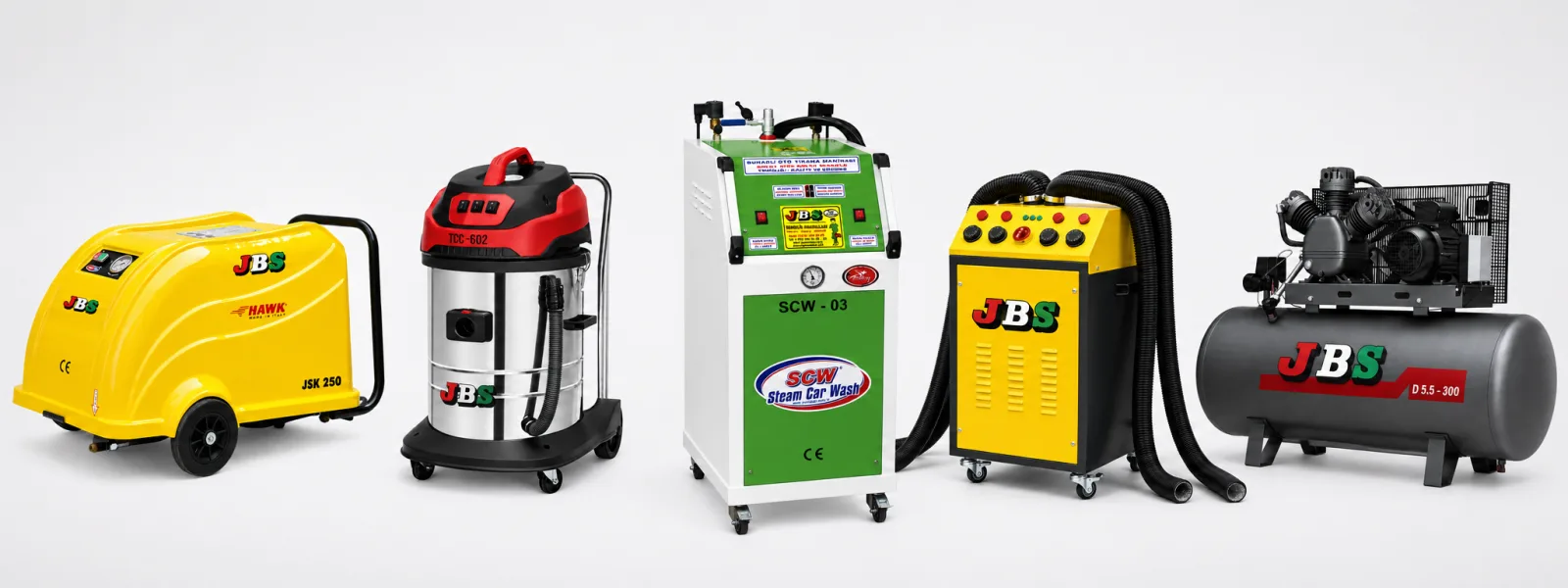
Starting a car wash involves more than renting premises and purchasing a pressure washer. A sustainable business requires a suitable location, clearly defined services, adequate water and electricity, compliant wastewater infrastructure, correctly sized equipment and sufficient working capital.
This car wash entrepreneur guide covers the main decisions that should be made before opening and the equipment that may be required for different operating models.
1. Choose Your Car Wash Business Model
The target customer and services should be determined before selecting premises or equipment.
Staff-operated car wash
Employees provide exterior pressure washing, foam application, rinsing, drying and interior vacuuming. Initial equipment costs can be controlled more easily than with a multi-bay self-service facility, but staffing and service quality must be managed carefully.
Detailing and steam cleaning
This model may include seat and upholstery cleaning, door jambs, wheels, engine compartments, stain removal and detailed interior work.
Businesses offering these services can review steam car wash machines, upholstery cleaners and professional wet-and-dry vacuum cleaners.
Self-service car wash
Customers activate pressure washing, foam, rinsing, wax, vacuum or blower functions using coins, tokens, cards or QR-code payments.
A self-service operation may reduce staffing requirements, but payment systems, chemical dosing, freeze protection, remote monitoring and station capacity must be planned correctly. Available solutions can be reviewed on the self-service car wash systems page.
Fleet and commercial-vehicle washing
This model serves rental fleets, shuttle vehicles, trucks, machinery and company fleets. Higher water flow, long duty cycles and durable pumps become more important.
2. How Should the Location Be Selected?
Location affects customer demand, licensing and infrastructure costs. Before signing a lease, confirm whether the property can legally and technically be used as a car wash.
Check the following:
- Zoning and business-licence suitability
- Safe vehicle entry and exit
- Visibility and access from busy roads
- Vehicle waiting and manoeuvring space
- Separate washing, drying and interior-cleaning areas
- Waterproof flooring and suitable slope
- Drainage channels and floor grates
- Water pressure and supply capacity
- Single-phase or three-phase electrical infrastructure
- Noise impact on neighbouring properties
- Chemical-storage and staff areas
- Sign visibility
A high-traffic property should not be rented if it cannot support the required drainage, electricity and wastewater systems.
3. Research Permits Before Signing a Lease
Licence and permit requirements vary by country and municipality. Businesses operating in Türkiye may need to examine:
- Company or sole-trader registration
- Tax registration
- Business opening and operating licence
- Zoning and occupancy suitability
- Fire-safety requirements
- Water and sewer connection approval
- Wastewater connection conditions
- Sign permits
- Occupational health and safety obligations
- Employee registration requirements
Some Turkish municipalities accept applications through the e-Municipality Business Licence Service. Written confirmation should still be obtained from the relevant municipality before renting the property.
Entrepreneurs outside Türkiye should confirm the applicable requirements with their local municipality, environmental authority and water utility.
4. Plan Wastewater and Drainage
Car-wash wastewater may contain sand, mud, oil, detergents and road residue. It should not be discharged into the environment or a stormwater line without approval.
Depending on local requirements, the project may need:
- Sediment or sludge traps
- Oil and grease separators
- Floor channels and grates
- A wastewater connection approval
- Sampling or inspection points
- Water-recycling equipment
- A secure chemical-storage area
Requirements must be confirmed with the relevant water and sewer authority before construction begins.
5. How Should a Car Wash Machine Be Selected?
Maximum pressure should not be the only criterion. Cleaning capacity is influenced by both working pressure and water flow.
Compare:
- Continuous working pressure
- Maximum pressure
- Water flow rate
- Pump brand and piston construction
- Motor power and speed
- Electrical supply
- Daily duty capacity
- Hot-water requirements
- Hose and spray-gun length
- Warranty and technical service
- Spare-parts availability
6. Selecting a Machine by Daily Vehicle Volume
Small and medium-sized businesses
The JSK-150 cold-water car wash machine offers adjustable 20–150 bar pressure, an 11 L/min flow rate, a 3 kW motor and 220 V operation. It may be suitable for moderate passenger-car and light commercial-vehicle washing.
Daily professional operation
Businesses with more vehicles and longer operating hours can review the JSK-200 cold-water car wash machine. It offers adjustable 20–200 bar pressure, a 14 L/min flow rate and a 5.5 kW three-phase motor.
Commercial vehicles and intensive cleaning
The JSK-250 cold-water car wash machine provides adjustable 20–250 bar pressure and a 15 L/min flow rate for commercial vehicles, machinery and demanding cleaning tasks.
7. Is Hot Water Necessary?
Cold water may be sufficient for mud, dust and ordinary road contamination. Hot water can make removing oil, grease and stubborn contamination easier.
| Model | Pressure | Water flow | Supply | Recommended use |
|---|---|---|---|---|
| JSC-150 | 20–150 bar | 11 L/min | 220 V | Small and medium-sized businesses |
| JSC-200 | 20–200 bar | 14 L/min | 380 V | Daily professional washing |
| JSC-250 | 20–250 bar | 15 L/min | 380 V | Commercial vehicles and heavy contamination |
Cold- and hot-water options can be compared on the pressure washing machines page.
8. What Equipment Is Needed?
A standard car wash may require:
- Pressure washing machine
- Foam tank or chemical-dosing system
- High-pressure hose and spray gun
- Nozzles and pressure regulator
- Water filters and fittings
- Wet-and-dry vacuum cleaner
- Air compressor and air gun
- Upholstery cleaning machine
- Seat-drying equipment
- Steam cleaning machine
- Brushes, microfibre cloths and chemicals
- Personal protective equipment
- Secure chemical-storage cabinet
Supporting equipment can be reviewed under car wash equipment, foam tanks, industrial and car vacuum cleaners and carpet and upholstery cleaning machines.
9. Which Costs Should Be Included?
| Investment item | Scope |
| Rent and deposit | Deposit, advance rent and property expenses |
| Renovation | Flooring, waterproofing, drainage and customer area |
| Electrical installation | Panel, cables, three-phase connection and protection |
| Water infrastructure | Storage, pumps, filters, plumbing and wastewater connection |
| Machines and equipment | Pressure washer, vacuum, compressor and foam system |
| Licences and setup | Company formation, permits, projects and consultancy |
| Opening inventory | Chemicals, cloths, brushes and consumables |
| Marketing | Signage, website, local listings and advertising |
| Working capital | Rent, payroll and utilities during the first months |
| Maintenance reserve | Repairs, spare parts and scheduled maintenance |
Machine price should be considered together with energy consumption, maintenance, service response and potential downtime.
10. How Is Break-Even Calculated?
Estimated monthly revenue:
Daily vehicle volume × average transaction value × monthly operating days
Contribution per vehicle:
Average transaction value − water, energy, chemicals and other variable costs
Break-even vehicle volume:
Monthly fixed costs ÷ contribution per vehicle
Prepare low, normal and high-demand scenarios. Weather, seasonal changes, competition and weekday traffic should be included.
11. Services That Can Increase Revenue
- Steam detailing
- Seat and upholstery cleaning
- Engine-bay cleaning
- Wheel and tyre care
- Wax and paint protection
- Headlight cleaning and polishing
- Air-conditioning vent cleaning
- Fleet contracts
- Coin-operated vacuum and blower
- Monthly wash packages
- Appointment-based premium services
Each service should be priced after calculating labour, equipment, chemical and time requirements.
12. Common Mistakes
- Renting before confirming licence suitability
- Ignoring wastewater and drainage costs
- Selecting a machine only by maximum pressure
- Failing to calculate daily vehicle capacity
- Ignoring electrical requirements
- Buying only by the lowest price
- Failing to check service and spare parts
- Underestimating payroll and working capital
- Copying competitors’ prices without cost analysis
- Failing to create a repeat-customer system
Opening Checklist
- Define the business model and target customer.
- Analyse competitors and local prices.
- Set a realistic daily vehicle target.
- Confirm zoning and licence suitability.
- Inspect water, electricity and wastewater infrastructure.
- Plan washing, drying and waiting areas.
- Select machine capacity according to workload.
- Obtain written quotations for renovation and equipment.
- Set aside sufficient working capital.
- Train staff and perform trial washes.
- Prepare local listings, website and social media.
- Establish a maintenance and spare-parts plan.
Can KOSGEB Support Be Used in Türkiye?
KOSGEB programmes may include support for company formation, staffing, machinery, software or professional services. Not every programme is open to every industry.
The company’s activity code, establishment date and programme-specific eligibility should be checked. An investment should not be planned on the assumption that support will automatically be approved.
Current conditions are available from the KOSGEB Entrepreneur Support Programme.
Conclusion
A successful car wash depends on more than purchasing a good machine. Location, permits, infrastructure, machine capacity, staffing, service quality, pricing and customer retention must be managed together.
An oversized system can increase the initial investment unnecessarily, while an undersized machine can cause slow service, breakdowns and customer loss.
Review the JBS Makina product catalogue to compare professional car wash machines and supporting equipment.
Recommended Solutions
Related Products and Categories
Common Questions
Frequently Asked Questions
How much do car wash machines and equipment cost?
A budget of approximately TRY 150,000–500,000 may be allocated for a pressure washer, foam tank, compressor, vacuum cleaner, and auxiliary equipment. The cost increases when steam, seat-cleaning, and drying machines are added.
Is 380 V Required for a Three-Phase Car Wash Machine?
Yes. Three-phase machines generally require a 380 V electrical supply. The electrical installation should be checked before purchase.
What should you consider when choosing a car wash machine manufacturer?
When choosing a car wash machine manufacturer, you should consider product quality, manufacturing experience, technical specifications, customization options, warranty conditions, spare parts availability, installation support, maintenance services, and after-sales technical support. For professional projects, it is also important to evaluate the manufacturer’s references, export experience, energy and water efficiency, and ability to provide solutions tailored to your business needs.
What is the difference between a 220 V and a 380 V pressure washer?
The main difference is the electrical power supply and the performance level the machine can support. 220–230 V pressure washers are generally suitable for lighter-duty applications and locations with a standard single-phase power supply. 380–400 V three-phase models are typically used for professional and industrial applications because they can support more powerful motors, higher water flow, and longer operating times. The right choice depends on the required cleaning performance, daily usage, and available electrical infrastructure.