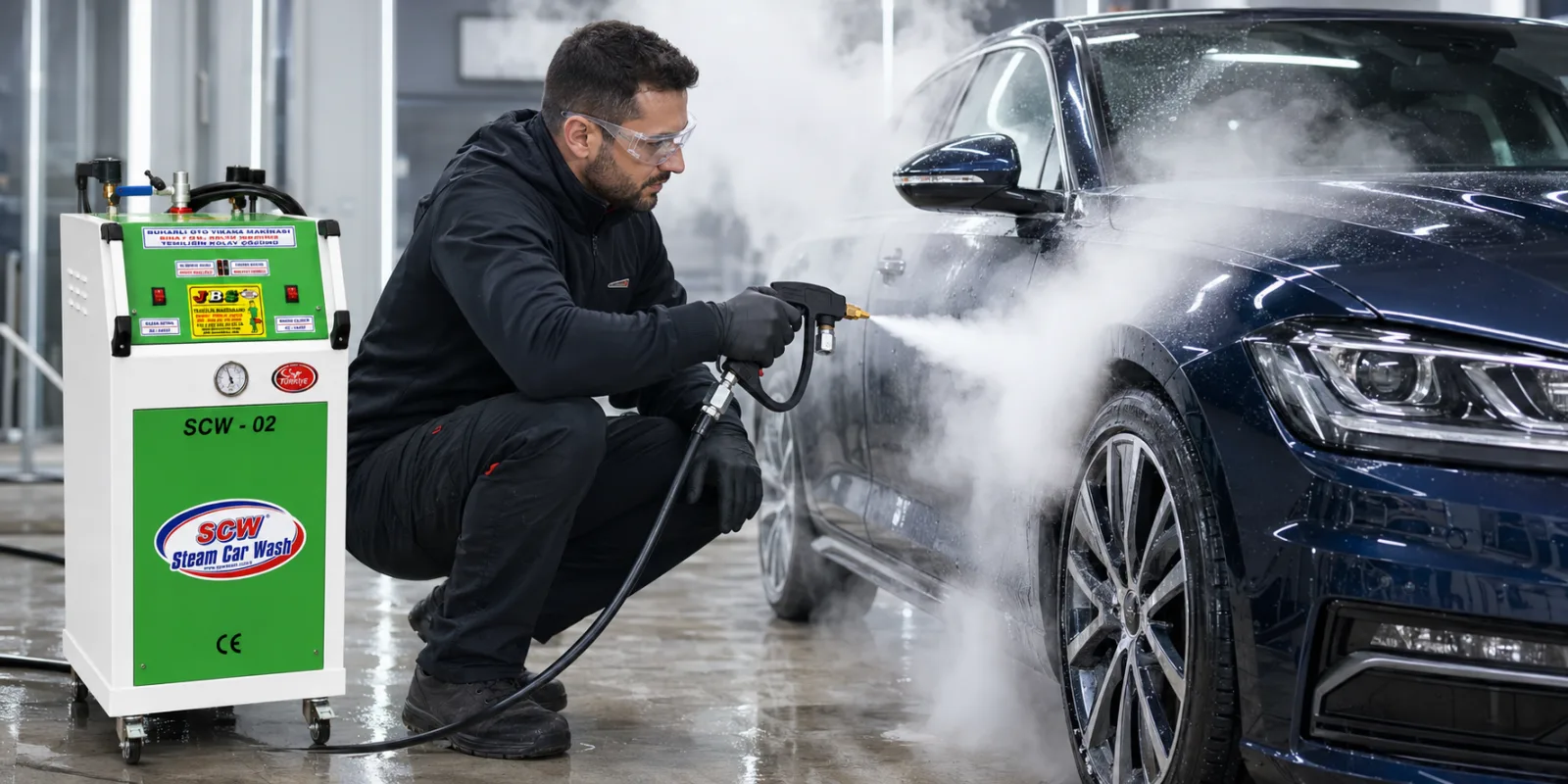
Yes, a car can be washed with a steam cleaner when the equipment is suitable for automotive use and the application is controlled. Professional steam car wash machines use high-temperature steam and limited moisture to soften dirt on vehicle surfaces.
How Does Steam Car Washing Work?
Heat helps loosen contamination while controlled steam reaches detailed areas. Pressure, temperature, moisture level, nozzle type and working distance must be adjusted to the surface being cleaned.
Can Any Steam Cleaner Be Used?
Small household steam cleaners are not designed for the workload and continuous output expected in a professional car wash. Commercial vehicle cleaning requires appropriate steam capacity, durable components and safe pressure control.
Can Steam Damage Paint?
Sound automotive paint can generally be cleaned safely when the steam gun is kept moving at an appropriate distance. Loose clear coat, fresh repair paint and damaged wraps require extra care.
How to Steam Clean the Exterior
Remove heavy sand and mud first, work panel by panel and wipe loosened dirt with clean microfiber towels. Avoid dragging abrasive particles across the paint.
Can the Interior Be Cleaned?
Steam can be used on many seats, carpets, plastic trim, door jambs and detailed areas. Sensitive electronics and materials should be protected from concentrated heat and moisture.
Engine Bay and Wheels
Wheels and many engine-bay surfaces can be cleaned with steam, but exposed electrical components, sensors and delicate finishes require controlled application.
Advantages and Limitations
Steam can reduce liquid-water use and support detailed cleaning, but it is not always the fastest solution for vehicles covered in thick mud or sand.
Conclusion
A car can be washed effectively with steam when the machine, surface preparation and operator technique are appropriate for automotive detailing.
Recommended Solutions
Related Products and Categories
Common Questions
Frequently Asked Questions
Can Steam Cleaning Be Performed While the Machine Is Running?
Production equipment with moving parts should not be cleaned while operating. The machine must be stopped and all hazardous energy sources safely isolated.
Does steam cleaning completely eliminate the use of chemicals?
Not in every case. Depending on the type and thickness of the residue, a surface-compatible chemical or mechanical cleaning method may be required.
Does steam car washing increase costs?
A steam machine increases the initial investment, but it can enable higher-priced services such as interior cleaning, detailing, and engine cleaning.
Does steam car washing use a lot of water?
Steam systems can use water in a more controlled way than conventional methods based on high-volume water flow. Actual consumption depends on the machine's technical specifications, selected operating mode, and application time.
Does steam cleaning save water?
Yes. Steam cleaning can significantly reduce water consumption compared with many conventional washing methods because it uses a relatively small amount of water to generate high-temperature steam. This makes steam cleaning especially suitable for professional vehicle detailing, food facilities, workshops, and industrial cleaning applications where water efficiency is important. Actual water savings depend on the machine, application, and operating method.
How many bar should a steam cleaner have for a food processing facility?
The required steam pressure depends on the cleaning application and level of contamination. For general food processing and commercial kitchen cleaning, steam cleaners operating at around 3–4 bar can be suitable for many surfaces and equipment. For intensive industrial cleaning, grease removal, conveyor systems, and demanding production areas, professional dry-steam systems with around 6–10 bar or higher may be more appropriate. Pressure should always be evaluated together with steam temperature, steam volume, continuous-duty capability, and hygiene requirements.