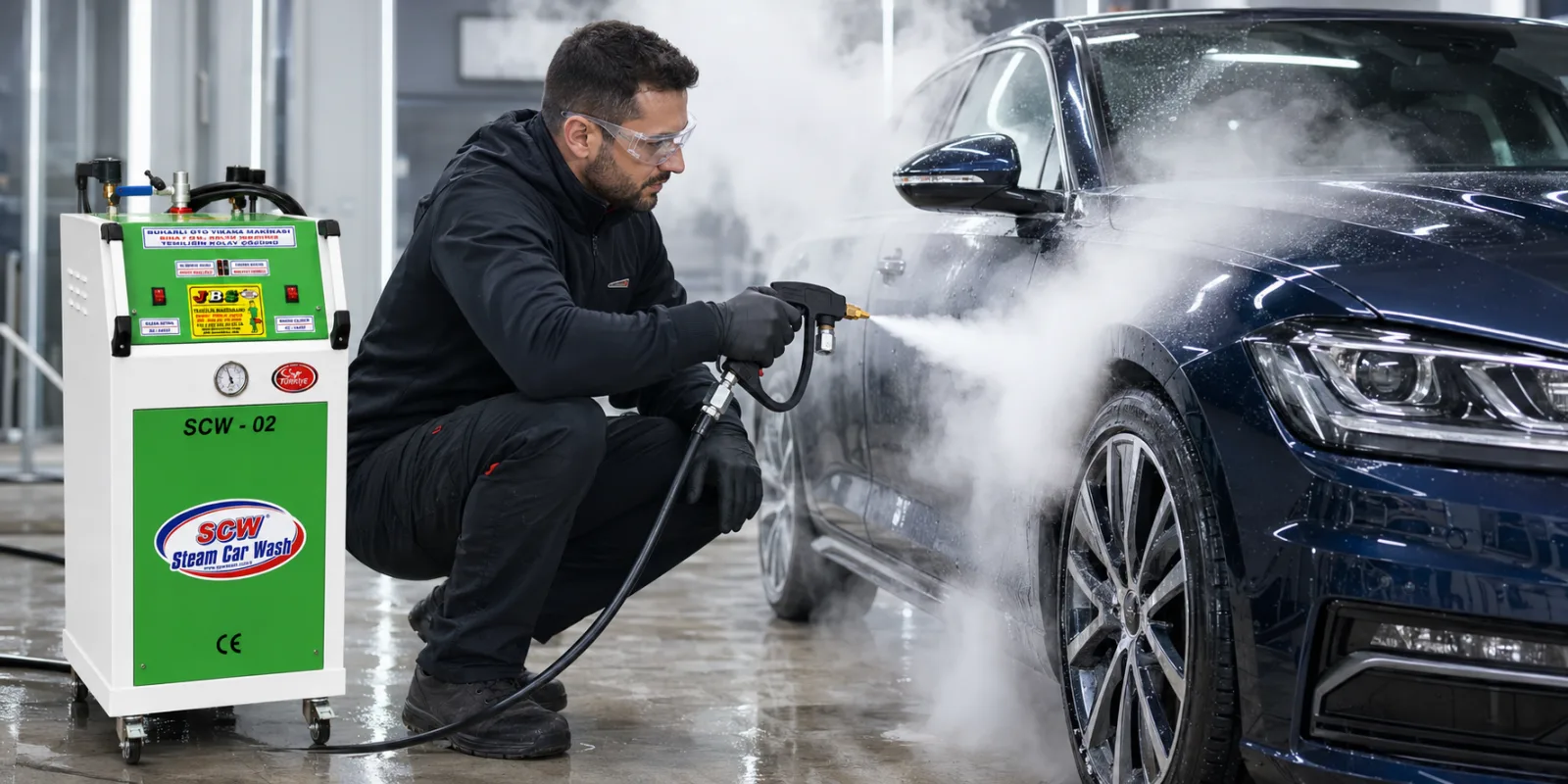
Paint Safety Is an Operating Procedure, Not a Machine Claim
For a UK detailing business, saying a machine is “paint safe” is not enough.
Paint safety depends on the vehicle, surface condition, technician and working method.
OEM clear coat, smart repairs, aged paint, matte finishes, vinyl wrap, PPF and fresh ceramic coatings create different risks.
That is why professional exterior steaming should begin with a vehicle condition check, not the steam trigger.
Inspect Before Accepting the Job
Look for clear-coat failure, lifting paint, fresh body-shop repairs, stone-chip damage and previously repaired panels.
Where paint condition is uncertain, record it before cleaning begins.
This matters particularly for dealerships and vehicle-preparation businesses handling used stock where previous repair history may not be obvious.
Grit Is Often a Bigger Paint Risk Than Steam
Dry road grit, sand and mud become abrasive when dragged across a panel.
A steam system may loosen the contamination, but it does not make dirty microfibre safe.
Heavily contaminated vehicles should therefore receive an appropriate pre-clean before detailed steam work begins.
This is also why high-pressure washing and steam detailing can belong in the same professional bay rather than competing for the same task.
Control Temperature Through Distance and Movement
Professional steam-car-wash systems are normally used with a moving nozzle rather than holding concentrated heat over one section.
Work panel by panel, keep the lance moving and allow the steam to loosen the contamination before lifting it away with clean microfibre.
Testing an unfamiliar surface before treating a complete panel is good commercial practice.
Repaired Paint Needs a More Conservative Process
Body-shop refinishing creates a different risk profile from factory paint.
If the repair is recent, follow the refinisher’s curing and washing instructions.
If clear coat is already peeling or paint adhesion is questionable, steam should not be used as a test of how strong the repair is.
The defect should be documented and discussed before cleaning.
Matte and Satin Finishes Need Their Own SOP
Matte paint should not inherit the standard process used for gloss clear coat.
Its visual finish depends on retaining a uniform low-gloss surface.
Technicians should follow the vehicle manufacturer's care guidance and avoid aggressive local heat, abrasive towels and unsuitable products.
For businesses handling premium vehicles, a separate matte-paint procedure reduces inconsistency between technicians.
Wraps and PPF Require Manufacturer Guidance
Paint-protection film and vinyl introduce edges, seams and adhesives that ordinary paint does not have.
Avoid concentrating heat around lifted edges or damaged seams.
For unknown films, begin with a conservative test and follow the film manufacturer's care limits.
This is especially important for premium detailing businesses that also sell PPF or wrapping services.
Ceramic Coatings Still Need Correct Technique
A coating does not make paint immune to excessive heat or poor towel handling.
Different systems have different curing and maintenance requirements.
Recently coated vehicles should be cleaned according to the coating supplier or installer instructions.
Steam is a cleaning tool; it is not a substitute for the coating's aftercare programme.
Equipment Should Match the Business
For a two-technician studio, the JBS SCW-03 Steam Car Wash Machine provides an 8-bar, dual-gun, 220 V configuration.
A single-operator detailing business may be better served by a smaller system rather than paying for unused workstation capacity.
The wider JBS Steam Car Wash Machine range covers different operating profiles.
Businesses planning a complete detailing bay can also review JBS solutions for Auto Detailing Centers.
Build a Repeatable Exterior SOP
A commercial process should consistently cover inspection, heavy-soil removal, surface classification, controlled steaming, clean-towel management and final inspection.
That reduces variation between employees and provides a clearer quality standard for premium detailing, dealership preparation and fleet work.
For wider steam applications, read the Professional Steam Cleaner for Auto Detailing guide.
Share daily throughput, technician count and service mix to request a commercial quotation from JBS Makina.
Recommended Solutions
Related Products and Categories
Common Questions
Frequently Asked Questions
Steam Car Wash Machines for Businesses
Steam car wash machines are suitable for car wash businesses, auto detailing centers, car dealerships, service centers, rent a car companies, fleet operators and mobile vehicle cleaning services.
What Affects Steam Car Wash Machine Prices?
Steam car wash machine prices are determined by the selected model, steam capacity, number of steam guns, heating system, power requirements, accessory package, service support and professional usage needs.
Can You Wash a Car with a Steam Machine?
A car can be washed with a steam machine when the correct steam pressure, nozzle type, distance and cleaning method are used according to the vehicle surface and dirt level.
Which Machines Should Car Detailing Centers Choose?
Steam car wash machines, upholstery cleaners, wet and dry vacuums, and pressure washers can be considered together for detailing centers. Steam systems are advantageous for interior detailing, door jambs, air vents, and seat rails.