JBS Makina
Menu
Language

Refrigerated Truck Cleaning Equipment

Reefer trailer washout requires more than a high-pressure rinse. Food carriers must protect insulated liners, manage sanitation records and allow drying before pre-cooling. Compare JBS adjustable pressure washers by water flow, bay throughput and electrical compatibility.

Refrigerated Truck Cleaning Equipment

Reefer Trailer Washout Equipment: Building a Reliable Fleet Cleaning Process

A refrigerated trailer returning to a distribution depot may have only a short period between unloading and its next collection appointment.

Packaging, food residue and moisture need to be managed without damaging the trailer's insulated structure or refrigeration components. For food carriers, the objective is a documented, repeatable cleaning process that fits the dispatch schedule.

The right reefer trailer washout equipment should be selected around the wash bay, cargo history and vehicle turnaround—not a headline pressure rating.

JBS Makina manufactures professional adjustable-pressure washing machines that can be assessed for approved trailer surfaces and commercial fleet operations.

What Should a Reefer Washout Service Include?

The work required after a load depends on the previous cargo and the trailer's condition.

A trailer carrying packaged chilled goods may need debris removal and routine cleaning. A trailer carrying exposed food materials may require more extensive cleaning and, where specified, appropriate sanitising procedures.

A typical washout workflow includes removing loose debris, examining the trailer's condition, cleaning suitable interior surfaces, collecting wastewater, inspecting the result and preparing the compartment for the next load.

Commercial operators should record the service completed, particularly where a customer requires washout documentation.

A washout ticket can help demonstrate that the service took place, but it does not automatically prove that a particular sanitation standard was met.

How Do Food Transport Requirements Affect the Wash Bay?

For US food carriers, the FDA's sanitary transportation framework assigns responsibilities for keeping transportation equipment in a condition suitable for the food being carried.

The required practices depend on the shipment, shipper instructions and applicable arrangements between the parties.

A food transport wash bay should therefore support the operator's documented cleaning procedure.

If a validated sanitation step is required, pressure washing alone cannot be presented as equivalent to it.

Cleaning chemicals must be selected for the application, with any required contact time and rinsing carried out according to their instructions.

Protect Insulated Liners, Seals and Refrigeration Hardware

Reefer trailers have vulnerable construction details that ordinary commercial trucks may not.

Insulated panels can be damaged when pressurised water enters joints or defects. Door seals, floor channels and adhesives may also have restricted cleaning conditions.

Never assume that 200 bar or heated water is suitable for interior panels merely because the washing machine can deliver it.

Refrigeration coils, electrical connectors, sensors and air-distribution components require specific cleaning methods. A high-pressure jet must not be directed at these assemblies without an approved procedure.

Trailer manufacturers' instructions should define the permitted pressure, nozzle distance, chemical compatibility and temperature.

Choose Pressure Washer Capacity for the Entire Depot

A single-bay washout operation has different requirements from a depot cleaning multiple trailers during an overnight dispatch window.

For appropriate cleaning applications, JBS JSC-200 offers:

  • Adjustable pressure from 20 to 200 bar

  • Water flow of 15 L/min

  • 5.5 kW three-phase motor

  • Nominal 380 V / 50 Hz electrical supply

  • Water heating up to 60°C

Compare JBS commercial hot and cold water pressure washers.

These are machine specifications, not recommended settings for a refrigerated trailer interior.

Cold-water configurations may be sufficient for many routine approved wash tasks. Heated equipment should be considered only where the cargo residue and trailer manufacturer's instructions justify it.

For buyers outside regions using the stated electrical supply, power compatibility must be confirmed before purchase.

Drying and Pre-Cooling Are Part of Vehicle Turnaround

A freshly rinsed compartment is not necessarily ready for loading.

Remaining water around floor channels, seals and corners should be addressed before releasing the trailer.

The compartment must also be brought to the temperature specified for the next shipment, where required.

The washout process should measure cleaning time, drying time and pre-cooling time separately. Otherwise, a faster pressure washer may make little difference to the actual dispatch deadline.

Where multiple trailers share a wash bay, queueing and operator availability should be considered in capacity planning.

Compare Equipment Costs with the Service You Need to Deliver

A useful supplier proposal goes beyond the pressure washer's purchase price.

Confirm water supply requirements, wastewater handling, pump servicing, hoses, accessories and spare parts. Establish which components are included and what must be supplied locally.

For international sourcing, clarify electrical compatibility, warranty arrangements, freight terms and any installation work.

The equipment itself should not be represented as a complete wash bay, wastewater recovery system or certified food-sanitising package unless those elements are expressly specified.

Request a Factory-Direct Reefer Washout Equipment Specification

An expensive pressure washer will not solve wash bay congestion, missing sanitation procedures or damage caused by unsuitable cleaning settings.

Ask JBS Makina for a technical proposal based on your refrigerated fleet and operational constraints.

Provide the number of trailers washed per shift, their compartment materials, previous cargo types, available utilities and destination country.

Request confirmed machine specifications, included spray accessories, service requirements and current manufacturer pricing.

Choose the washing equipment your operation can use safely and consistently, then build the washout procedure around verified requirements.

REQUEST A FACTORY-DIRECT REEFER TRAILER WASHOUT EQUIPMENT QUOTE

Related Products

Hot and Cold Water Car Wash Machines JSC 250

Hot and Cold Water Car Wash Machines

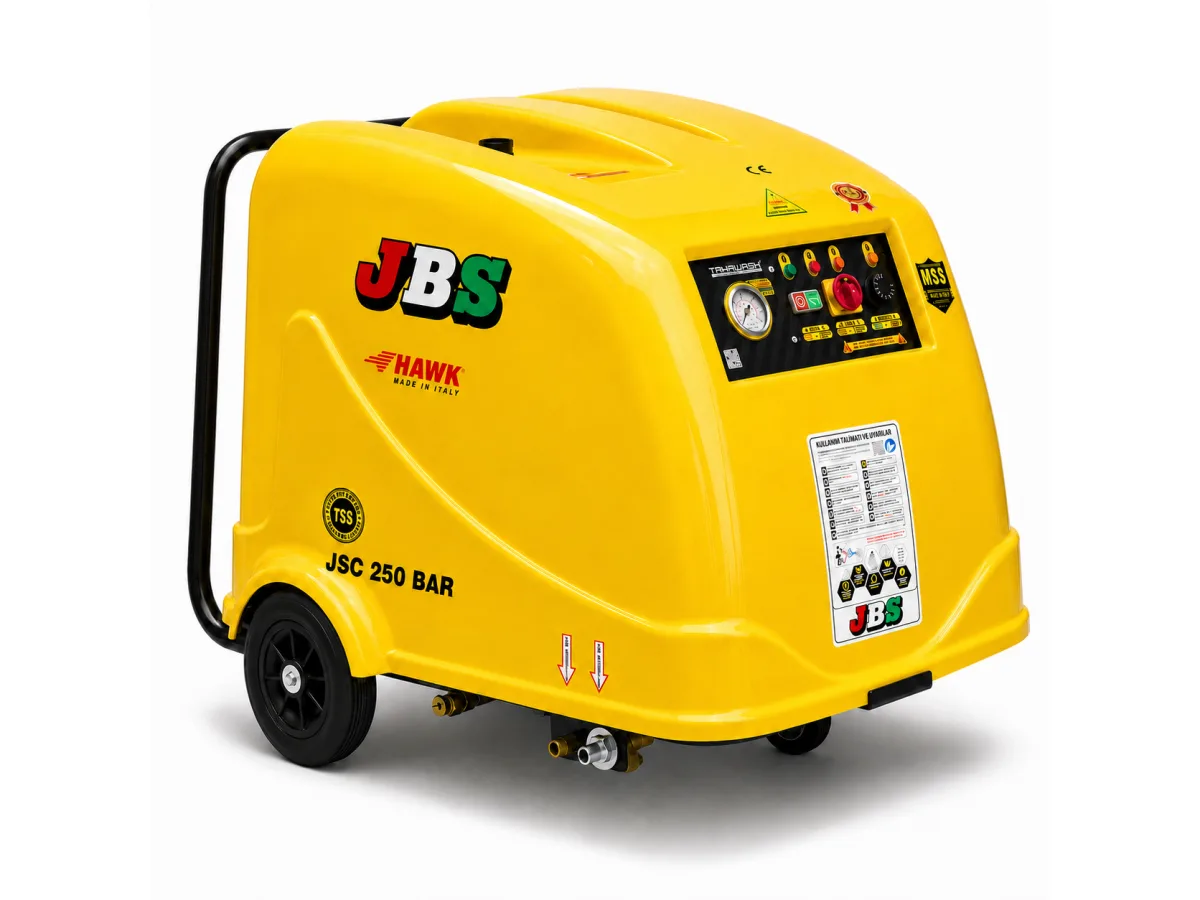
Hot and Cold Water Car Wash Machine JSC 250

Model: JSC-250

The JBS JSC-250 hot water pressure washer combines adjustable 20–250 bar pressure, 15 L/min flow, a 7.5 kW three-phase motor and water heating up to 60°C. An Italian HAWK pump and 20-litre fuel tank support commercial fleet, workshop and machinery cleaning. Compare specifications, check site requirements and request a tailored written manufacturer quotation today.
Details WhatsApp Quote
Trigger-Operated Hot and Cold Water Car Wash Machine JSCT 250

Trigger-Controlled Hot and Cold Water Car Wash Machines

Trigger-Operated Hot and Cold Water Car Wash Machine JSCT 250

Model: JSCT-250

JBS JSCT-250 is a commercial hot water pressure washer for truck depots, construction equipment and fleet maintenance. It combines adjustable 20–250 bar pressure, 15 L/min flow, a 7.5 kW three-phase motor, Italian HAWK pump and water heating from 30–90°C. Trigger-operated spraying supports controlled cleaning. Check installation requirements and request a tailored manufacturer quotation today.

Details WhatsApp Quote

Related Categories