JBS Makina
Menu
Language

Railway Maintenance Cleaning Equipment

Rail depots face grease, brake dust and accumulated dirt on approved rolling stock surfaces and workshop areas. Select controlled pressure washing around maintenance schedules, water supply and electrical restrictions. Request a site-specific JBS Makina technical quotation.

Railway Maintenance Cleaning Equipment

Cleaning Challenges in Railway Depots and Rolling Stock Workshops

Railway maintenance facilities operate under demanding schedules, with limited time available between rolling stock inspections, servicing and planned maintenance activities.

Locomotives, passenger coaches and freight wagons accumulate environmental dirt, mud and operational contamination. Depot workshops also face grease, oil residues and brake-related particles around servicing equipment and designated maintenance areas.

These deposits can make external inspections more difficult and increase the preparation time required before scheduled maintenance.

For railway operators, rolling stock maintenance contractors and depot managers, professional railway cleaning should support inspection accessibility and planned servicing rather than simply improve the appearance of vehicles.

The cleaning method must be appropriate for the particular surface, vehicle type and operational environment. Modern rolling stock includes sensitive electrical systems, protective coatings and components that cannot safely be exposed to unrestricted pressure washing.

A suitable cleaning strategy therefore separates approved exterior and workshop washdown tasks from specialist railway maintenance procedures.

Pressure Washing Applications in Locomotive and Rail Vehicle Depots

Selected exterior surfaces of locomotives, passenger coaches and freight wagons may require periodic washing to remove mud, road film and environmental contamination.

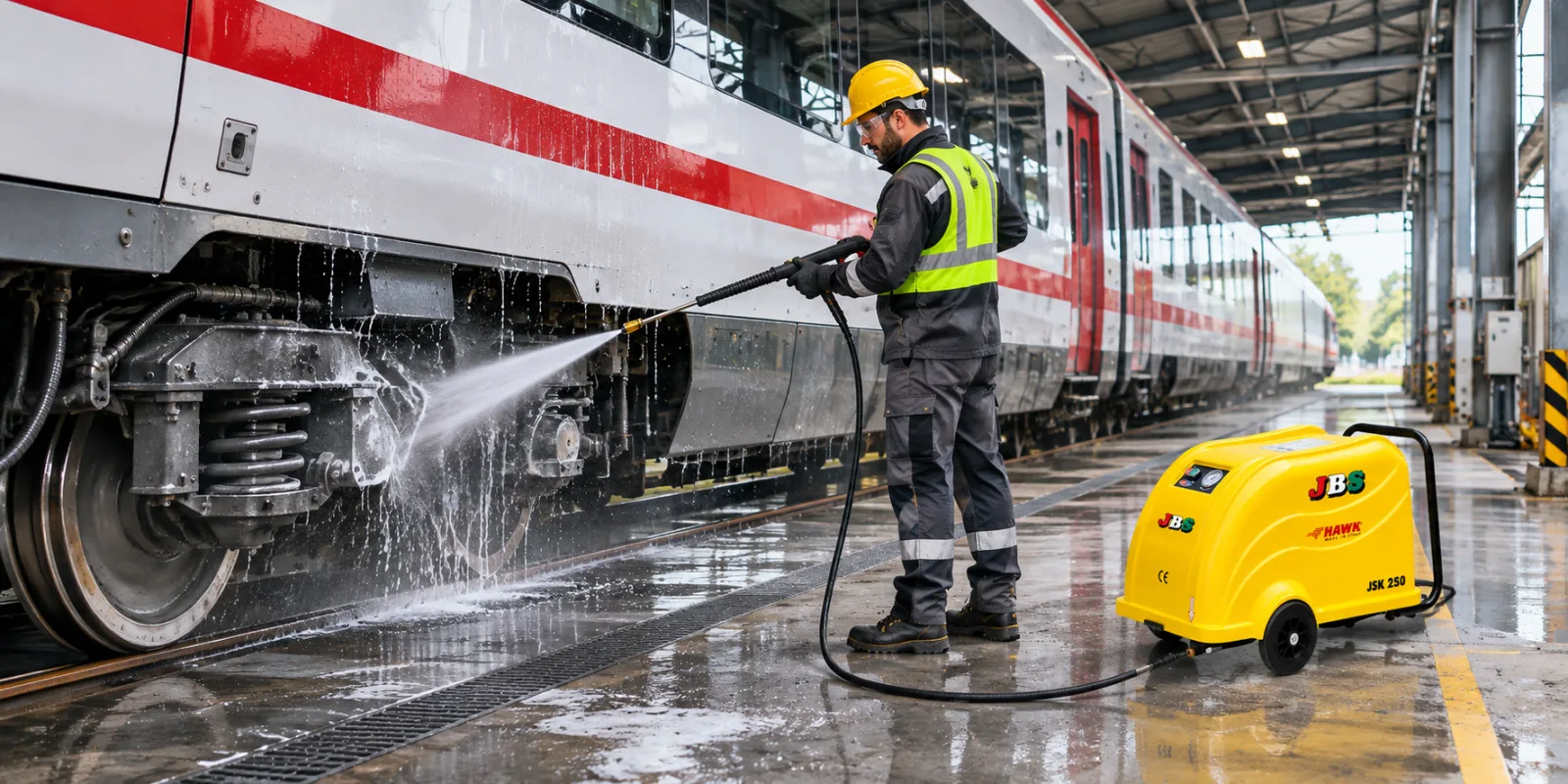
In designated wash areas, commercial pressure washing equipment can support approved manual exterior cleaning where the vehicle manufacturer permits the method.

Painted body panels, vinyl graphics, window seals and external equipment housings require suitable pressure limits, spray distances and nozzle selection.

Railway repair workshops may also need controlled washdown of robust, water-compatible flooring, maintenance equipment and external service areas.

Where industrial grease or oil accumulates on approved hard surfaces, heated water may improve cleaning effectiveness. This requires confirmation of surface compatibility and the depot's operating procedures.

Train underframes, brake assemblies, traction equipment and other safety-critical components should not automatically be included in a general pressure washing programme.

Routine railway track cleaning, switch maintenance and signalling infrastructure cleaning are specialist activities requiring separately approved methods and equipment.

The primary role of a general professional pressure washer is to address clearly defined, permitted cleaning tasks within the maintenance facility.
Selecting Cold-Water and Hot-Water Pressure Washing Equipment

For routine cleaning of suitable workshop surfaces and approved rolling stock exteriors, an industrial cold-water pressure washer with adjustable working pressure is a practical starting point.

Water flow helps remove loosened contamination, while pressure assists with releasing dirt from the surface. Both parameters must be considered alongside nozzle selection and manufacturer-defined cleaning limits.

JBS Makina offers professional pressure washing equipment with adjustable pressure ranges, including configurations rated at 20–250 bar and 15 L/min water flow.

These equipment specifications describe the machine's capability, not the permitted washing pressure for railway vehicles. Operating settings must always follow the relevant rolling stock or component manufacturer's instructions.

For maintenance areas regularly affected by oily residues, a hot-water pressure washer can be considered where the surfaces, drainage arrangements and safety procedures allow it.

Heat exchangers, brake components, electrical enclosures and other sensitive assemblies may require entirely different cleaning techniques, including specialist low-pressure or component-specific methods.

Review the JBS Makina commercial pressure washing range to assess suitable equipment categories for approved depot applications.

Wash Bay Capacity, Water Flow and Maintenance Productivity

Railway cleaning equipment should be selected according to the site's actual operating conditions.

A small rolling stock workshop with occasional external washdown requirements will have different needs from a large maintenance depot operating several shifts.

Equipment selection should consider the number of permitted cleaning locations, working hours, water availability, pump duty requirements and the distance between service areas.

A sufficient water supply is necessary for consistent equipment operation. However, water delivery should also match the available drainage and wastewater collection capacity.

Pump reliability, ease of servicing, replacement parts and access to maintenance support can influence the total cost of ownership.

Where rolling stock servicing must be completed within fixed maintenance windows, a predictable cleaning procedure helps staff organise preparation tasks and avoid unnecessary delays.

Commercial buyers should evaluate these operating requirements before purchasing equipment based solely on maximum pressure or initial price.

The objective is an appropriate pressure washing solution that can perform its intended tasks without introducing unnecessary operational complexity.

Railway Electrical Safety, Environmental Controls and Wash Water

Safety procedures are fundamental to cleaning operations within railway maintenance facilities.

Manual pressure washing should only take place in authorised areas after vehicle movement has been controlled and the necessary work permits have been issued.

Electrical isolation must be carried out by authorised personnel in accordance with the depot's operating rules. High-pressure water must never be directed towards live overhead lines, third-rail equipment, signalling systems or exposed electrical components.

Sensitive rolling stock equipment may also be damaged by inappropriate pressure or water ingress. Manufacturer cleaning instructions and approved maintenance procedures take priority over general washing recommendations.

Brake dust and other deposits may require controlled collection methods to prevent hazardous particles from becoming airborne or spreading into the surrounding work area.

Rail depot wastewater can contain lubricants, metal particles, detergents and other operational contaminants.

Washdown areas may therefore require suitable collection systems, sediment separation, oil interceptors or additional wastewater treatment depending on local requirements.

These safety and environmental controls must form part of the equipment selection and cleaning plan.

Request Railway Maintenance Cleaning Equipment from JBS Makina

Whether your business manages a locomotive maintenance depot, rolling stock repair workshop or industrial rail servicing facility, pressure washing equipment should be matched to specific, authorised applications.

JBS Makina supplies professional cold-water and hot-water pressure washing equipment for suitable industrial cleaning operations.

Share your facility type, permitted cleaning surfaces, contamination levels, daily operating hours and available electrical and water infrastructure.

For international procurement, equipment specifications, electrical compatibility, spare parts requirements and delivery arrangements should also be established.

Receive a technical equipment recommendation and commercial quotation tailored to your railway maintenance facility's cleaning requirements.

Request a Railway Maintenance Cleaning Equipment Quote

Related Products

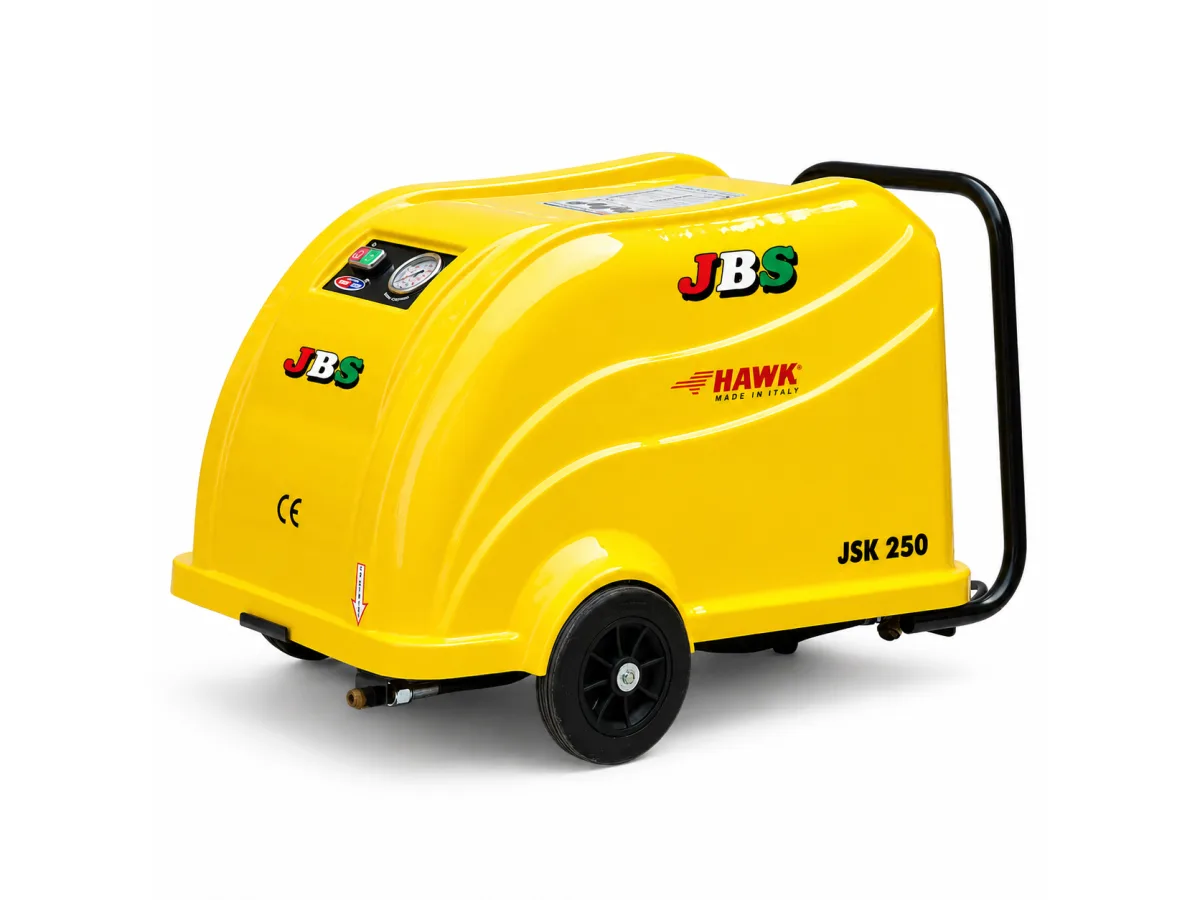
Cold Water Car Wash Machines JSK 250

Cold Water Car Wash Machines

Cold Water Car Wash Machine JSK 250

Model: JSK-250

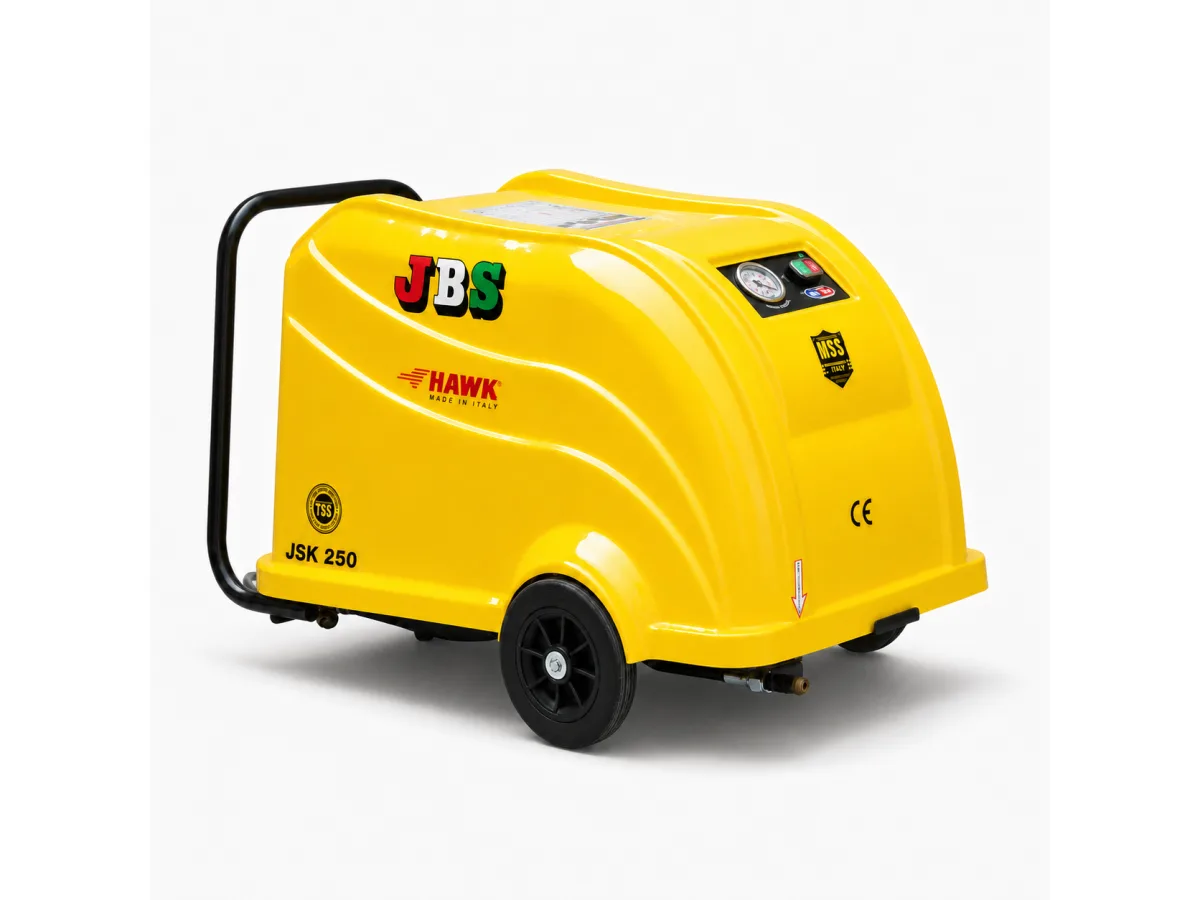
JBS JSK-250 is a heavy-duty commercial cold water pressure washer combining adjustable 20–250 bar pressure, 15 L/min flow, a 7.5 kW / 10 HP three-phase motor, 380 V / 50 Hz supply and an Italian HAWK pump. It is designed for fleet depots, commercial vehicles, trucks, agricultural machinery, construction equipment and professional cleaning operations.

Details WhatsApp Quote
Hot and Cold Water Car Wash Machines JSC 250

Hot and Cold Water Car Wash Machines

Hot and Cold Water Car Wash Machine JSC 250

Model: JSC-250

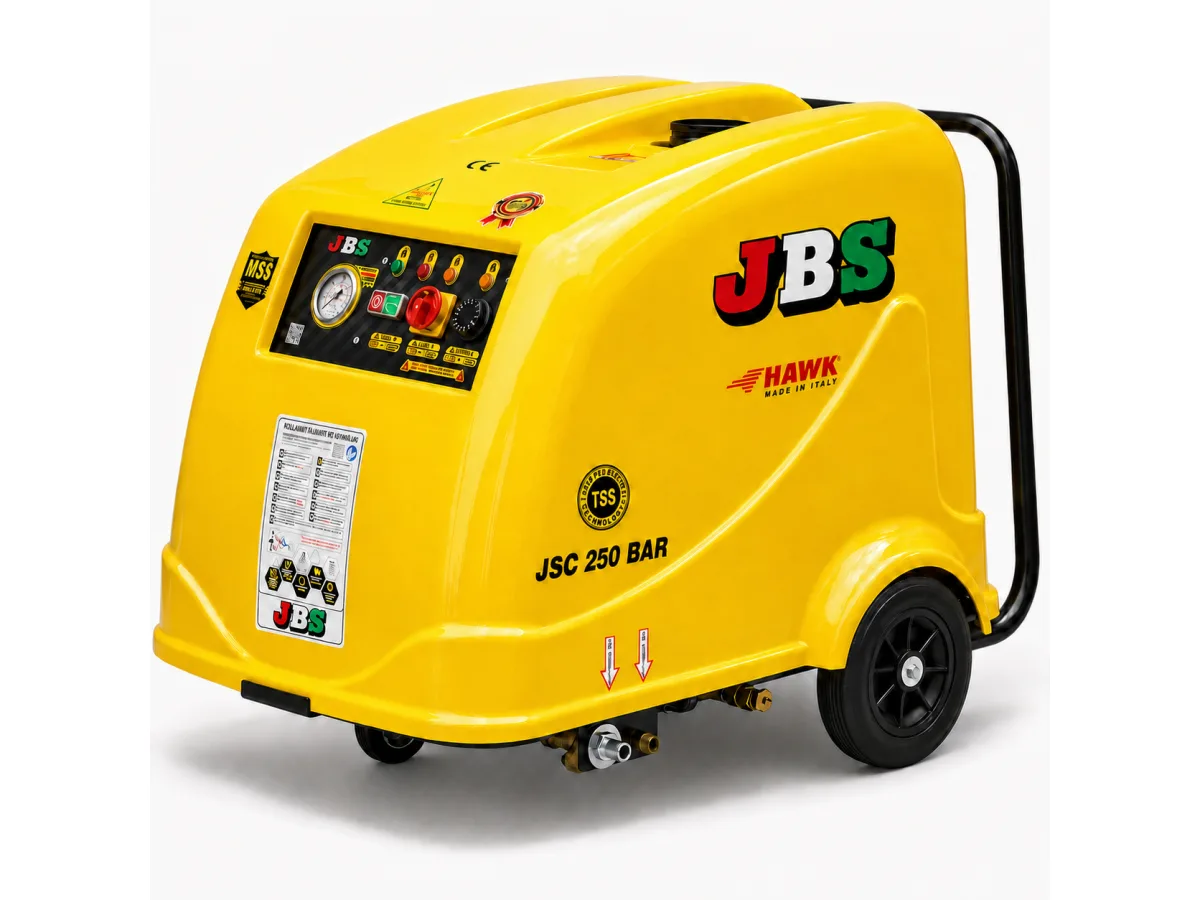
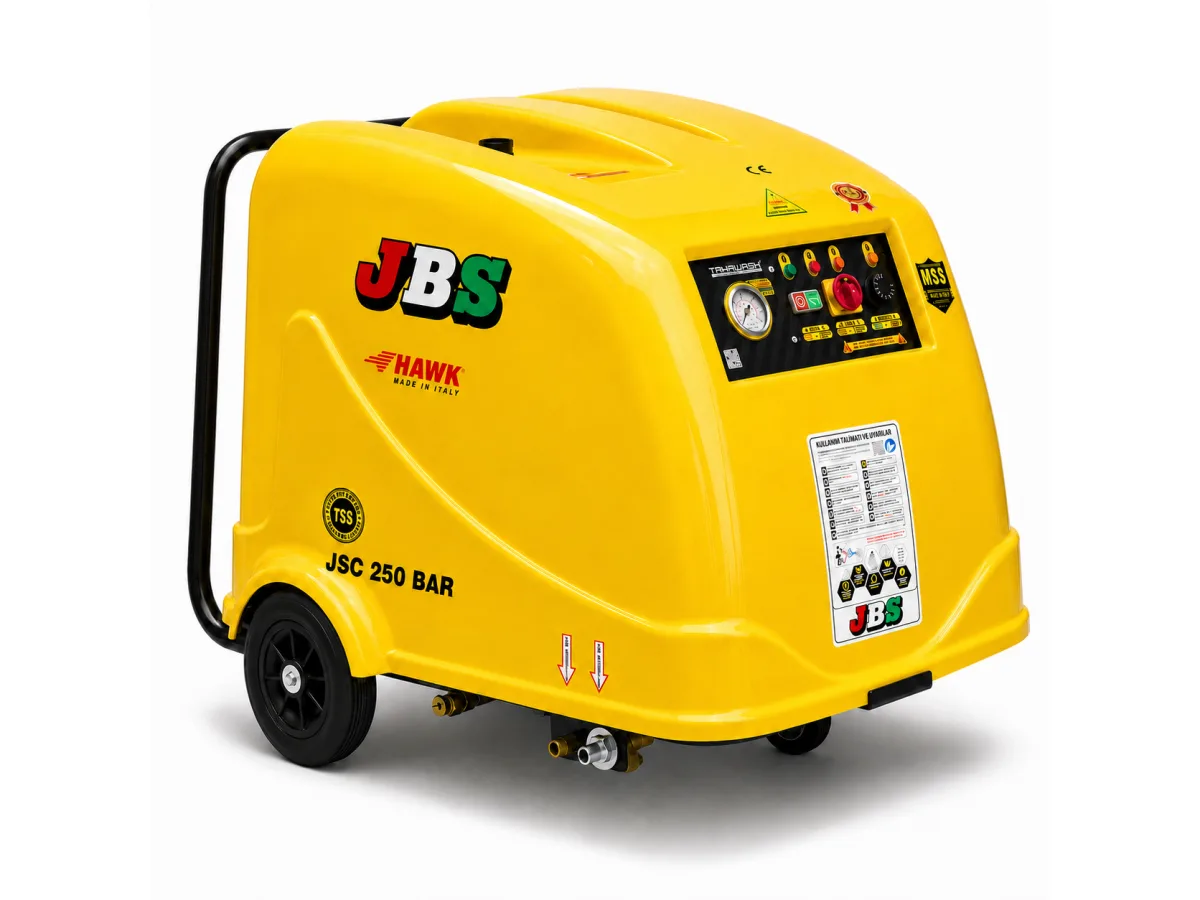
JBS JSC-250 delivers adjustable 20–250 bar pressure, 15 L/min flow, a 7.5 kW three-phase motor, 380 V / 50 Hz power, an original Italian HAWK pump and hot water up to 60°C. It is designed for commercial vehicles, fleets, workshops, agricultural machinery and heavy equipment where oily, stubborn contamination requires reliable professional hot-water cleaning.

Details WhatsApp Quote
Trigger-Operated Cold Water Car Wash Machine JSKT 250

Trigger-Controlled Cold Water Car Wash Machines

Trigger-Operated Cold Water Car Wash Machine JSKT 250

Model: JSKT-250

JSKT-250 is a heavy-duty commercial cold water pressure washer delivering adjustable 20–250 bar pressure, 15 L/min flow, a 7.5 kW / 10 HP three-phase motor, 380 V / 50 Hz supply, Italian HAWK pump and trigger-controlled water delivery. It is designed for fleet depots, commercial vehicles, trucks, construction equipment and intensive cleaning operations.

Details WhatsApp Quote
Trigger-Operated Hot and Cold Water Car Wash Machine JSCT 250

Trigger-Controlled Hot and Cold Water Car Wash Machines

Trigger-Operated Hot and Cold Water Car Wash Machine JSCT 250

Model: JSCT-250

JBS JSCT-250 is a heavy-duty hot water pressure washer with adjustable 20–250 bar pressure, 15 L/min flow, 7.5 kW three-phase power, 380 V / 50 Hz supply, an Italian HAWK pump, 30–90°C heated water and trigger-controlled spraying. It is designed for transport depots, trucks, agricultural equipment, construction machinery and intensive commercial cleaning operations daily.

Details WhatsApp Quote

Related Categories