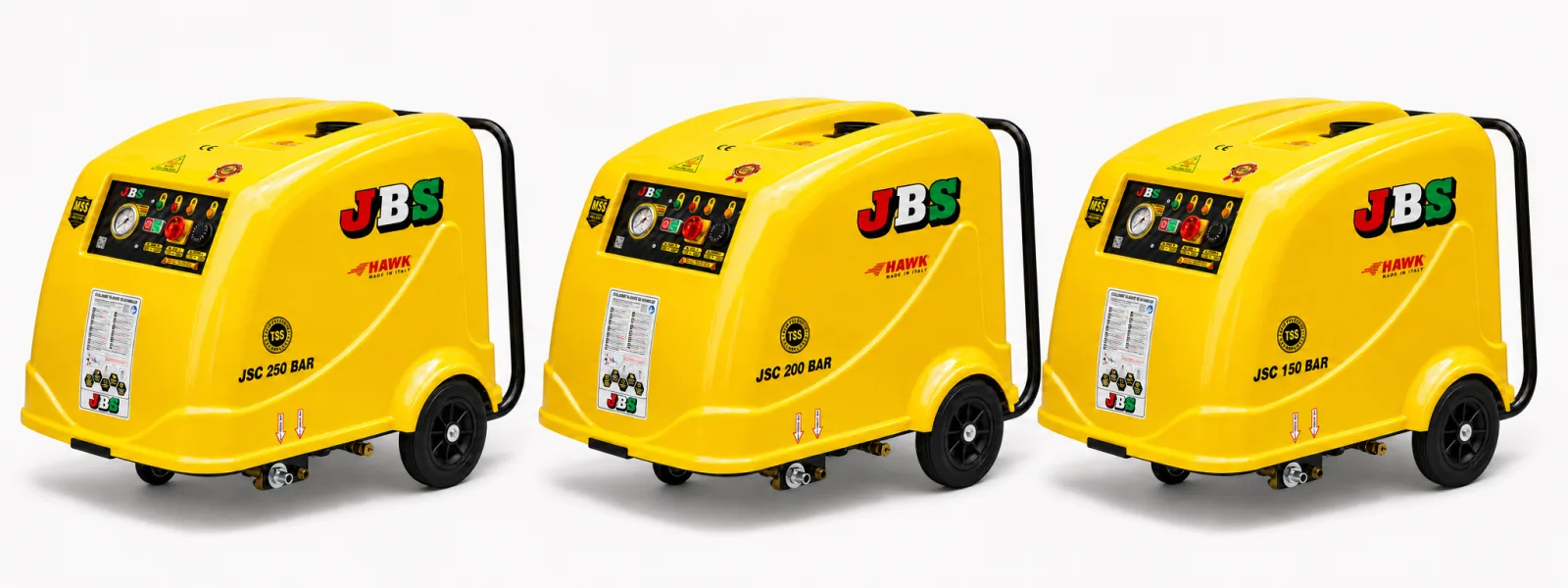
A cold-water car wash machine may be sufficient for routine vehicle washing and removing mud, dust and ordinary road dirt. A hot and cold water car wash machine is more suitable when oil, grease and stubborn contamination must be removed regularly from vehicles, machinery or industrial surfaces.
The correct choice should not be based on maximum pressure alone. Water temperature, flow rate, pump quality, motor power, daily vehicle volume, energy consumption and maintenance requirements must be evaluated together.
Main Differences Between the Two Systems
| Feature | Cold-water machine | Hot and cold water machine |
|---|---|---|
| Operation | Pressurizes water without heating it | Supplies hot or cold pressurized water |
| Suitable dirt | Mud, dust and road dirt | Oil, grease and stubborn contamination |
| Applications | Cars, motorcycles, dealerships and fleets | Commercial vehicles, workshops and industry |
| Heating system | Not required | Burner or heating system required |
| Operating structure | Simpler and more economical | Provides a wider range of applications |
| Maintenance | Pump, filter, seals and connections | Pump maintenance plus heating system |
| Initial investment | Generally lower | Generally higher |
How Does a Cold-Water Car Wash Machine Work?
A cold-water pressure washer takes water from the mains supply or a tank and uses a pump to send it through the hose, spray gun and nozzle at high pressure. The machine does not heat the water internally, resulting in a simpler operating structure.
Cold-water car wash machines can be used for:
- Exterior washing of cars and motorcycles
- Car dealerships and showrooms
- Rental companies and vehicle fleets
- Wheels, wheel arches and underbody areas
- Car parks and pressure-resistant floors
- Routine removal of mud, dust and road dirt
Cold water is practical for standard contamination without heavy oil or grease. Since no heating system is used, fuel consumption and heater maintenance are avoided.
How Does a Hot and Cold Water Machine Work?
Hot and cold water machines can operate with either heated or unheated pressurized water. Cold water can be used for routine cleaning, while hot water helps soften oil, grease and dirt strongly bonded to surfaces.
Hot and cold water car wash machines may be suitable for:
- Engine areas and oily mechanical components
- Chassis and underbody cleaning
- Trucks, minibuses and commercial vehicles
- Agricultural and construction machinery
- Vehicle service and maintenance centres
- Factory floors and industrial equipment
- Surfaces contaminated with oil and grease
The option to select hot or cold water provides flexibility for businesses handling different cleaning tasks.
Are Pressure and Temperature Equally Important?
Pressure helps loosen mud and surface dirt, while water flow carries the loosened contamination away. Temperature is particularly helpful when cleaning oil and grease.
For this reason, selecting the highest available pressure does not always provide the best result. On an oily surface, suitable water temperature, adequate flow rate and a compatible cleaning chemical may be more effective than cold water at higher pressure.
Maximum pressure should not be applied from a short distance to paint, plastic components, seals or sensors. Nozzle type, pressure and working distance must be adjusted to the surface.
Operating and Maintenance Costs
Cold-water machines have a simpler structure because they do not heat water. They may help control purchase, energy and maintenance costs for businesses focused on routine exterior washing.
Hot and cold water machines include a heating system and may require additional fuel, electricity and maintenance. However, they can help reduce the time required to remove oil and stubborn dirt.
The purchase price should not be considered alone. Daily operating time, energy use, maintenance, chemical consumption and labour time should also be compared.
What Should Be Checked Before Buying?
Consider the following factors:
- Daily number of vehicles
- Vehicle and equipment types
- Mud, dust, oil or grease contamination
- Required pressure and water flow
- Available 220 V or 380 V power supply
- Energy or fuel required for heating
- Continuous operating time
- Pump brand and motor power
- Hose, spray gun and nozzle options
- Technical service and spare-parts availability
JBS Makina offers JSK cold-water and JSC hot and cold water models with different pressure and capacity options.
Conclusion
Choose a cold-water machine for routine exterior washing and a simpler operating structure. Choose a hot and cold water machine if your business regularly handles grease, oil, commercial vehicles or industrial equipment.
Share your daily vehicle volume, cleaning applications and available electrical infrastructure with JBS Makina to receive technical guidance and a current quotation.
Recommended Solutions
Related Products and Categories
Common Questions
Frequently Asked Questions
Which washing machine is suitable for car wash businesses?
For car wash businesses, the most suitable washing machine depends on daily vehicle volume, service type, available space, and budget. Professional pressure washers, steam cleaners, self-service wash systems, or automatic car wash machines can be preferred depending on the operation. For intensive commercial use, durability, stable pressure, high water flow, energy efficiency, easy maintenance, and reliable after-sales support are especially important.
What Should You Consider When Choosing a Car Wash Machine?
Learn what to consider when choosing a car wash machine, including pressure, water flow, pump quality, power requirements, accessories, service support and business usage needs.
Should you buy a used or a new car wash machine?
Used car wash machines can offer a lower purchase cost. However, if the condition of the pump, motor, electrical system, and other components is unknown, additional maintenance and repair expenses may arise. If intensive commercial use is planned, a new machine covered by warranty may be a safer investment.
Are hot-water car wash machines more expensive?
Because hot-water car wash machines include an additional heating system, their prices are generally higher than those of cold-water models. However, hot water can provide an important advantage for businesses that need to remove heavy dirt, grease, and contamination from demanding surfaces.
Should You Choose a Hot-Cold or Cold Water Car Wash Machine?
Choosing between a hot-cold and cold water car wash machine depends on dirt type, usage intensity, vehicle category and cleaning needs. Hot-cold machines are more effective for oily and heavy dirt, while cold water machines are suitable for standard vehicle washing.
What should the pressure reducing valve be set to?
The correct pressure setting depends on the water supply system and the equipment being used. In many applications, pressure reducing valves are commonly preset to around 3 bar. However, for pressure washers and professional car wash systems, the inlet pressure should always be adjusted according to the manufacturer’s specifications to ensure safe and efficient operation.