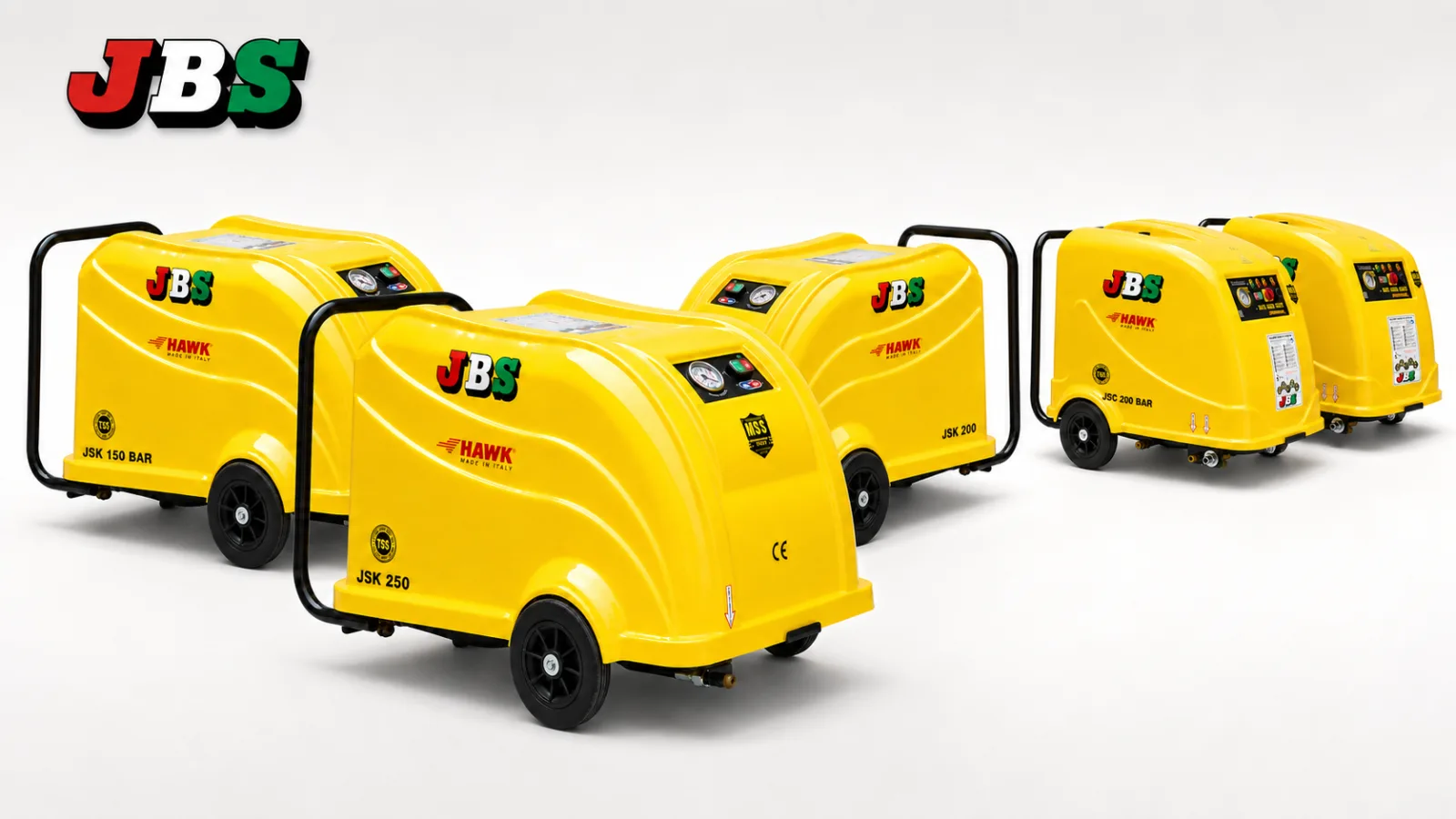
Water consumption is one of the main operating costs of a professional car wash. Saving water does not simply mean using less water. The right pressure, flow rate, nozzle, washing technique and equipment must work together.
Choosing suitable professional car wash machines can help businesses achieve effective cleaning while keeping unnecessary water consumption under control.
Use a Pressure Washer Instead of Continuous Hose Flow
A conventional hose can allow water to flow continuously during washing. A professional pressure washer directs water onto the contaminated surface at high pressure, allowing dirt, mud and road residue to be removed more efficiently.
However, pressure alone should not determine machine selection. Water flow, measured in litres per minute, is equally important.
Balance Pressure and Water Flow
A machine with unnecessarily high water flow may increase water consumption per vehicle. On the other hand, insufficient flow can extend washing time.
When choosing a professional washing system, consider:
- Working pressure
- Water flow rate
- Pump capacity
- Nozzle size
- Daily vehicle volume
- Average washing time
The goal is not to select the lowest possible flow rate, but to find the correct balance between cleaning performance and water consumption.
Check Nozzles, Hoses and Connections
Small leaks can create significant water losses when a car wash operates throughout the day.
Regularly inspect:
- Spray nozzles
- High-pressure hoses
- Trigger guns
- Fittings and connections
- Water inlet filters
A worn nozzle can also change the spray pattern and reduce washing efficiency.
Let Foam Work Before Rinsing
Trying to remove all dirt only with pressurised water can increase washing time and water consumption.
Applying suitable car wash foam and allowing it to soften dirt before rinsing can make the pressure-washing stage more efficient.
This is especially important for mud, road film and stubborn surface contamination.
Control Water Use in Self-Service Car Washes
Self-service car wash systems allow pressure washing, foam, wax and rinsing functions to operate for predefined periods.
Correctly configured program times can help businesses control both customer usage and overall water consumption.
For better efficiency:
- Set realistic wash-program durations
- Optimise pressure and flow
- Check guns and hoses regularly
- Avoid unnecessarily long rinse cycles
Can Steam Cleaning Reduce Water Consumption?
Steam car wash machines use water in the form of high-temperature steam and are particularly useful where controlled water consumption is important.
Steam cleaning is suitable for areas such as:
- Vehicle interiors
- Upholstery
- Door jambs
- Wheels
- Engine compartments
- Hard-to-reach areas
However, steam should not automatically be considered a replacement for pressure washing in every application. For heavily muddy exterior surfaces, conventional pressure washing may still be the more practical solution.
Consider Water Recycling Systems
High-volume car wash facilities can also evaluate water treatment and recycling systems.
Depending on the system design and local regulations, wash water can be filtered and treated for reuse during suitable washing stages.
Water recycling can be particularly relevant for:
- High-volume car washes
- Fleet washing facilities
- Multi-bay self-service car washes
- Commercial vehicle washing facilities
Where Is Water Most Commonly Wasted?
Common causes of unnecessary water consumption include:
- Leaving the spray gun running between operations
- Worn or incorrect nozzles
- Leaking hoses and fittings
- Excessive water flow
- Long pre-wash cycles
- Rinsing before foam has softened the dirt
- Poor equipment maintenance
Conclusion
Effective vehicle cleaning does not always require more water.
The correct combination of pressure, flow rate, nozzle selection, foam application and properly maintained equipment can improve washing efficiency while reducing unnecessary water consumption.
Compare JBS Makina professional car wash equipment according to your daily vehicle volume, washing process and operating requirements.
Recommended Solutions
Related Products and Categories
Common Questions
Frequently Asked Questions
How much water does steam car washing use?
Actual water consumption depends on the machine, steam flow rate, vehicle size, and cleaning time. Professional steam cleaning generally uses much less water than conventional pressure washing.
Does Every Pressure Washer Pump Fit Every Machine?
No. Pressure, water flow rate, rotational speed, shaft, connection, and motor-power compatibility must be checked.
How do you choose a pressure washer for car washing?
When choosing a pressure washer for car washing, you should consider working pressure, water flow rate, pump quality, motor power, hose length, nozzle options, durability, and ease of maintenance. For professional car wash applications, it is also important to select a machine suitable for frequent use and capable of providing stable pressure without damaging vehicle paint or sensitive surfaces.