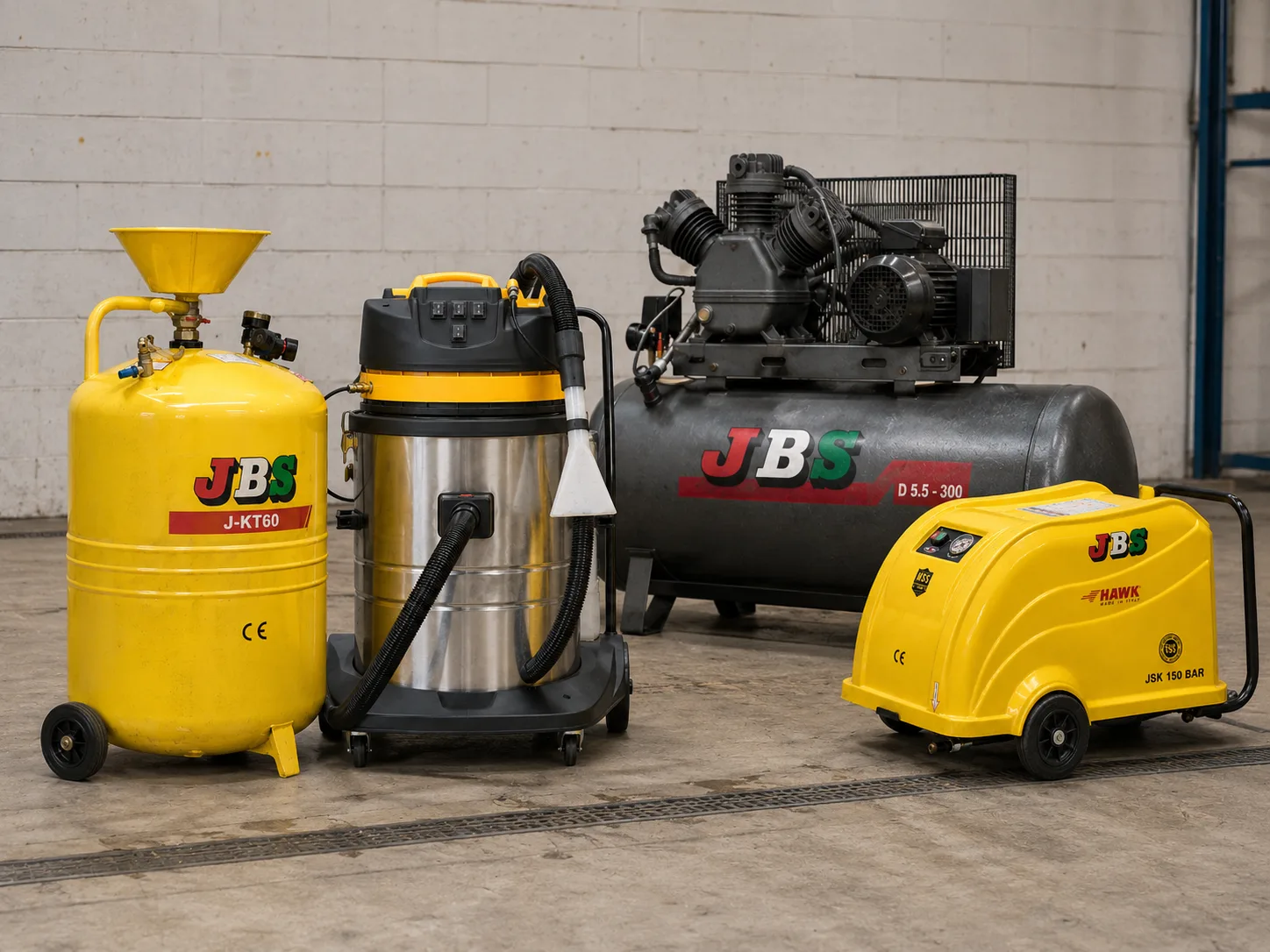
Pressure washer repair begins with identifying the true source of the fault. Pressure loss, unstable operation, water or oil leaks, motor failure and frequent cycling can all have different causes.
Safety Before Repair
Disconnect electrical power, shut off the water supply and release pressure before inspecting the machine. Hot-water units should be allowed to cool before service.
If the Machine Does Not Build Pressure
- Check that the water supply is sufficient.
- Clean the inlet filter.
- Bleed air from the system.
- Inspect the nozzle for blockage or wear.
- Check hoses and fittings for leaks.
When the Pump Needs Inspection
If pressure remains low despite correct water supply and nozzle condition, pump valves, seals, pistons and the pressure regulator may require professional inspection.
Electrical Problems
If the motor does not start, check the supply, fuses and basic external connections first. Internal electrical panels, motors and capacitors should be handled by qualified technicians.
Water or Oil Leakage
Damaged seals, fittings, hoses or pump components may cause leakage. Oil that appears milky can indicate water contamination and should be investigated promptly.
Hot-Water Units That Do Not Heat
Burner, fuel supply, thermostat, ignition and safety-control faults require systematic diagnosis and often professional service.
When to Call Technical Service
Major pump damage, electrical faults, abnormal noise, overheating, persistent leaks and burner problems should not be repaired without the correct technical knowledge and tools.
Conclusion
Routine cleaning of filters, correct nozzle use, stable water supply and scheduled maintenance prevent many common pressure-washer failures.
Recommended Solutions
Related Products and Categories
Common Questions
Frequently Asked Questions
How much do car wash machines and equipment cost?
A budget of approximately TRY 150,000–500,000 may be allocated for a pressure washer, foam tank, compressor, vacuum cleaner, and auxiliary equipment. The cost increases when steam, seat-cleaning, and drying machines are added.
What are the key tips for washing a car properly?
For effective car washing, start by rinsing off loose dirt, use a suitable car shampoo, work from top to bottom, and avoid washing under direct sunlight. Use separate mitts or cloths for the body and wheels to reduce the risk of scratches. When using a pressure washer, maintain a safe distance and avoid directing high-pressure water too closely at paint, seals, sensors, and other sensitive areas. Finally, rinse thoroughly and dry the vehicle with a clean microfiber towel to help prevent water spots.
Is a car wash a profitable business?
Yes, a car wash can be a profitable business when it is located in the right area and managed efficiently. Profitability depends on factors such as customer traffic, service prices, equipment investment, water and energy costs, labor expenses, maintenance, rent, and the type of car wash system. Self-service and automated systems can also reduce labor costs and increase daily vehicle capacity.
How many cars can a car wash clean per day?
The number of cars a car wash can clean per day depends on the type of system, number of wash bays, washing time per vehicle, staff capacity, opening hours, and customer traffic. A small manual car wash may clean around 20–50 vehicles per day, while self-service or automatic systems can handle significantly higher volumes. For professional planning, daily vehicle capacity should be calculated according to the equipment and expected customer flow.
How many bar do professional car washes use?
Professional car washes commonly use pressure washers in the range of approximately 100–150 bar for vehicle cleaning. Depending on the equipment and application, higher-pressure machines may also be used, but the pressure should be adjustable to protect paint, seals, tires, and other sensitive components. Water flow rate, pump quality, and continuous-duty capability are just as important as pressure.
When should a car wash machine be serviced?
Visual inspections should be performed before and after each use. Oil changes and technical maintenance intervals depend on the machine model, operating hours, and the manufacturer's instructions.
Why does a car wash machine lose pressure?
Insufficient water supply, a clogged filter, a worn nozzle, hose leaks, air in the water line, or a pump-valve fault can cause pressure loss.