For exterior cleaning of most passenger vehicles, an operating pressure of 100–150 bar is sufficient. Professional car wash businesses may prefer machines operating between 150 and 200 bar, depending on the level of dirt and daily usage volume.
However, the correct pressure for vehicle washing is not determined by the bar rating alone. Water flow rate, nozzle angle, working distance, pump quality and the condition of the surface also directly affect cleaning performance.
Pressure Ranges by Vehicle and Application Type
| Application | General pressure range |
|---|---|
| Sensitive or damaged painted surfaces | Low setting, after testing |
| Standard passenger vehicle exterior washing | 100–150 bar |
| Professional car washing | 150–200 bar |
| Commercial vehicle underbodies and durable surfaces | 200–250 bar, with controlled use |
These values are general reference ranges. Machine pressure should be adjusted according to sensitive areas such as paintwork, plastic components, seals, sensors and cameras.
Does Higher Pressure Provide Better Cleaning?
Higher pressure does not always mean better cleaning. Excessive pressure can remove damaged paint, harm plastic components and force water into electrical areas.
Using pre-wash foam and allowing the dirt to soften can reduce the need for very high pressure. Sufficient water flow is also as important as pressure for carrying loosened dirt away from the surface.
Are Maximum Pressure and Operating Pressure the Same?
The maximum pressure stated on a machine indicates the highest value the unit can reach. The operating pressure maintained during continuous use may be lower.
A machine should not be selected solely according to its maximum bar rating. Adjustable operating pressure, water flow rate, motor power, pump construction and daily operating time should be evaluated together.
What Should You Consider When Washing a Vehicle?
For safe and controlled cleaning:
-
Use a fan-pattern nozzle.
-
Begin cleaning from a safe distance.
-
Do not hold the spray gun on the same point for too long.
-
Do not use a zero-degree concentrated jet on painted surfaces.
-
Do not apply direct pressure to cameras, sensors, seals or electrical components.
-
Inspect damaged paint and coatings before washing.
Which Car Wash Machine Should You Choose?
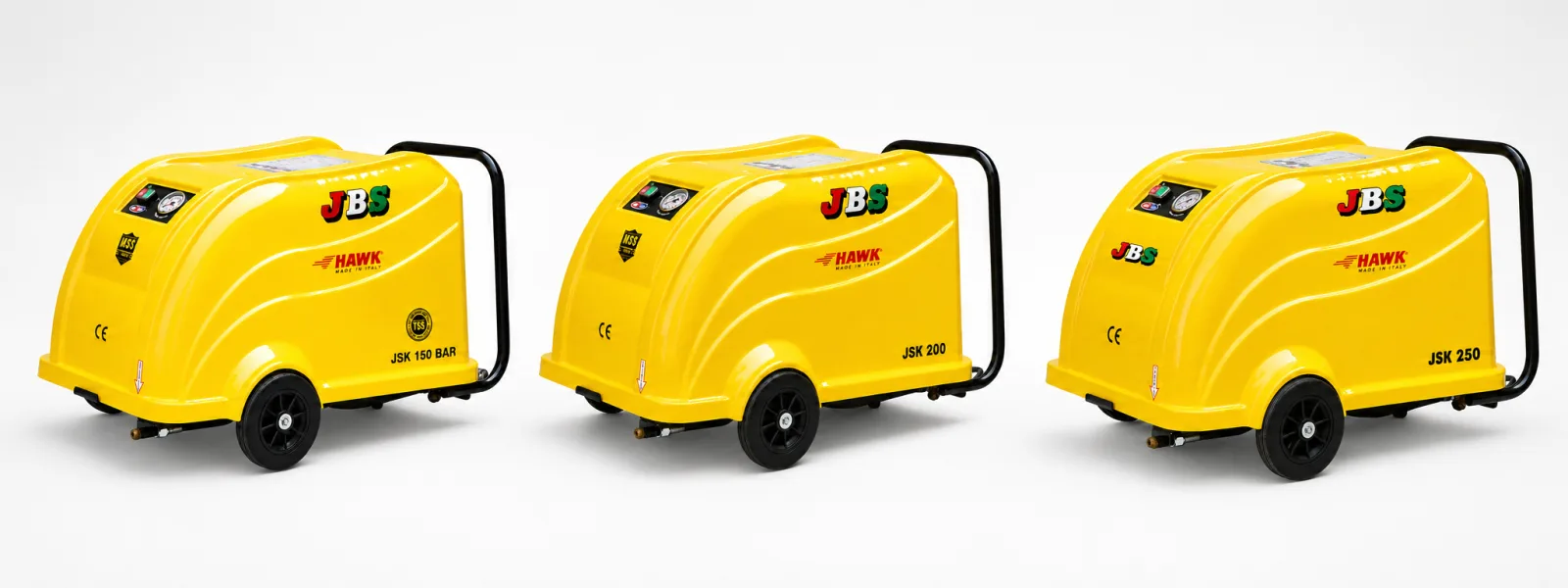
Low- and medium-volume businesses can consider the 150 bar JSC 150 hot and cold water car wash machine for routine vehicle washing.
Professional businesses with a higher daily vehicle volume may prefer the 200 bar JSC 200 hot and cold water car wash machine, which offers adjustable pressure and hot-water support.
For heavy dirt, commercial vehicles and durable equipment requiring higher pressure, the 250 bar JSC 250 hot and cold water car wash machine can be considered. High pressure must not be applied directly and uncontrollably to vehicle paintwork.
To compare cold-water, hot-and-cold-water and different pressure options, visit the pressure washing machines category.
Recommended Solutions
Related Products and Categories
Common Questions
Frequently Asked Questions
Can a car be washed with high-pressure water?
Yes. A car can be washed with a pressure washer when the correct pressure, nozzle, and spraying distance are used. High-pressure water can effectively remove mud, dust, and road dirt, but the spray should not be held too close to the paint, seals, sensors, tires, or other sensitive parts. Using a suitable fan nozzle and moderate pressure helps provide safer and more effective vehicle cleaning.
How much water does a car wash machine use?
Water consumption depends on the machine's flow rate, washing time, and the nozzle used. The liters-per-minute value should be checked in the technical specifications.
Is Bar Pressure Alone Enough?
Bar pressure alone is not enough to determine cleaning performance. Water flow rate, pump quality, nozzle type, hose structure and usage area should also be considered when choosing a car wash machine.
Does High Pressure Damage a Vehicle?
High pressure washing may damage vehicle paint, plastic parts, seals or coated surfaces if used incorrectly. Safe car washing depends on the right pressure level, nozzle type, washing distance and surface condition.